
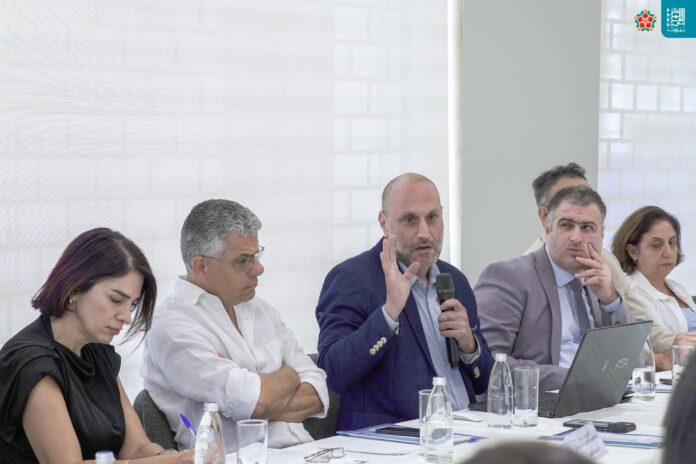
The National Human Rights Commission, which includes the Committee for the Prevention of Torture, participated in a dialogue session organized by the Arab Center for Research and Policy Studies–Beirut, in partnership with SMEX, to mark the launch of a policy paper entitled “Protecting Children in Their Use of Social Media: Are Ban Policies Effective?”. During the session, the Commission presented its opinion on the two legislative proposals currently under consideration in Lebanon concerning children’s and minors’ use of social media platforms. It called for the development of a comprehensive national legislative framework grounded in children’s rights, digital freedoms, and the principles of necessity and proportionality.
The Commission was represented at the session by its Commissioner for International Relations and Media, Bassam Al Kantar, who presented the main conclusions of the opinion prepared by the Commission on the two legislative proposals, in accordance with its legal mandate to provide opinions on legislation and policies related to human rights.
The Commission affirmed that protecting children from risks associated with the digital environment is a legitimate and necessary objective. However, achieving this objective should not lead to blanket bans or disproportionate restrictions on children’s rights. Instead, it requires an integrated, evidence-based protection system that takes into account the best interests and evolving capacities of the child while safeguarding the rights to privacy, freedom of expression, access to information, and participation in the digital environment.
Al Kantar stressed that any proposed legislative restrictions must satisfy the tests of legality, necessity, suitability, and proportionality. Such restrictions must also be accompanied by clear safeguards concerning age-verification mechanisms and the protection of personal data, the definition of digital platforms’ responsibilities, the promotion of digital citizenship and safety education, and the provision of effective prevention and protection tools to parents, schools, and relevant institutions.
The Commission also emphasized the importance of linking the ongoing legislative debate in Parliament with the governmental process, particularly the work of the ministerial committee established by a Council of Ministers decision to develop a national approach to the issue and coordinate the efforts of the relevant ministries, public administrations, and specialized bodies.
The Commission called for the two legislative proposals to be discussed by the competent parliamentary committees in parallel with the ongoing governmental efforts, thereby enabling the development of an integrated policy and legislative framework instead of parallel or conflicting tracks.
In this context, the Commission stressed the need to involve the National Human Rights Commission throughout the consideration of the proposals and the drafting of the relevant legislation and policies. This would enable it to exercise its legal mandate to provide advice and opinions on the compatibility of proposed legislation and policies with the Constitution and international human rights treaties and standards.
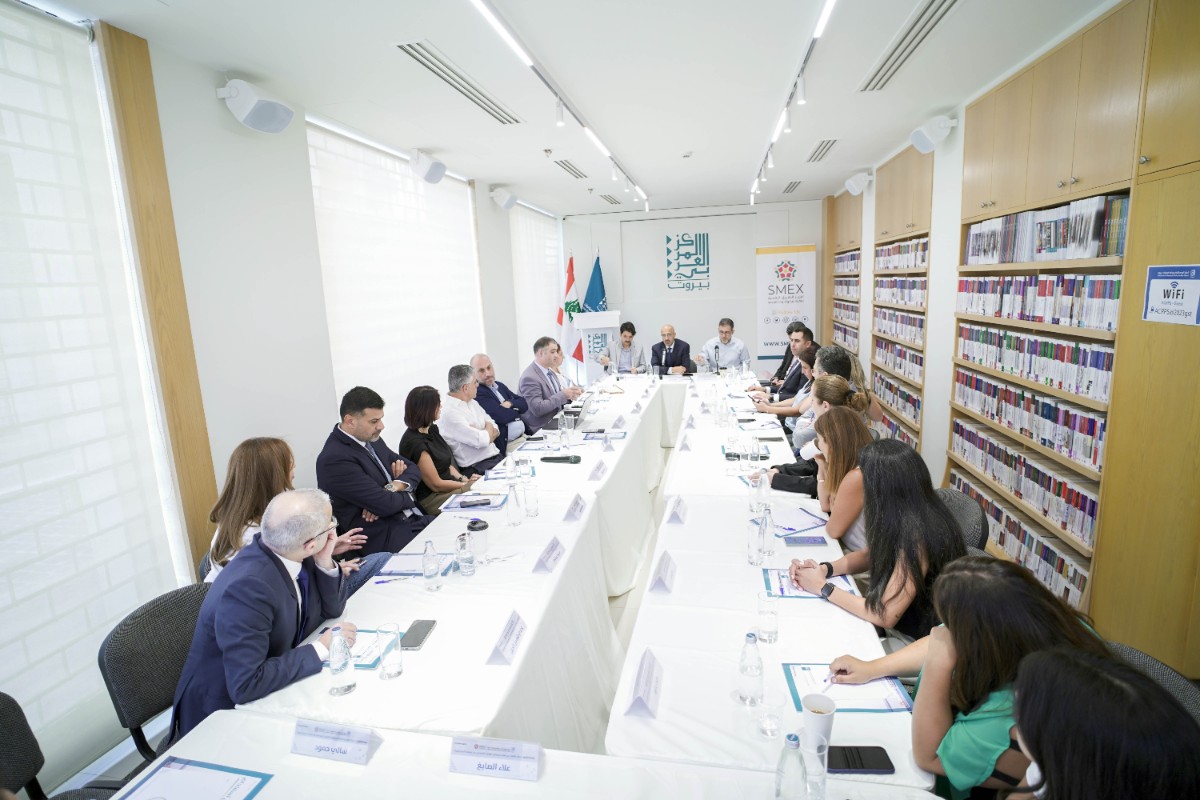
Multi-Stakeholder Discussion on Bans and Their Alternatives
Dr. Nasser Yassin, Director of the Arab Center for Research and Policy Studies–Beirut, opened the session by explaining that it formed part of the Center’s cooperation with several intellectual and research institutions, as well as a project monitoring legislative developments in a number of countries. He noted that the policy paper provides a basis for discussing the effectiveness of banning children from social media platforms and the suitability of such policies to the Lebanese context, particularly given the institutional and legal challenges involved in implementing international standards.
For his part, SMEX Executive Director Mohamad Najem called for a more critical approach to technology and its social and political effects. He urged participants to move beyond the promotion of ready-made technological solutions and instead raise questions concerning data protection, the influence of digital platforms, and the protection of children in the digital environment.
Rita Karam, Secretary-General of the Higher Council for Childhood at the Ministry of Social Affairs, emphasized the importance of listening to children before adopting ban policies. She pointed to the ease with which some technical restrictions can be circumvented and called for direct consultations with children, the involvement of technical and academic experts, and consideration of differences among age groups and children’s circumstances, including those of children with disabilities.
Attorney Antoine Fenianos, representing MP Tony Frangieh, presented the legislative proposal submitted to Parliament. He explained that it seeks to limit the psychological and social consequences of early and unregulated use of social media platforms, including cyberbullying and addiction, and to hold platforms responsible for verifying users’ ages while respecting privacy.
Major Elias Dagher of the Internal Security Forces’ Cybercrime Bureau emphasized the importance of awareness-raising in protecting children. He presented the Bureau’s experience in conducting awareness campaigns in schools and Scout camps and receiving complaints concerning crimes committed against children online. He also called for the strengthening of educational programmes and greater accountability for cyberextortion and cyberbullying offences.
Participants in the session also included Najib Farhat, representing MP Paula Yacoubian; Nadim Mansouri, Director-General and Adviser on Digital Transformation, Governance, and Artificial Intelligence Policies at the Lebanese Parliament; Rita Karam, Secretary-General of the Higher Council for Childhood at the Ministry of Social Affairs; Fares Abi Khalil, Legal Adviser at the Ministry of Information; Grace Sawwan, Head of the Educational Informatics Department at Lebanon’s Center for Educational Research and Development; telecommunications expert and former Touch Director-General Wassim Mansour; Rabih Baalbaki, President of the Technology and Education Syndicate in Lebanon; Denise Hanina, Karen Haddad, and Sanaa Awada, representing the Lebanese Ministry of Social Affairs; and attorney Kassem Karim, representing the Union for the Protection of Juveniles in Lebanon. Representatives of international organizations, local associations working on children’s issues, and other interested participants also attended.
The discussion concluded by emphasizing the importance of moving beyond fragmented approaches toward a comprehensive national policy for protecting children in the digital environment—one that combines legislation, regulation, accountability, digital education, awareness-raising, and data protection, while ensuring that children themselves participate in discussions and decisions affecting their rights.
The National Human Rights Commission affirmed its readiness to continue cooperating with Parliament, the Government, the Ministry of Information, the Higher Council for Childhood, public institutions, civil society organizations, experts, and children themselves. This cooperation aims to contribute to developing a national framework that protects children from digital risks without allowing protection measures to become a disproportionate denial of their rights and freedoms in the digital environment.
هذه المقالة متاحة أيضًا بـ:

