
A safe home provides more than shelter. It gives children a place to study, families stability, older persons security and people with disabilities a foundation for independent living. When housing becomes unsafe, unaffordable or insecure, the consequences reach into health, education, employment and community life.
For Lebanon, the International Day for the Eradication of Poverty, observed on 17 October, brings these connections into sharp focus. Economic hardship, conflict damage and displacement make access to adequate housing an essential part of poverty reduction and recovery.
Under the United Nations’ 2026–2028 theme, “United for Peace and Human Rights,” this year’s focus is “Safe Homes for All.” The observance calls for housing policies centred on human dignity, meaningful participation by people experiencing poverty and resources sufficient to expand access to safe, accessible and affordable homes.
For Lebanon, that means connecting reconstruction with social protection, public services and measures that prevent people from being pushed further into deprivation.
Understanding poverty in Lebanon—and using the evidence accurately
Lebanon’s poverty crisis has been documented, but published figures must be understood within their dates and geographic coverage.
The World Bank’s Lebanon Poverty and Equity Assessment 2024 found that monetary poverty rose from 12 per cent in 2012 to 44 per cent in 2022 across the areas surveyed. The research covered Akkar, Beirut, Bekaa, North Lebanon and most of Mount Lebanon. Among Lebanese nationals in those areas, approximately one in three lived in poverty in 2022.
These are not nationwide measurements for 2026. The assessment nevertheless provides important evidence of the economic crisis’s effects on households, including reductions in food consumption, healthcare spending and other expenses.
The implication for public policy is practical: poverty reduction requires updated evidence and coordinated responses. Income support, healthcare, education and housing cannot be treated as unrelated needs when families must choose between them.
Housing insecurity can deepen poverty
A household may retain a roof over its head while living in conditions that undermine dignity and safety.
Housing insecurity can involve overcrowding, structural hazards, inadequate sanitation, unaffordable rent or uncertainty about continued occupancy. A low-cost home may also be far from employment, schools and healthcare, creating expenses that offset any savings.
For Lebanon, assessing housing needs should therefore go beyond counting damaged buildings or available accommodation. Programmes should examine affordability, accessibility, essential services and the stability of living arrangements.
Assistance should also recognise different circumstances. A displaced tenant, an owner unable to repair a damaged home and a family living in temporary accommodation may need different forms of support.
The objective should be a safe and sustainable living situation that allows people to meet their other essential needs.
Displacement makes safe housing an urgent recovery priority
Recent public information demonstrates the continuing scale of Lebanon’s displacement challenge.
IOM’s Lebanon Crisis Response Plan 2026 cites 333,144 internally displaced people as of 9 September 2026, alongside 818,288 people who had begun returning to their areas of origin. It cautions that returns cannot yet be considered sustainable, citing insecurity, unexploded ordnance, damaged housing and disrupted services among the obstacles. These figures describe a dated mobility snapshot, rather than a permanent measure of displacement.
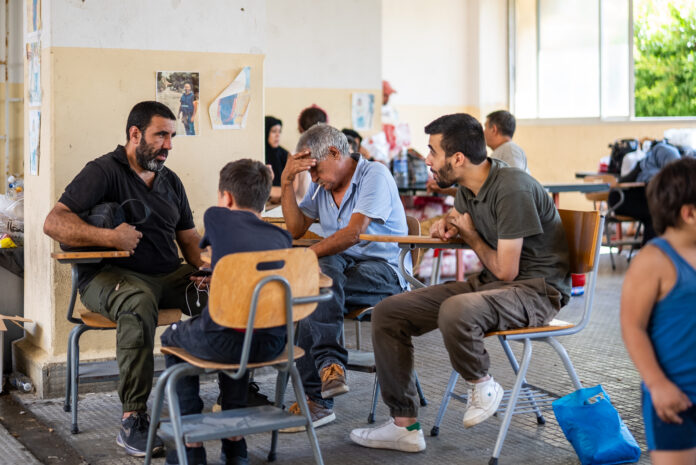
For affected families, return should be assessed through safety and living conditions. Reaching an area of origin does not establish that a home is habitable or that essential services have resumed.
Recovery support should therefore connect housing assessments with repairs, water, sanitation, access routes and livelihood opportunities. Where safe return remains impossible, dignified accommodation and appropriate assistance must continue.
Rebuilding homes must include rebuilding neighbourhoods
Housing recovery succeeds when the surrounding neighbourhood can support everyday life.
A repaired apartment offers limited security if residents lack reliable water, safe access or functioning services. Reconstruction should therefore consider buildings alongside infrastructure, public facilities and local livelihoods.
UN-Habitat’s Urban Crisis Response, Recovery and Reconstruction Framework for Lebanon proposes an integrated approach involving support to public institutions, adequate housing and protection, and environmental and climate considerations.
For Lebanon, this supports practical coordination between national authorities, municipalities, technical specialists and affected communities.
Housing programmes should include qualified safety assessments and transparent repair standards. They should also recognise tenants and other residents whose needs may be overlooked when assistance focuses mainly on property ownership.
Social protection should help people maintain a dignified standard of living
Housing assistance cannot carry the full burden of poverty reduction.
Lebanon launched its first National Social Protection Strategy in February 2024. Developed with support from the ILO and UNICEF, it provides a framework for strengthening protection against vulnerabilities across people’s lives.
A January 2026 ILO–Arab Reform Initiative publication further examines reform pathways involving social assistance, pensions, social health protection and the governance needed to make these systems coherent and sustainable.
For housing security, the practical priority is to connect assistance with the costs households actually face. Support should help prevent situations in which paying rent means foregoing food, treatment or schooling.
Reliable procedures also matter. People need clear information, predictable payments and accessible ways to correct errors or challenge exclusion.
Children’s wellbeing depends on stable homes
Children experience the consequences of poverty through several connected needs.
Unstable accommodation can disrupt learning, separate children from familiar support networks and make it difficult to maintain routines. Housing assistance should therefore be coordinated with school access, healthcare and child protection.
For Lebanon, family accommodation should provide safe spaces, suitable sanitation and reasonable access to education. Decisions about relocation should consider children’s continuity of learning and the practical needs of caregivers.
Children should not be asked to bear the long-term consequences of gaps between emergency shelter and durable housing solutions.
Accessibility must be built into housing assistance
Safe housing must be usable by the people who live in it.
For persons with disabilities and older persons, steps, narrow entrances, inaccessible toilets or distant services can make accommodation unsuitable. Emergency arrangements should assess these barriers from the outset.
Assistance programmes should also offer application and communication methods that do not depend entirely on online access. People facing mobility, literacy or documentation difficulties need practical support.
Women heading households and people facing protection risks should have access to confidential advice and appropriate referrals. Housing policy should account for safety and privacy within accommodation, as well as the condition of the building.
Policies must be designed with people experiencing poverty
The 2026 observance emphasises the knowledge of people who experience poverty and housing exclusion.
For Lebanon, meaningful participation should influence programme design, eligibility criteria, repair priorities and evaluation. Residents can identify barriers that administrative records overlook: transport costs, inaccessible facilities, unclear procedures or accommodation that does not meet household needs.
Consultation should reach beyond established organisations to include tenants, displaced families, informal workers and people who face barriers to public participation.
Institutions should explain how contributions affect decisions and report back on results. Participation becomes meaningful when it can change policies, budgets or implementation.
Accountability is essential to fair recovery
Public resources and reconstruction assistance should be allocated transparently.
Authorities and programme partners should publish understandable information about eligibility, assessment methods and assistance. Complaints mechanisms must be accessible and capable of correcting mistakes.
Independent human rights institutions can contribute within their mandates by receiving complaints, examining discrimination and recommending improvements. Monitoring should ask who is excluded, whether support is adequate and whether measures protect dignity.
Public communication should also avoid portraying poverty as an individual failure. Effective policy addresses the conditions that restrict people’s choices and access to essential services.
Priorities for Lebanon on 17 October
The International Day for the Eradication of Poverty should encourage concrete commitments:
- Place adequate housing at the centre of recovery, connecting repairs with affordability, accessibility and essential services.
- Support safe and sustainable return, while maintaining assistance where return remains unsafe.
- Strengthen social protection, with reliable support and accessible procedures.
- Protect children’s continuity of education and care, through coordinated family assistance.
- Include tenants and people facing accessibility barriers, in housing assessments and programme design.
- Develop policies with affected communities, and explain how their participation changes decisions.
- Improve data and accountability, using clearly dated evidence, transparent criteria and effective complaints mechanisms.
“Safe Homes for All” gives Lebanon a concrete measure of progress: people living in secure and dignified conditions, with access to services and a genuine opportunity to rebuild their lives. Poverty reduction must make that security possible for those who currently face the greatest barriers.
Official references
- United Nations: International Day for the Eradication of Poverty
- UN DESA: International Day for the Eradication of Poverty 2026—Safe Homes for All
- United Nations: 2026 concept note—Safe Homes for All
- United Nations: Doha Political Declaration, A/RES/80/5
- World Bank: Lebanon Poverty and Equity Assessment 2024—Key findings
- IOM: Lebanon Crisis Response Plan 2026
- UN-Habitat: Urban Crisis Response, Recovery and Reconstruction Framework for Lebanon
- ILO: Lebanon launches its first National Social Protection Strategy
- ILO: Towards an inclusive, integrated and sustainable social protection system in Lebanon
- UNICEF Lebanon: National Social Protection Strategy
هذه المقالة متاحة أيضًا بـ:

