

Al Kantar: People must not be forced to choose between their health and their pay… Trust in institutions is built through listening, follow-up and accountability
Abi Chahine: Defending the environment means defending residents’ health and dignity… Health concerns require responsible follow-up and reliable answers
The Chekka Environmental Protection Association, in cooperation with the Chekka Development Council, organised an interactive dialogue with Bassam Al Kantar, Commissioner for International Relations and Information and Chair of the International Humanitarian Law Committee at the National Human Rights Commission, including the Committee for the Prevention of Torture (NHRC-CPT). The discussion addressed the Commission’s independence, powers and working methods, its role in protecting and promoting human rights, preventing torture and supporting human rights defenders, with particular attention to the right to a healthy environment and issues affecting residents of Chekka and Koura.
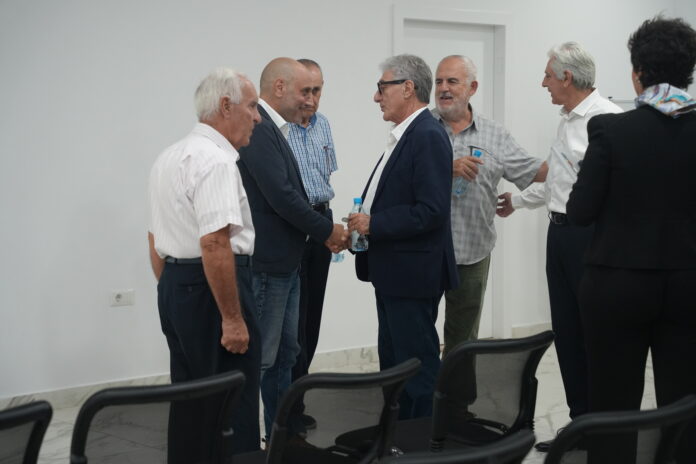
The event took place at the Chekka Development Council’s centre, in the presence of Chekka Mayor Engineer Gaby Boutros; Chekka’s mukhtars, Georges Saab and Ali Hajj; Batroun Civil Registry Officer Marlo Kfoury; Chekka Development Council President Simon Ghattas; and local residents, journalists and activists.
The meeting provided a detailed introduction to the Commission as an independent national institution and explained how citizens and residents can benefit from its mandate. It connected the Commission’s work to everyday concerns, from health, employment, the environment and access to information to justice safeguards and the rights of persons deprived of their liberty. It also addressed the importance of documenting violations and following them up, protecting public participation and peaceful dissent, and building sustained cooperation between the Commission and local civil society.
Abi Chahine: Chekka’s Environmental Concerns Are a Matter of Rights and Human Dignity
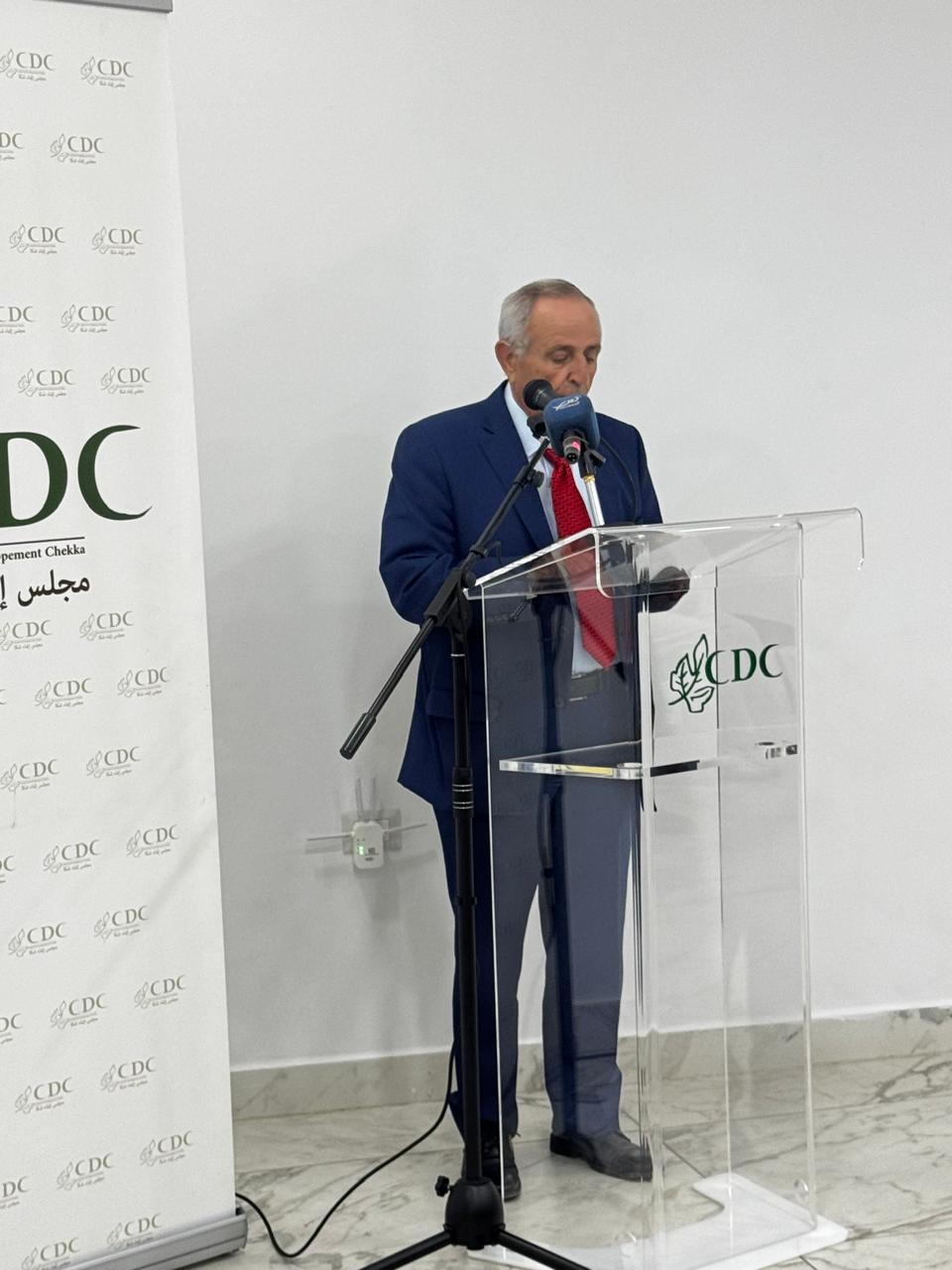
Pierre Abi Chahine, President of the Chekka Environmental Protection Association, welcomed participants and thanked the Chekka Development Council for helping organise and host the meeting. He acknowledged Al Kantar’s longstanding engagement with environmental issues, his attention to residents’ hardships and demands, and his contribution to highlighting pollution and waste issues and amplifying the voices of those affected.
He noted that this engagement had covered several environmental issues, including the 2015 waste crisis and the accompanying protests and calls for accountability and meaningful solutions. He emphasised the role of the media and civic action in keeping these issues under public scrutiny and ensuring continued follow-up.
Abi Chahine also discussed the Association’s work on the health and environmental impacts of asbestos contamination associated with the Eternit factory. He stressed the need to keep the issue firmly on the public agenda and to follow up on its consequences for former workers, their families, local residents and the surrounding environment.
He called for responsibility to be established, pollution sources and contaminated waste to be addressed through safe, specialised methods, and affected persons’ rights to healthcare, reparation and fair compensation to be upheld. He emphasised that the passage of time must not lead to the case being closed or the suffering of those affected being overlooked. Achieving justice, he said, requires acknowledging and documenting the harm, providing redress to rights holders, and taking the necessary measures to prevent continuing or recurring harm.
Abi Chahine stressed that pollution affects fundamental human rights, particularly the rights to health, a life of dignity, social justice and access to information affecting people’s lives and safety. He affirmed that defending the environment means defending residents’ health, lives and rights. Health concerns in Chekka, particularly concerns about cancer, require serious attention, responsible follow-up and clear answers grounded in reliable information and studies.
He noted that hosting Al Kantar offered an opportunity to examine the town’s concerns from a human rights perspective, learn about the Commission’s role and powers, and explore cooperation to protect residents’ rights and support environmental defenders.
Al Kantar: Introducing the Commission Begins with Reaching People in Their Communities
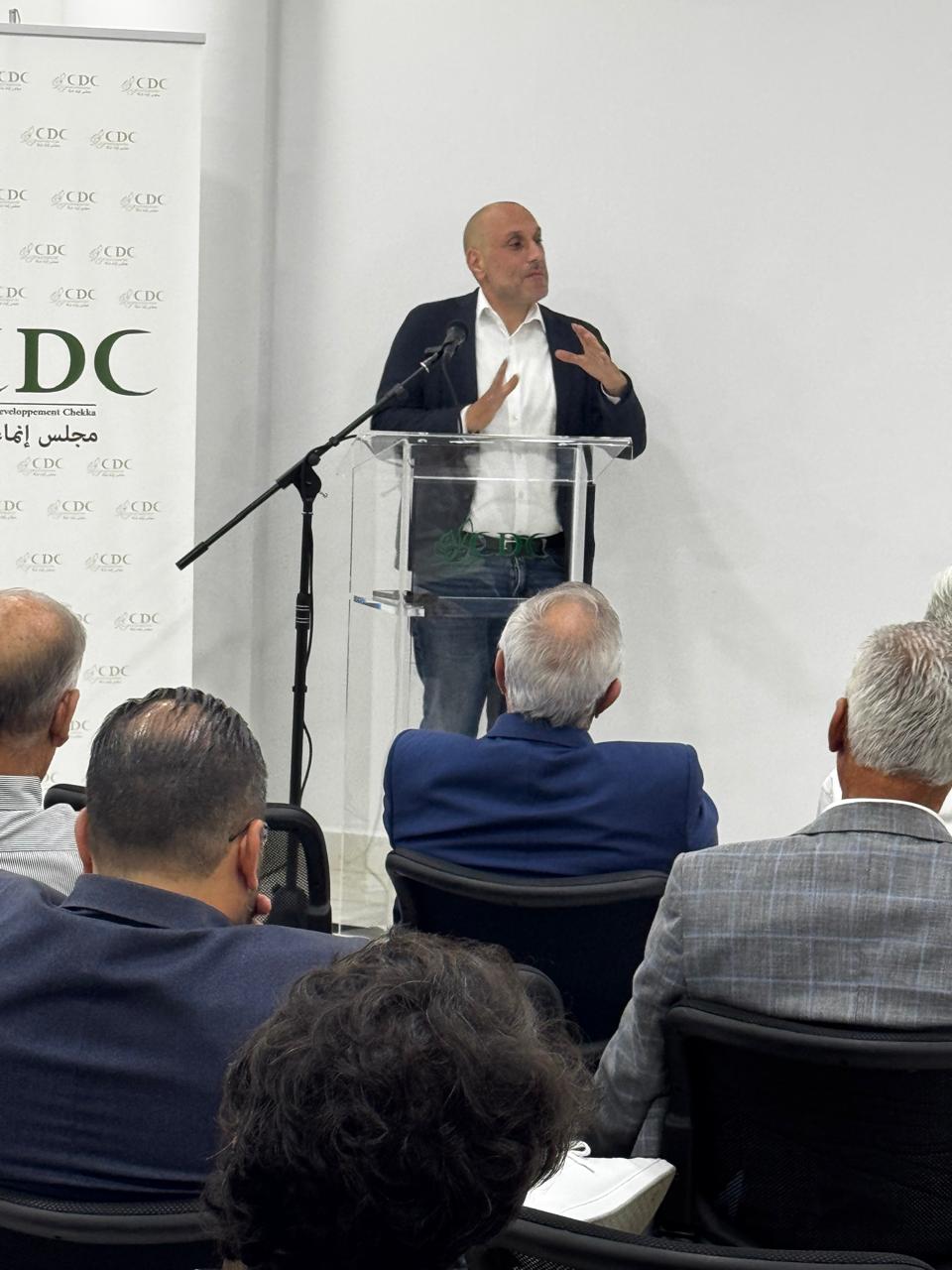
Al Kantar opened his remarks by thanking the Environmental Protection Association, the Chekka Development Council, the municipality, the mukhtars, community representatives and residents. He explained that the meeting formed part of an effort to visit communities across Lebanon and engage directly with people about the National Human Rights Commission.
He said such meetings were needed because many people still had basic questions: What is the Commission? How does it differ from associations and other organisations? What powers does it have? How can people contact it and benefit from its work?
He emphasised that a national human rights institution makes a practical difference when people understand its mandate and know how to reach it, and when it can listen to their concerns and follow them up. Raising awareness of the Commission, he said, is an ongoing responsibility requiring a presence in local communities and engagement with municipalities, associations, journalists, activists and rights holders.
An Independent National Institution Mandated to Protect and Promote Rights
Al Kantar outlined the Commission’s establishment under legislation adopted by Parliament in 2016. He explained that it is an independent national institution whose nature and powers differ from those of civil society associations and local and international organisations, while stressing the importance of cooperation and complementary efforts to protect and promote human rights.
He described the lengthy process between the adoption of the founding legislation, the appointment and swearing-in of members, and the completion of the regulations and procedures needed for the Commission to operate. Administrative, financial and institutional difficulties had affected its ability to carry out its duties. He noted that it now has premises and a team that enable it to expand engagement with citizens and residents and follow up on their concerns within its mandate.
He explained that the Commission’s mandate includes monitoring the human rights situation, documenting violations, receiving and following up on complaints, reviewing legislation and public policies and making recommendations, alongside raising awareness, promoting a culture of rights and strengthening cooperation with relevant stakeholders.
Explaining its quasi-judicial mandate, he said the Commission neither replaces the courts nor issues judicial rulings. Rather, it exercises its powers by examining complaints, gathering information, engaging with relevant bodies, undertaking mediation where appropriate, referring matters to competent authorities, and issuing reports and recommendations.
He noted that this role extends beyond individual complaints: a single case may reveal a recurring flaw in an administrative practice, public policy or law, requiring a broader response to help prevent further violations.
Independence, Resources and Accountability as Conditions for Effective Work
Al Kantar stressed that the Commission’s independence is essential to its effectiveness and its ability to monitor and address violations. Translating that independence into practice requires human and financial resources and the capacity to reach communities and follow up on cases.
He linked independence to transparency and accountability, affirming people’s right to know what the Commission is doing, the results of its follow-up, and the obstacles to implementing its recommendations.
“People have the right to ask us: What did you do with the complaint? What happened after the report? Which recommendation was implemented, and which remains pending? Trust is built through follow-up and by keeping rights holders informed about the progress of their cases.”
He emphasised that clear powers and procedures help establish a realistic and responsible relationship with complainants, based on explaining what the Commission can do, identifying follow-up steps and avoiding promises beyond its mandate or capacity.
Human Rights in Everyday Life and the Need to Confront Discouragement
Al Kantar addressed the discouragement many Lebanese express when human rights are discussed amid economic, social and security crises. He said this feeling reflected the scale of the difficulties people face and reinforced the need for institutional action to protect their rights.
He explained that human rights concern health, education, employment and social security; a healthy environment and access to information; treatment by public administrations; and the ability to object and claim one’s rights.
“Human rights begin with the details of people’s everyday lives: the air they breathe and the water they drink, their right to obtain information, to protest peacefully, and to participate in decisions affecting their health, livelihoods and children’s future,” he said.
He stressed the importance of countering resignation and despair through action and sustained follow-up. Protecting a right, stopping a violation or changing a harmful practice can make a tangible difference in people’s lives, he said, while accumulated results help strengthen confidence in the value of asserting rights and demanding accountability.
Complaint Mechanisms: Clear Documentation and Respectful Follow-up
On practical procedures, Al Kantar explained what information helps the Commission examine and follow up on complaints: identifying the facts, where and when they occurred, and the parties involved; gathering supporting documents; and indicating whether previous administrative or judicial remedies have been pursued.
He stressed that accurate information and a clear request help determine the appropriate follow-up, and that handling cases must respect affected persons’ privacy, the confidentiality of their data and their consent to its use.
He also underlined the distinction between the Commission’s mandate and judicial proceedings, emphasising respect for judicial independence and non-interference in the courts’ work, while following up on human rights matters within the Commission’s competence, including procedural safeguards and delays in resolving cases.
He noted that lengthy proceedings directly affect rights holders and may worsen their social, economic and psychological circumstances, making attention to justice safeguards an essential part of human rights protection.
Environmental Protection and Workers’ Rights Are Interconnected Responsibilities
Turning to environmental issues, Al Kantar said residents’ concerns relate to their rights to health, dignity and livelihoods. Addressing them requires effective oversight, access to information and reliance on evidence and specialist expertise.
“People must not be forced to choose between their health and their pay. We need policies and measures that protect workers in their workplaces, protect their families and surroundings, and require the relevant authorities to exercise oversight, provide information and address violations.”
He explained that distinguishing established facts from concerns requiring investigation is essential to serious follow-up. Where verification is needed, testing must be conducted, information gathered and clear answers provided to residents.
He linked public health protection to residents’ participation in decisions affecting their environment and livelihoods, emphasising that local knowledge and residents’ experiences are important in identifying problems and following up on solutions.
Chekka and Koura: Land Use, Quarries and the Public Interest
Addressing local issues in Chekka and Koura, Al Kantar called for clear questions about land use, the limits of industrial and extractive activities, compliance with approved classifications and maps, and the protection of areas designated as green belts or for other conservation purposes.
He noted that land ownership does not exempt owners from the laws and environmental and planning restrictions governing its use. Related decisions, he said, must be assessed in light of residents’ rights, the public interest and their effects on the area.
He discussed the importance of protecting public property and communal lands, safeguarding the rights of the State and local communities in resources extracted from them, and establishing responsibility for rehabilitating damaged sites.
He stressed that following up on these matters requires documents, maps and verifiable information identifying the activity, the parties involved, the grounds for objection and the demands being made, allowing for specific accountability and practical follow-up.
Nature Reserves: Enforceable Protection That Respects Local Communities’ Rights
Al Kantar discussed the Commission’s advisory opinions on the maps of eleven nature reserves in Lebanon and the strengthening of their protection. He explained that this work brings together environmental protection and scrutiny of legal and regulatory frameworks and their effects on people’s rights.
He added that hundreds of hectares of Horsh Ehden must not be lost to protection on the grounds that they fall within the administrative boundaries of a neighbouring town. The solution, he said, lies in a legislative amendment ensuring that Bshannata Forest receives protection equivalent to that afforded to Horsh Ehden.
He noted that effective protection requires clear boundaries, accurate maps and consistency between legal provisions and cadastral realities, alongside management, funding and implementation capacity. He highlighted the importance of clarifying ownership and resolving related issues in ways that respect rights and prevent disputes and encroachments.
He affirmed that involving local communities and drawing on their knowledge of natural sites contributes to fairer, more effective and sustainable protection, and that preserving these sites also concerns the rights of future generations.
Protecting Environmental Activists, Journalists and Human Rights Defenders
Addressing the protection of human rights defenders, Al Kantar emphasised that environmental activists, journalists, volunteers and residents who peacefully defend their communities’ rights play an essential role in protecting the public interest.
He explained that requesting information about pollution, documenting an encroachment or participating in peaceful action are exercises of the rights to expression, participation and access to information. Threats or intimidation arising from such activities must be taken seriously.
“A person does not need a card identifying them as a human rights defender for their voice to deserve protection. Anyone asking about polluted water, documenting an encroachment or requesting information is exercising a right that must be respected.”
He discussed the risks environmental defenders may face when their demands conflict with powerful economic interests, emphasising the connection between protecting natural sites and resources and protecting the people who defend them.
He stressed that accurate documentation and clearly stated facts and demands strengthen activists’ ability to communicate their concerns and follow them up, while helping build case files that competent authorities can examine and address.
Preventing Torture and Visiting Places of Deprivation of Liberty
Al Kantar outlined the role of the Committee for the Prevention of Torture as Lebanon’s national preventive mechanism under the Optional Protocol to the Convention against Torture, which Lebanon joined in 2008.
He explained that preventive work centres on identifying conditions that may allow torture or ill-treatment to occur and addressing them before they worsen, through visits, follow-up and recommendations.
He noted the Committee’s authority to conduct regular and unannounced visits to places of deprivation of liberty without requiring prior authorisation for each visit, examine conditions and conduct private interviews with detainees without supervision.
He explained that these powers are particularly important because of the vulnerability of persons deprived of their liberty and the difficulties they may face in making their voices heard. Visits allow scrutiny of detention conditions, healthcare, overcrowding, access to a lawyer, contact with family members and safety safeguards.
He stressed that preserving detainees’ dignity supports fair and sound investigations and complements crime victims’ rights to redress and accountability. Preventive responsibilities, he added, require attention to conditions and practices that may create opportunities for violations.
Documenting Violations of International Humanitarian Law and Protecting Victims’ Rights
Al Kantar addressed the Commission’s mandate to monitor and document violations of international humanitarian law during armed conflicts, referring to the repeated Israeli attacks on Lebanon since 2023 and the resulting deaths, injuries, captivity, and destruction of homes and facilities.
He explained that these events place a responsibility on the Commission to gather information, preserve evidence and document violations in support of victims’ rights and accountability processes, while retaining the information needed to pursue cases before competent bodies.
He referred to the Commission’s calls to activate international justice mechanisms, including accession to the Rome Statute of the International Criminal Court and acceptance of its jurisdiction through the mechanisms available under the Statute. He stressed the importance of combating impunity and enabling victims to access justice.
Securing Rights Through Institutions and the Law: Moving Beyond Wasta
Al Kantar discussed the effects of wasta—reliance on personal connections—and political intervention on people’s relationship with the State. Generations of Lebanese, he said, had become accustomed to seeking an influential person’s help to process paperwork, obtain a service or resolve a problem.
He stressed that people must be able to secure their rights through clear procedures and accountable institutions, with their cases handled on the basis of law and equality, preserving their dignity and strengthening their trust in the State.
He linked this goal to awareness, complaint mechanisms and follow-up, emphasising that knowing one’s rights and the bodies responsible for protecting them helps people assert those rights and hold those who fail in their duties accountable. Institutions, he said, must make themselves accessible, explain their procedures and fulfil their responsibilities.
Towards Sustained Cooperation Between the Commission and the Local Community
Al Kantar called for the meeting to serve as a starting point for practical, sustained cooperation between the Commission, associations and residents in Chekka, based on specific, documented local cases that clearly identify the facts, information gaps, relevant bodies and actionable demands.
He emphasised the importance of involving young people, women, workers and groups whose voices are less easily heard, and facilitating affected persons’ access to complaint mechanisms while respecting their privacy, the confidentiality of their information and their consent to its use.
He stressed that protecting human rights requires sustained efforts combining people’s knowledge and assertion of their rights, institutions’ fulfilment of their duties, and accountability for decisions and practices.
He concluded: “We want people to be able to say: I submitted a complaint, someone listened to me, I understood what would happen, and I knew where my case stood. Behind this simple statement lies a fundamental feeling: that a person matters in their own country.”
هذه المقالة متاحة أيضًا بـ:
 العربية (Arabic)
 Français (French)

