

A new resource helps national human rights institutions turn evidence on digital risks into practical recommendations, stronger oversight and protection for journalists and human rights defenders.
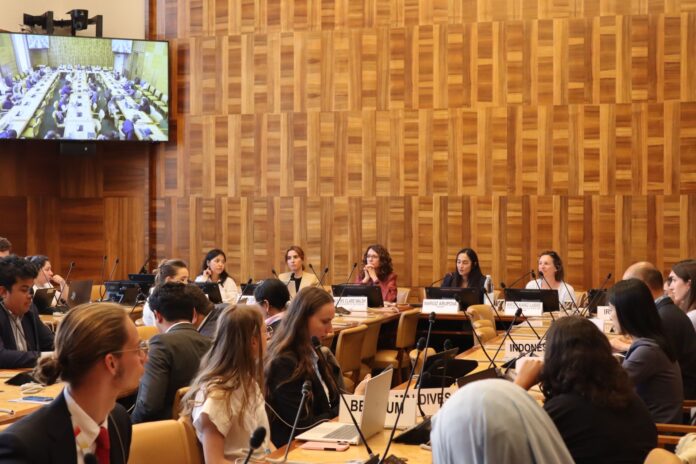
The Global Alliance of National Human Rights Institutions (GANHRI) and UNESCO have launched a joint brief during the 63rd session of the United Nations Human Rights Council, outlining how national human rights institutions (NHRIs) can strengthen their monitoring of human rights in the digital environment.
Entitled Strengthening NHRI Action Online and Offline through ROAM-X and Human Rights Impact Assessments in the Digital Age, the brief brings together two complementary tools: UNESCO’s Internet Universality ROAM-X Indicators and the UNESCO–OHCHR guidance Protecting Critical Voices: Guidance for Human Rights Impact Assessment on Digital Platforms.
During the launch, UNESCO highlighted the importance of reliable evidence on the digital environment, while GANHRI explained how NHRIs can apply these frameworks within their existing mandates.
Human rights protection extends online
Digital technologies shape access to information, public debate, essential services and participation in public life. They also create avenues for surveillance, harassment, discrimination and restrictions on expression.
The brief emphasises that these concerns fall within the established responsibilities of NHRIs. Complaints handling, investigations, legislative review and international reporting increasingly require institutions to examine how digital systems affect people’s rights.
These impacts are uneven. Women journalists and human rights defenders may face gender-based abuse; persons with disabilities may encounter inaccessible services; and marginalised communities may face barriers linked to connectivity, affordability, language or digital literacy.
Two tools, complementary purposes
UNESCO’s ROAM-X framework assesses national Internet environments through human rights, openness, accessibility and multistakeholder participation, alongside cross-cutting issues. It provides a basis for examining whether laws, policies and practices support inclusive digital development.
For NHRIs, this approach can help connect individual complaints to wider patterns. An investigation into inaccessible digital public services, for example, can examine affordability, disability access, language barriers and the availability of support.
The UNESCO–OHCHR guidance focuses on the human rights impacts of digital platforms, particularly risks affecting journalists and human rights defenders. Published in 2025, it sets out four stages: analysing the context, identifying risks and impacts, developing mitigation measures, and reviewing and updating the assessment.
Although primarily addressed to companies, the guidance also offers NHRIs a reference for examining platform practices, including content moderation, account restrictions, online harassment and access to remedies.
Relevance for Lebanon
For Lebanon, these tools offer a useful basis for strengthening attention to freedom of expression, privacy, access to information and the safety of journalists and human rights defenders.
Potential applications include documenting online threats, reviewing safeguards in digital legislation, examining barriers to public services, and convening dialogue among public authorities, civil society, media, technical experts and affected communities.
The frameworks can also help NHRIs develop evidence for submissions to the Universal Periodic Review, treaty bodies and UN Special Procedures, and monitor whether recommendations lead to improvements in practice.
The brief’s central message is clear: protecting rights in the digital environment requires evidence, meaningful participation and effective remedies. National human rights institutions have a vital role in ensuring that digital change strengthens people’s ability to exercise their rights.
هذه المقالة متاحة أيضًا بـ:
 العربية (Arabic)
  Français (French)

