
In light of the serious and unprecedented escalation in grave human rights violations in Lebanon, the National Human Rights Commission, including the Committee for the Prevention of Torture, announced that it has sent an urgent letter to His Excellency the Prime Minister, Judge Nawaf Salam, requesting immediate action at the international level through calling for an emergency session of the United Nations Human Rights Council in Geneva.
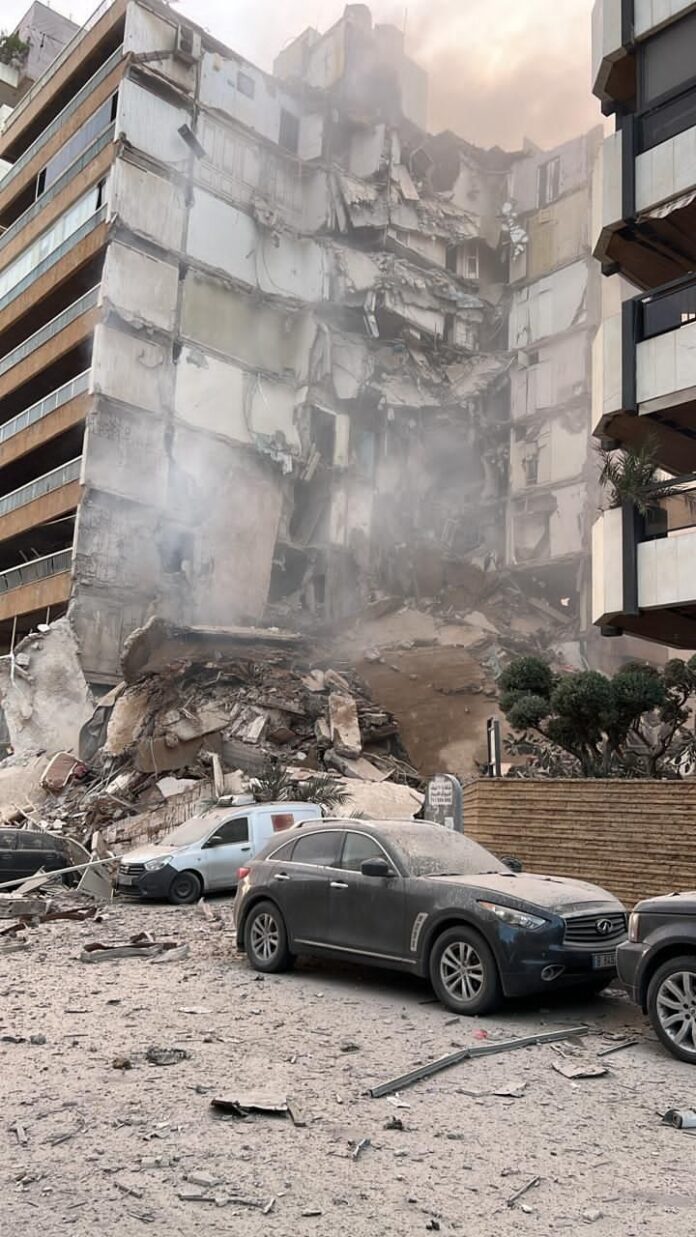
The Commission affirmed that this request comes in response to the escalating developments on the ground across various regions of Lebanon, which signal a dangerous deterioration in the human rights situation, particularly in light of indiscriminate and large-scale Israeli airstrikes, especially those carried out on April 8, 2026. Within approximately ten minutes, at least 48 areas were targeted, including densely populated residential neighborhoods and civilian infrastructure, across southern and northern Lebanon, Mount Lebanon, the Bekaa, as well as Beirut’s suburbs and central districts. These attacks resulted in the killing of at least 200 people and the injury of more than 1,000 others.
In its letter, the Commission emphasized that the responsibility of the Lebanese state, in line with its international obligations, requires immediate action to activate international accountability mechanisms, particularly through the Human Rights Council, which holds a clear mandate to address emergency situations and serious, systematic violations.
In this context, the Commission called on the Lebanese government to mandate the Permanent Mission of the Lebanese Republic to the United Nations in Geneva to undertake urgent diplomatic action and mobilize international support for convening a special session of the Human Rights Council, with the aim of placing the international community before its legal and moral responsibilities regarding the situation in Lebanon.
The Commission also requested that the Lebanese Mission work toward the adoption of two draft resolutions during this emergency session, forming a comprehensive framework for accountability and protection.
The first draft resolution provides for the establishment of an independent international commission of inquiry on Lebanon, mandated to investigate all alleged human rights violations and abuses, violations of international humanitarian law, and crimes under international law committed by all parties since 7 October 2023, including the recent escalation of hostilities. Its purpose would be to document facts, determine responsibilities, and ensure accountability.
The draft resolution stipulates that this international mechanism should be independent, impartial, and adequately resourced. It would be tasked with collecting and analyzing evidence, identifying individual responsibilities where possible, and preserving such evidence in accordance with the highest international standards, enabling its use in national or international judicial proceedings.
The resolution further emphasizes the need to establish a central evidence repository under the Office of the United Nations High Commissioner for Human Rights, to ensure the protection of information and facilitate its use in future accountability processes, in addition to submitting periodic reports to the Human Rights Council on progress achieved.
The second resolution calls for the immediate and unconditional release of all Lebanese detainees arbitrarily held by Israel, and for clarification of the fate and whereabouts of all missing Lebanese persons. It also calls for urgent measures to ensure respect for the Geneva Conventions and international human rights law in this context.
The Commission stressed that the adoption of these two resolutions would constitute a fundamental step toward strengthening international accountability, deterring violations, and ensuring the protection of civilians in Lebanon, particularly in light of the continued impunity for serious violations.
The Commission also called on the Council of Ministers to adopt a decision mandating the Ministry of Foreign Affairs and Emigrants, pursuant to Article 12(3) of the Rome Statute of the International Criminal Court, to submit a declaration to the Registrar of the Court accepting its jurisdiction over the investigation and prosecution of all crimes committed on Lebanese territory since 7 October 2023 that fall within its jurisdiction. This includes crimes targeting journalists, paramedics, and civil defense volunteers. The Lebanese government would also commit to full cooperation with the Court in accordance with Chapter IX of the Statute.
The Commission noted that the Lebanese government had previously adopted a similar decision on 24 April 2024, following the deliberate killing of journalist Issam Abdallah by Israeli forces while performing his professional duties on 13 October 2023. However, the government later reversed this decision without providing any justification or explanation for this retreat, which the Commission considers both concerning and unacceptable.
In this context, the Commission called on the international community, particularly member states of the Human Rights Council, to uphold their responsibilities in protecting human rights and to support efforts aimed at establishing independent mechanisms for investigation and accountability.
The Commission concluded its statement by affirming that Lebanon, which is facing one of the most severe humanitarian and human rights crises in its modern history, requires effective international solidarity and urgent action to put an end to ongoing violations, ensure justice for victims, and protect human rights in accordance with international standards.
هذه المقالة متاحة أيضًا بـ: العربية (Arabic) Français (French)

