

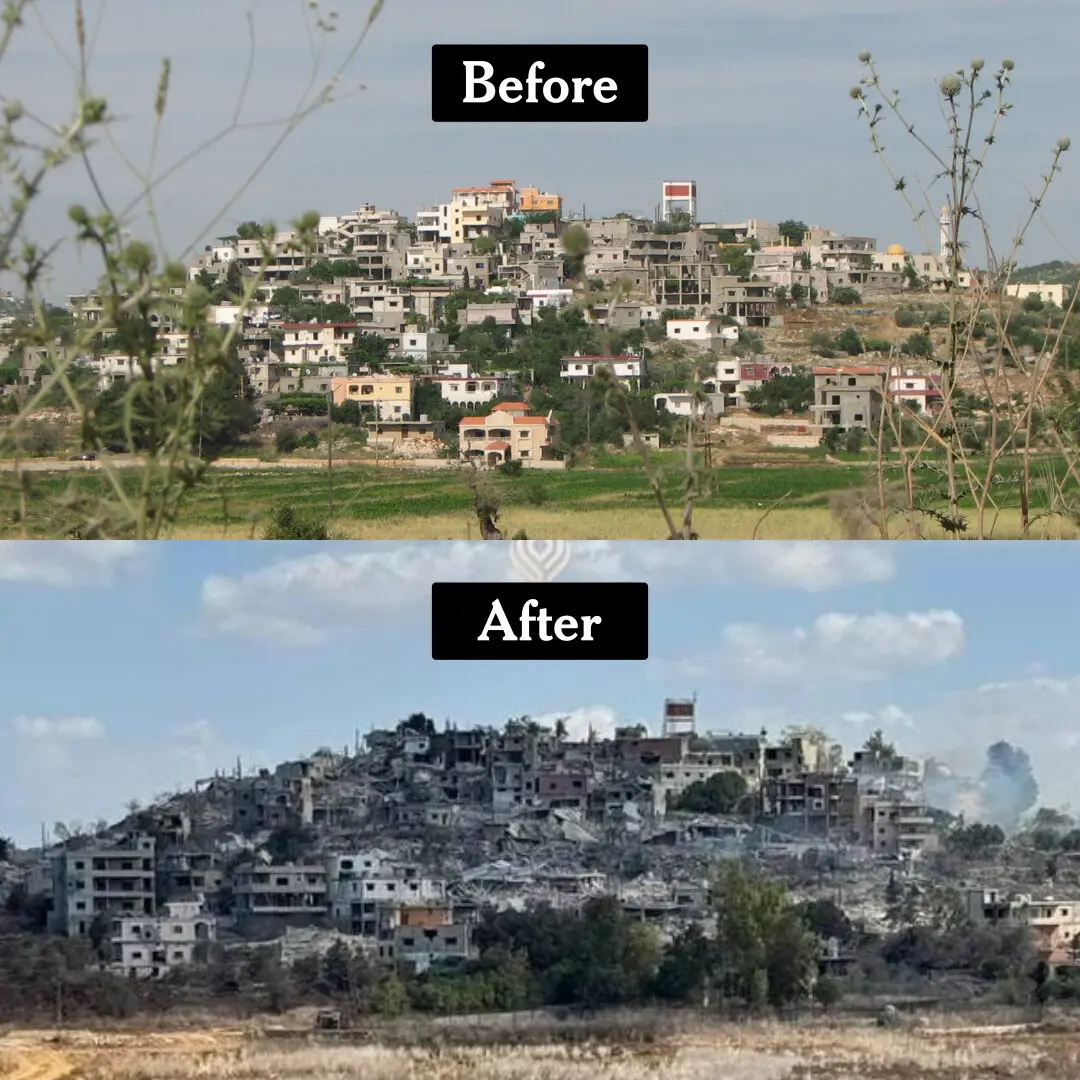
At least 1,085 buildings have been destroyed or badly damaged since Israel’s invasion, including many in controlled demolitions, a New York Times analysis shows.
Satellite imagery and videos show widespread destruction in six villages along Lebanon’s southern border, revealing 1,085 buildings that have been leveled or badly damaged since its Oct. 1 invasion.
The images offer only a glimpse at the situation in southern Lebanon. There has been little access to the area since the invasion began and the extent of the damage is unclear.
According to The Times’s latest analysis, one village, Mhaibib, appears to have been virtually flattened, with only a handful of buildings still standing. In five other villages and towns, entire neighborhoods were reduced to rubble.
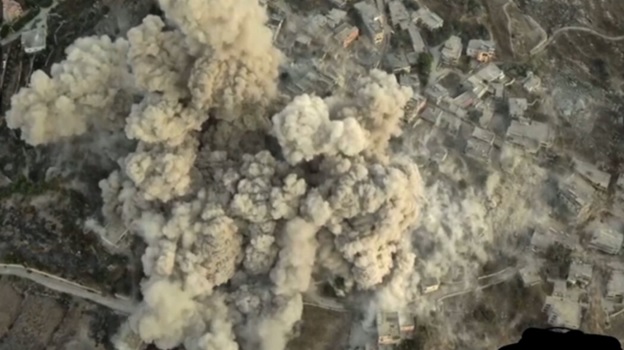
Videos posted to social media by the Israeli military and individual soldiers, and verified by The Times, show that at least 200 of the buildings were blown up in controlled demolitions, in which soldiers place and then remotely detonate explosives. Controlled demolitions were seen in five of the six towns: Blida, Kafr Kila, Mhaibib, Ramyah and Aita al Shaab. It couldn’t be determined how other buildings were damaged.
An Israeli military spokesperson did not directly address the destruction in specific villages, saying only that Israel was striking military targets to “counter the continuing threat Hezbollah poses to Israeli homes and families.”
In statements posted to social media, the Israeli military said that troops had found and destroyed Hezbollah tunnels underneath homes and other buildings in Meiss al-Jabal, Kafr Kila and Mhaibib, and under a hill in Aita al Shaab. It wasn’t possible to independently verify whether footage of tunnels was filmed in those towns. The Israeli military has also posted footage of tunnels it says were discovered elsewhere along the Lebanon-Israel border.
Some international law experts have raised questions about the widespread nature of the destruction. Tom Dannenbaum, an associate professor of international law at Tufts University, said that nonmilitary structures may be targeted only if they are being used militarily, or if Israel has specific information that they are intended to be used that way. “It is not permitted to target an entire area in which there is a mix of military objectives and civilian objects,” he said.
The most severe destruction has been in the town of Meiss al-Jabal, which had a prewar population of about 8,000. At least 311 buildings were destroyed or badly damaged, The Times found.
In the nearby town of Blida at least 168 buildings were destroyed, with a mosque in an ancient building flattened and its minaret toppled.
In Aita al-Shaab, satellite imagery shows at least 206 buildings were destroyed, virtually flattening the entire eastern part of the village.
In Kafr Kila, the largest of the six communities that The Times analyzed, with a prewar population of about 10,000, at least 284 buildings were badly damaged or destroyed.
The small village of Mhaibib was also almost entirely destroyed in a controlled demolition, videos show. Satellite imagery shows that at least 76 buildings were destroyed, and only a few structures were still standing. A centuries-old shrine in the village was partly destroyed.
Satellite imagery showed that at least 40 buildings were destroyed in the village of Ramyah. One verified video posted to Instagram by an Israeli soldier, and posted to X by the Palestinian journalist Younis Tirawi, shows soldiers counting down before detonating a large section of the village. The soldiers are heard cheering as a large smoke plume rises.
هذه المقالة متاحة أيضًا بـ:
 العربية (Arabic)

