
The National Human Rights Commission of Lebanon (NHRC), welcomes the recent measures taken by UNESCO to strengthen the protection of Lebanon’s cultural heritage amid ongoing hostilities.
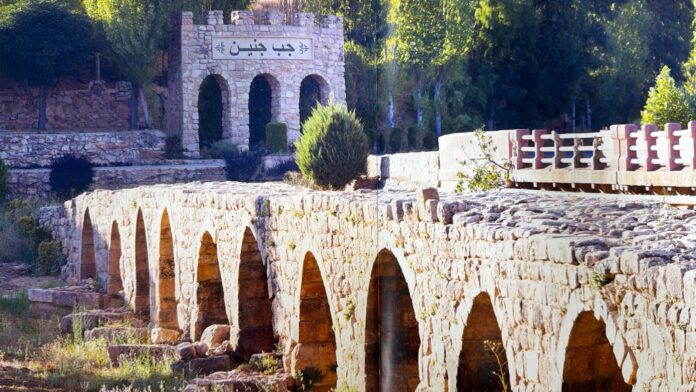
Following an extraordinary session of the Committee for the Protection of Cultural Property in the Event of Armed Conflict, convened on 1 April 2026 UNESCO has granted provisional enhanced protection to 39 Lebanese cultural properties, alongside emergency international financial assistance exceeding USD 100,000 to support urgent safeguarding measures.
The Commission underscores that these sites now benefit from the highest level of legal protection under international humanitarian law, particularly the 1954 Hague Convention and its 1999 Second Protocol. Any attack on or military use of these protected cultural properties may constitute serious violations of international law and could give rise to individual criminal responsibility.
The NHRC further notes that several of these sites include globally significant heritage locations such as Tyre, where damage has already been confirmed through satellite monitoring conducted in cooperation with the United Nations Satellite Centre (UNOSAT).
The Commission recalls that, on 18 November 2024, at the request of the Lebanese authorities, UNESCO convened a prior extraordinary session at its headquarters in Paris, resulting in the provisional inclusion of 34 Lebanese cultural properties on the International List of Cultural Property under Enhanced Protection.
This earlier decision included major World Heritage sites such as Baalbek and Tyre, located in areas where hostilities and airstrikes have been reported.
The Commission emphasizes that the protection of cultural heritage is inseparable from the protection of human rights. Cultural property embodies the identity, dignity, and collective memory of communities. Its destruction not only violates international legal obligations but also undermines social cohesion, resilience, and prospects for peace and recovery.
In this context, the NHRC:
- Commends UNESCO’s efforts, including satellite monitoring, emergency response measures, and cooperation with Lebanese authorities to secure cultural assets and museum collections,
- Highlights the importance of enhanced protection status as a legal safeguard and a clear signal to all parties of their obligations under international law,
- Welcomes the provision of technical and financial assistance to strengthen risk preparedness, site management, and training for cultural professionals and relevant stakeholders.
The Commission calls on all parties to the conflict to:
- Strictly comply with their obligations under international humanitarian law, including the protection of cultural property,
- Refrain from targeting or using cultural sites for military purposes,
- Take all feasible precautions to avoid damage to heritage sites, particularly those located in or near populated areas,
- Ensure accountability for any violations, including through national and international judicial mechanisms.
The NHRC also urges the Lebanese authorities and the international community to reinforce cooperation with UNESCO and mobilize additional resources to support the ongoing emergency programme covering culture, education, and information sectors.
At a time of escalating violence, protecting Lebanon’s cultural heritage is not only a legal duty but a moral imperative. Safeguarding these sites is essential to preserving the country’s identity and laying the foundations for recovery, justice, and lasting peace.
هذه المقالة متاحة أيضًا بـ:

