
The international conference launching the “100 Lawsuits in 100 Days” campaign opened today in Beirut, bringing together international legal experts, parliamentarians, human rights institutions, and lawyers from Lebanon and abroad to strengthen legal efforts aimed at pursuing accountability for alleged war crimes and crimes against humanity committed in Lebanon since October 2023.
The two-day conference, held at the Serenada Hotel in Hamra, is jointly organized by the International Alliance Against Impunity and the National Assembly for the Protection of Human Rights. Participants are discussing ways to support victims’ access to justice through domestic and international legal mechanisms, including the principle of universal jurisdiction.
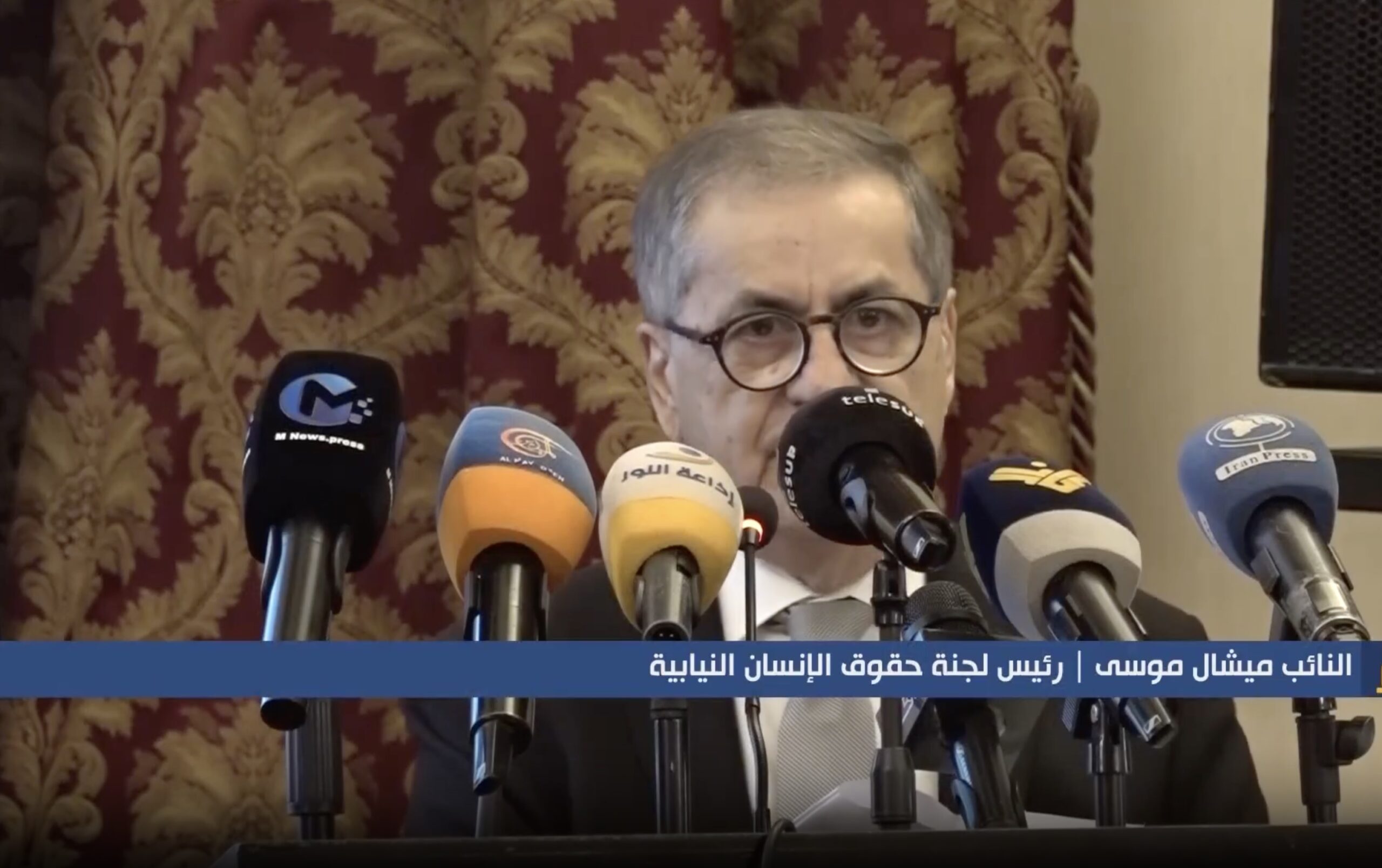
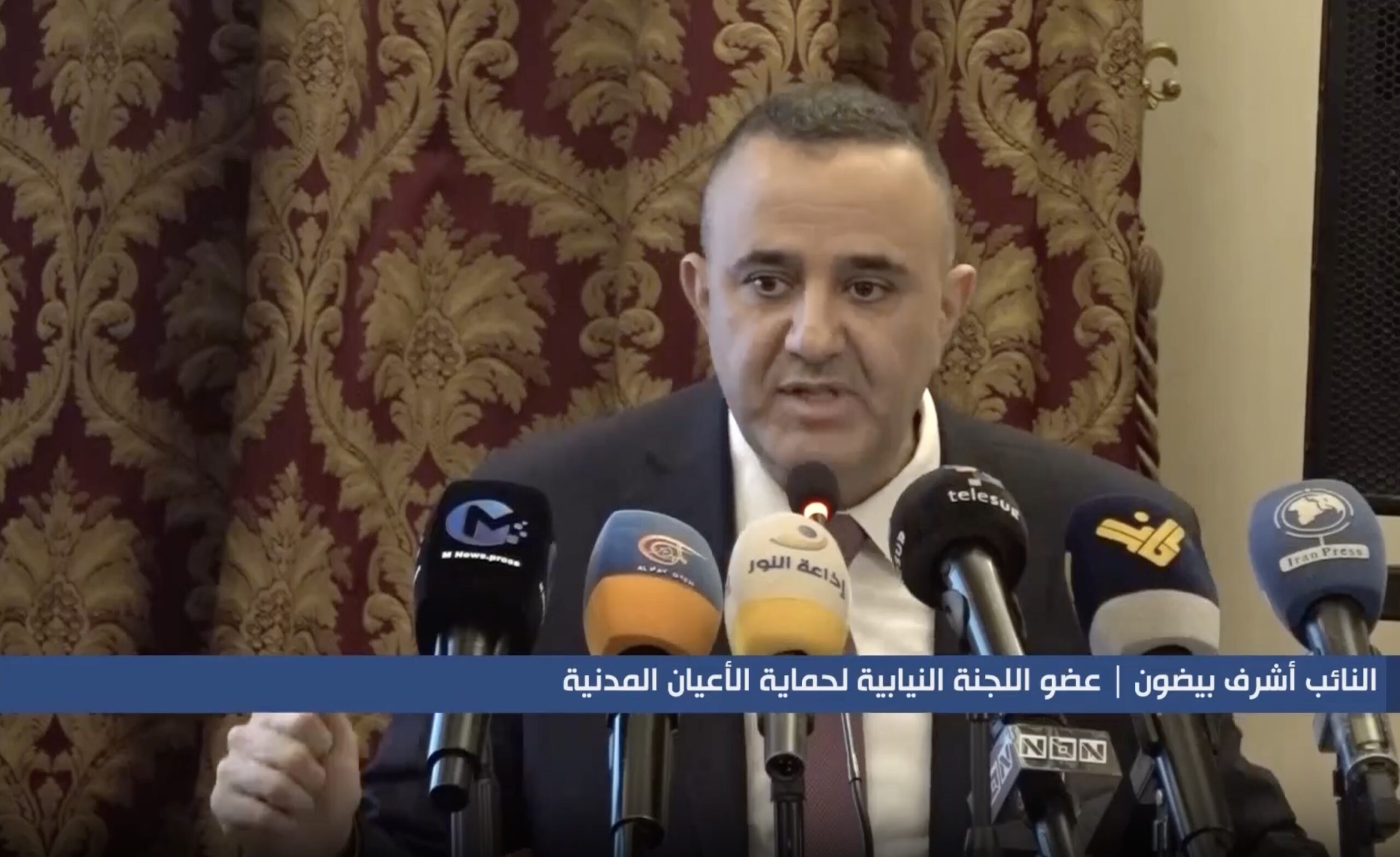
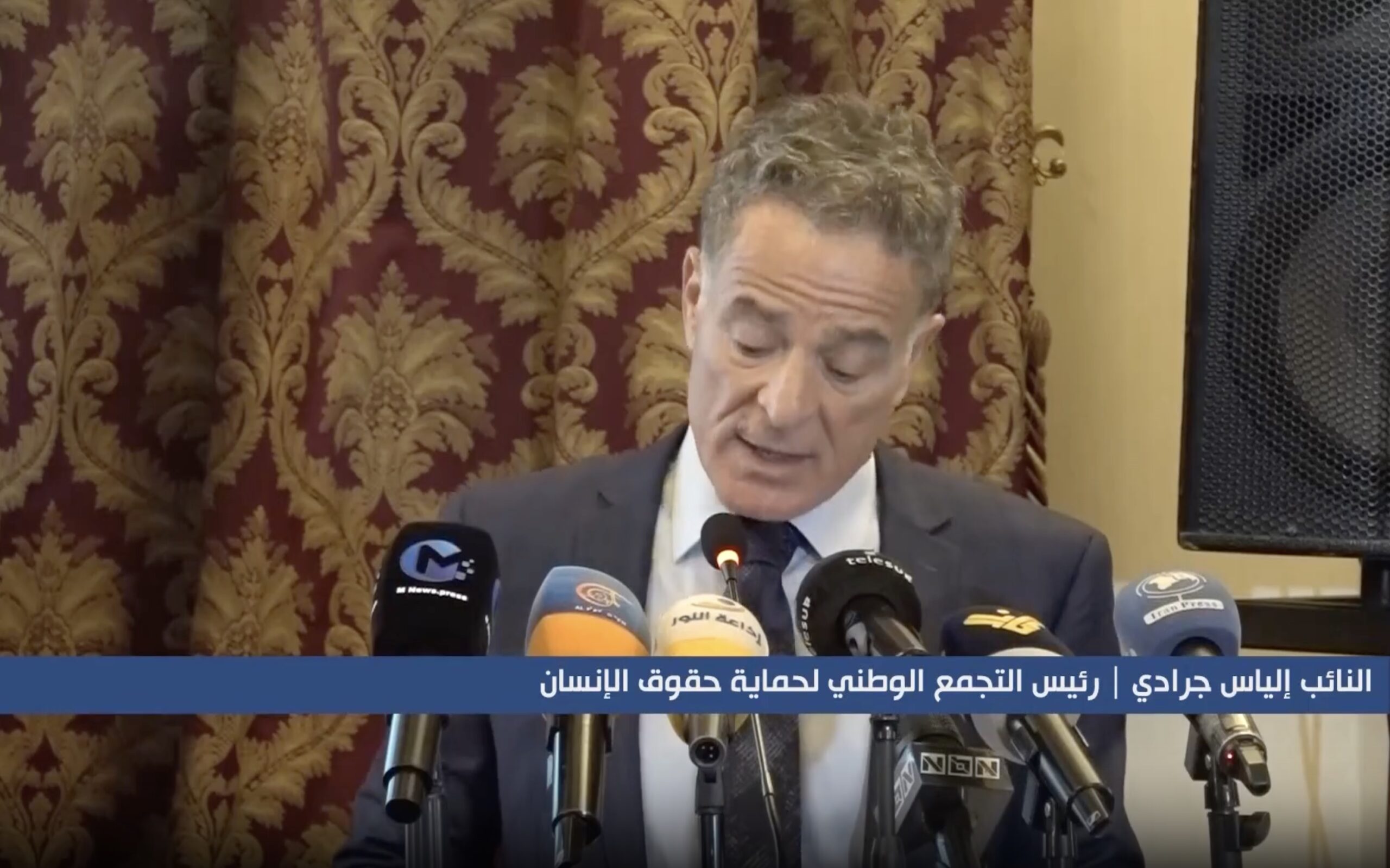
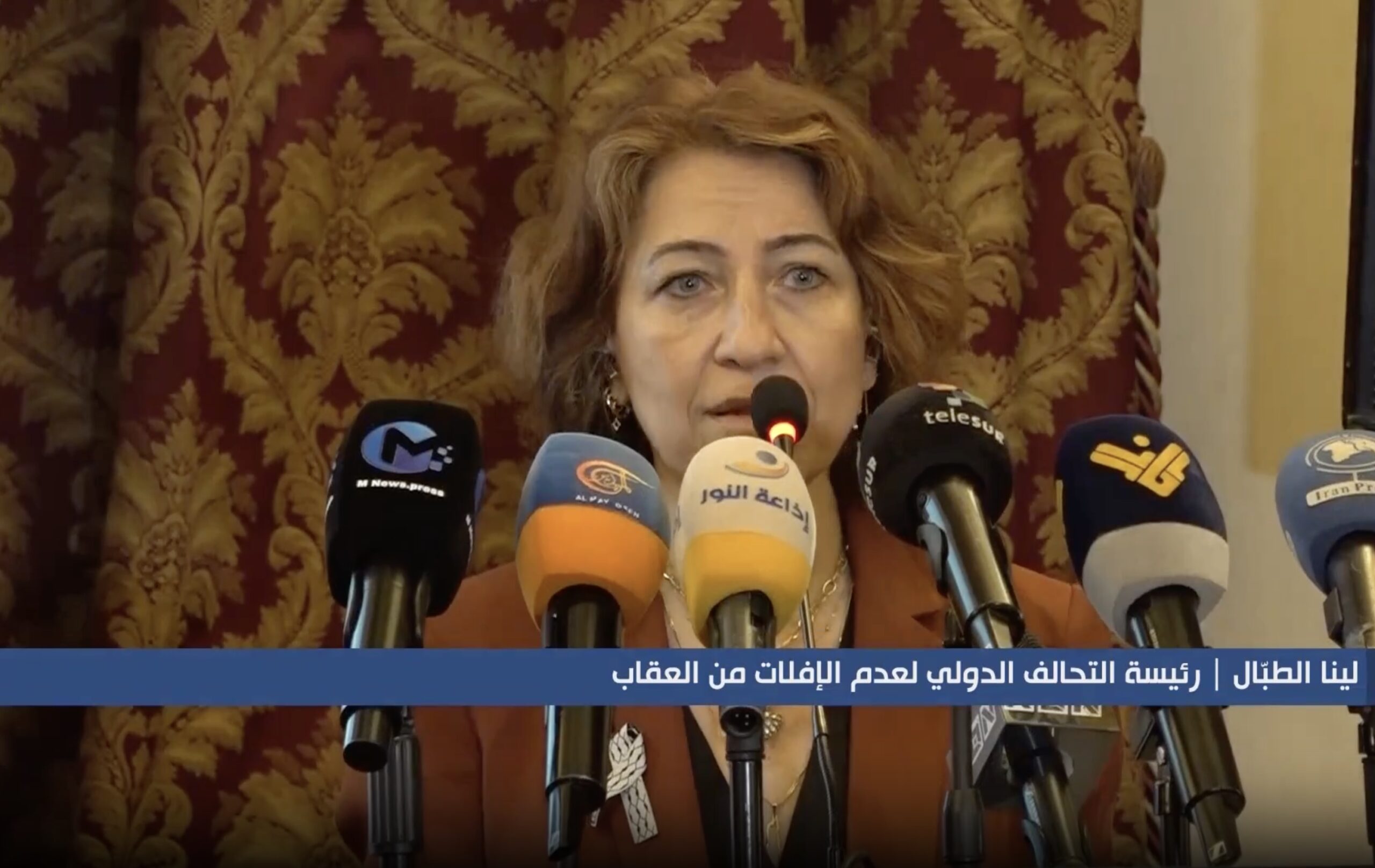
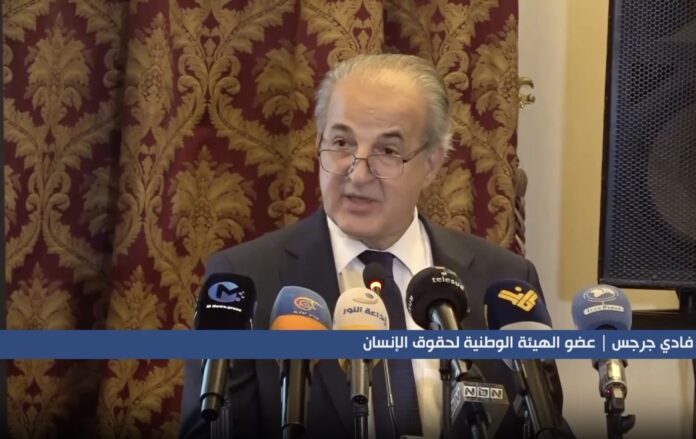
The opening session, entitled “Uniting International Efforts to Ensure Accountability and End Impunity for Crimes Committed in Lebanon,” featured a documentary produced by Lebanon’s National Council for Scientific Research documenting the impact of the hostilities, followed by addresses from Dr. Lina Tabbal, President of the International Alliance Against Impunity; Dr. Fadi Gerges, President of the National Human Rights Commission of Lebanon including the Committee for the Prevention of Torture (NHRC-CPT); MP Dr. Ashraf Baydoun; MP Dr. Michel Moussa, Chair of the Parliamentary Human Rights Committee; and MP Dr. Elias Jaradeh, President of the National Assembly for the Protection of Human Rights.
Speakers stressed that the campaign seeks to support victims of serious violations of international humanitarian law and international human rights law by preparing legal case files, facilitating litigation before competent national and foreign courts, and promoting the use of universal jurisdiction as a legal avenue for prosecuting international crimes.
In his keynote address, Dr. Fadi Gerges described the “100 Lawsuits in 100 Days” initiative as an important step toward translating international law into concrete judicial action. He emphasized that justice cannot be achieved through political declarations alone but requires effective legal proceedings capable of holding perpetrators of international crimes accountable.
Dr. Gerges stated that the events witnessed in Lebanon since October 2023 warrant independent legal scrutiny under international law, stressing that the legal characterization of alleged violations should be determined according to the applicable rules of international humanitarian law, the Geneva Conventions, the Rome Statute of the International Criminal Court, and other relevant international legal instruments.
He reaffirmed that victims’ access to justice is a fundamental and inalienable right that should not be restricted by political or diplomatic arrangements, arguing that the prosecution of alleged war crimes and crimes against humanity constitutes the implementation of international legal obligations rather than a political or hostile act.
Dr. Gerges also highlighted the importance of universal jurisdiction as one of the most significant legal tools available when accountability cannot be achieved domestically. He called on the Lebanese Parliament to adopt the draft International Crimes Law incorporating genocide, crimes against humanity, and war crimes into Lebanese legislation, thereby strengthening the capacity of Lebanese courts to prosecute such crimes.
He further urged Lebanon to continue examining legal avenues for accepting the jurisdiction of the International Criminal Court over crimes committed on its territory and to make full use of the mechanisms available under international law to combat impunity.
Emphasizing that the success of any judicial process depends on the quality of evidence, Dr. Gerges underlined the importance of complying with international standards for documenting violations, preserving evidence, maintaining the chain of custody, and protecting victims and witnesses.
He also announced that the National Human Rights Commission would continue to make its expertise available to lawyers, victims’ families, and civil society organizations. He noted that the Commission’s documentation, fact-finding activities, evidence collection, and legal reporting could provide valuable support to future judicial proceedings, provided that international standards governing evidence preservation and victim protection are fully respected.
On the sidelines of the conference, the National Assembly for the Protection of Human Rights and the International Alliance Against Impunity signed a cooperation agreement aimed at strengthening international legal cooperation, exchanging expertise, and supporting the preparation of litigation concerning alleged international crimes.
The conference also features a practical legal component designed to initiate judicial proceedings with victims. Throughout the day, three teams of international and Lebanese lawyers are conducting confidential meetings with Lebanese victims—particularly dual nationals—to record testimonies, collect evidence, complete the necessary legal documentation, and sign powers of attorney in preparation for filing cases before competent judicial authorities.
The first team, operating under the Paris Justice Office, is preparing French-Lebanese legal complaints on behalf of Lebanese victims holding French nationality. The investigation team comprises Jean-Louis Chalanset, Pedro Andújar, Dr. Lina Tabbal, and Ibrahim Marzouk. The team is conducting confidential interviews, gathering identity documents and supporting evidence, and obtaining legal mandates for the submission of complaints to the War Crimes and Crimes Against Humanity Unit of the Office of the Prosecutor in Paris.
The second team, working through the Office for the International Criminal Court and International Justice, is assisting Lebanese victims holding foreign nationalities other than French nationality, as well as victims whose cases may fall within international jurisdiction mechanisms. The legal team includes Azril Bin Mohamed Amin, Fahmi Bin Abdul Muin, Luqman Bin Mazlan, Norliana Binti Zulkifli, and Tara O’Grady. Their work involves preparing legal case files, collecting witness statements and legal authorizations, with a view to submitting complaints through appropriate international accountability mechanisms, including the International Criminal Court (ICC) where the applicable legal requirements are met.
The third team operates through the Environmental Crimes Office and focuses on allegations relating to ecocide, the use of glyphosate, and prohibited weapons. The team consists of Lebanese lawyers working alongside legal experts and practitioners from Malaysia and Indonesia, including Dhir Khizwan Bin Abdul Halim, Ahmad Nazrin Bin Abu Bakar, Professor Rahmah Bin Mohamed, Wan Roseli Binti Majid, and Farahah Binti Mohamed Nazri. The team is conducting technical interviews with farmers, engineers, and civilians from southern Lebanon while collecting evidence concerning the alleged use of glyphosate, white phosphorus, and environmental destruction, with the aim of assessing these acts under international humanitarian law and international environmental law.
هذه المقالة متاحة أيضًا بـ:

