

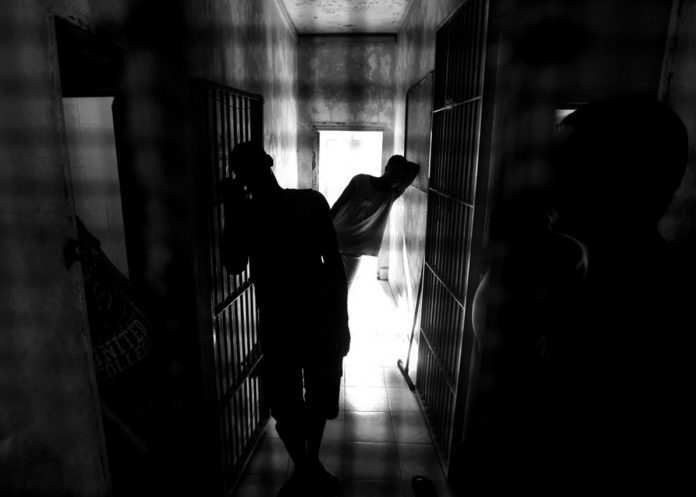
The President of the National Human Rights Commission in Lebanon, including the Committee for the Prevention of Torture (NHRC-CPT), Dr. Fadi Gerges, visited the President of the Beirut Bar Association, Mr. Imad Martinos, yesterday, Thursday, at the Bar Association’s headquarters in Beirut. The meeting brought together representatives of both institutions to strengthen institutional cooperation in protecting the rights of persons deprived of liberty, reinforcing the right to legal defence, and promoting access to justice.
The meeting reviewed the principal concerns identified by the Commission during its regular monitoring visits to prisons and detention facilities, particularly those relating to the effective exercise of the right to legal counsel, the implementation of procedural safeguards provided for under Article 47 of the Lebanese Code of Criminal Procedure, access to legal aid, and practical challenges encountered by detainees and lawyers throughout criminal proceedings.
Dr. Gerges emphasized that safeguarding the rights of persons deprived of liberty constitutes one of the Commission’s core mandates under Law No. 62/2016. He stressed that access to legal counsel from the earliest stages of detention is a fundamental component of the right to a fair trial and the rule of law, noting that close cooperation with the Beirut Bar Association is essential to ensuring these safeguards are effectively implemented in practice.
Participants discussed a number of issues identified through the Commission’s monitoring activities, including the need to strengthen the practical implementation of Article 47 of the Code of Criminal Procedure to ensure that detainees are promptly informed of their rights, are able to communicate with a lawyer without delay, and benefit from the presence of legal counsel during questioning in accordance with Lebanese law.
The meeting also examined the functioning of the legal aid system in light of interviews conducted by the Commission with detainees, which revealed that many were unaware of their right to request a lawyer through legal aid where they lacked the financial means to retain private counsel. Participants also discussed practical challenges affecting the referral of legal aid requests and communication with the Legal Aid Committee, which may hinder the effective enjoyment of the right to defence from the earliest stages of criminal proceedings.
In addition, the participants discussed observations concerning delays in the execution of certain judicial release orders. They underscored the importance of ensuring the immediate enforcement of court decisions ordering release while, at the same time, safeguarding lawyers’ professional rights in accordance with applicable legal and professional standards, thereby maintaining an appropriate balance between the protection of individual liberty and respect for the legal profession.
The meeting further addressed allegations relating to certain professional practices brought to the Commission’s attention during its monitoring work. Both parties agreed that any such allegations should be addressed through the appropriate legal and institutional mechanisms, while fully respecting the independence of the Bar Association, due process guarantees, and the presumption of innocence.
The two institutions agreed to strengthen their cooperation through the establishment of a permanent coordination mechanism, the designation of focal points within both institutions, and the creation of a joint committee to meet regularly and address issues relating to the right to defence and legal aid. They also agreed to enhance the implementation of Article 47 of the Code of Criminal Procedure, improve coordination with the Legal Aid Committee, and organize joint awareness-raising and training programmes for lawyers on the rights of persons deprived of liberty and relevant national and international standards.
Furthermore, the parties agreed to establish a joint referral and complaints mechanism to ensure the prompt follow-up of allegations relating to the rights of detainees or the exercise of lawyers’ professional duties within places of detention. They also agreed to strengthen cooperation with the Child Rights Committee of the Beirut Bar Association on matters concerning children in conflict with the law and access to legal assistance for juvenile detainees.
At the conclusion of the meeting, Dr. Fadi Gerges reaffirmed the importance of sustained dialogue and institutional cooperation between the National Human Rights Commission and the Beirut Bar Association as an essential means of strengthening fair trial guarantees, promoting the rule of law, protecting the rights of persons deprived of liberty, and advancing Lebanon’s justice system in line with the Constitution and international human rights standards.
هذه المقالة متاحة أيضًا بـ:
 العربية (Arabic)
  Français (French)

