
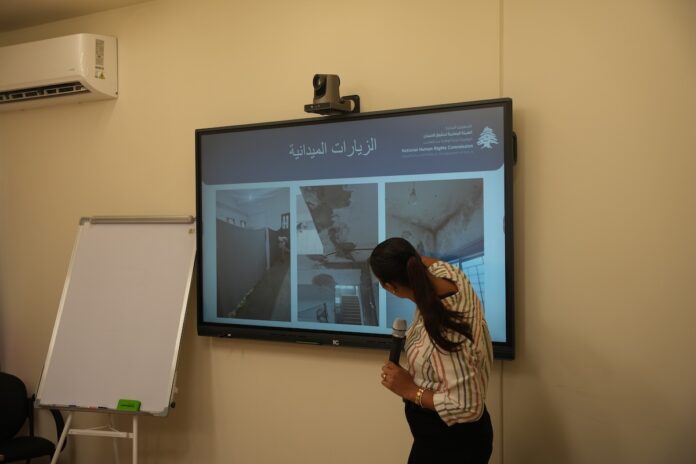
The National Human Rights Commission, which includes the Committee for the Prevention of Torture, organized at its headquarters in Beirut a specialized training seminar entitled “Shelters: Rights and Humanity”, as part of the project to promote and protect the rights of internally displaced persons in Lebanon, funded by the United Nations Development Programme (UNDP).
The seminar aimed to strengthen the capacities of staff working in shelters to understand the rights of internally displaced persons and the mechanisms for protecting those rights. It also sought to translate international and national law, as well as relevant standards, into practical tools that can be used in shelter management, service delivery, risk monitoring, and day-to-day decision-making affecting the dignity, safety, and rights of displaced persons.
The seminar brought together representatives from the Ministry of Social Affairs and its centers in several Lebanese regions, as well as social workers, coordinators, project managers, and representatives of local institutions and associations involved in shelter management and the provision of humanitarian and social services. These included the Makhzoumi Foundation, Al-Farah Social Foundation, The Socio-Economic Action Collective (SEAC), Migration Services and Development (MSD), and Amel Association International.
The Commission’s project team, comprising Project Coordinator Nicole Ghanem and research team members Aeda Al Mahmoud, Stephanie AboulHosn, Palig Taslakian, Michelle El Kawak, Vanessa Kllas, Zein Ayoub, Ahmad Al-Sayyed Mortada, and Lynn Hneine, presented the monitoring methodology and field findings and discussed their legal and human rights implications with the participants.
A Training Programme Moving from Monitoring to Reform
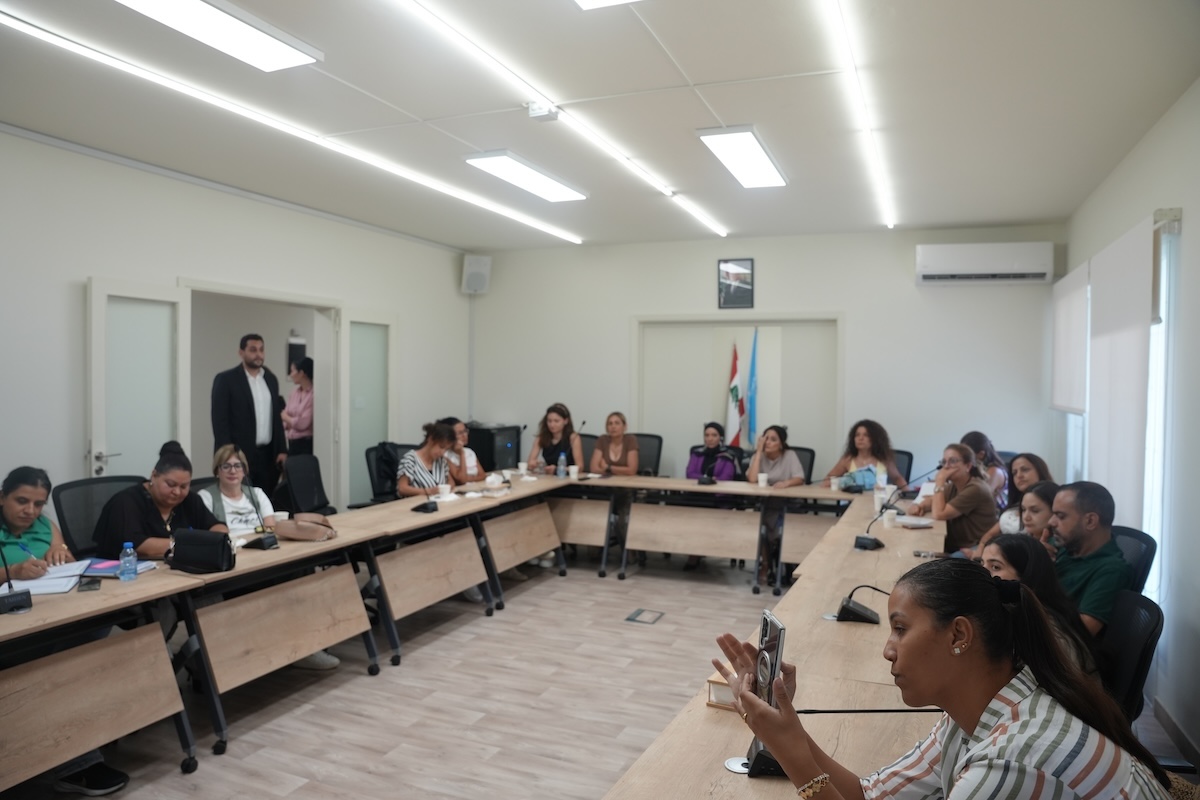
he training programme was structured around three interconnected sessions. The first session, entitled “Findings from the Monitoring of Shelters: The Human Rights Situation and Challenges on the Ground,” addressed the monitoring methodology adopted by the Commission, the key findings drawn from field visits, and the challenges facing displaced persons and staff working in shelters.
The second session was devoted to “The Legal Framework for Protecting the Rights of Displaced Persons: Examining Monitoring Findings in Light of International and National Standards.” It focused on analysing field observations and findings on the basis of international human rights law, international humanitarian law, the United Nations Guiding Principles on Internal Displacement, and the Lebanese Constitution and legislation.
The third session, held under the title “From Monitoring to Impact: Recommendations, Institutional Reform, and Strengthening a Human Rights-Based Response,” focused on discussing the practical measures required to address gaps, define responsibilities, strengthen coordination, and translate monitoring findings into actionable recommendations, policies, and measures.
This sequence reflected the Commission’s methodology of moving from documenting facts and conditions on the ground to identifying the rights affected and assessing the extent to which practices comply with legal obligations, ultimately leading to the formulation of outcomes aimed at institutional reform and the development of a more effective and sustainable response.
Protecting Displaced Persons Is a Shared Legal Responsibility
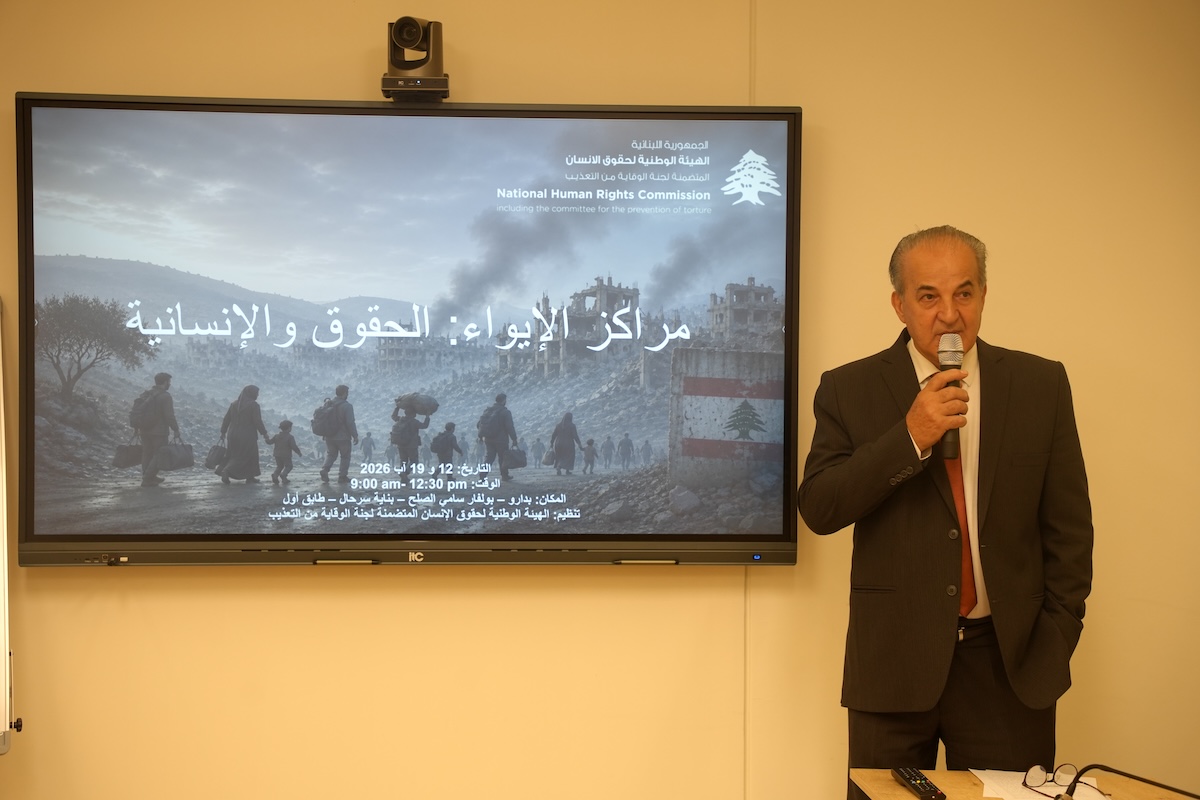
Dr. Fadi Gerges, President of the National Human Rights Commission, opened the seminar with remarks emphasizing that those working in shelters represent the frontline of the response and that the daily decisions they make determine, in practical terms, the extent to which the rights and dignity of displaced persons are upheld.
He explained that the Commission is an independent official institution established pursuant to Law No. 62 of 27 October 2016. It is neither a humanitarian organization providing direct services nor an executive body; rather, its mandate is to monitor the extent to which the State and relevant actors comply with their human rights obligations, document concerns and gaps, and formulate recommendations addressed to decision-makers.
He stressed that independent monitoring and the provision of services on the ground are complementary roles, and that gaps identified through assessments do not necessarily reflect shortcomings on the part of organizations operating in the field. In many cases, they are linked to limited resources, weak regulatory frameworks, fragmented responsibilities, and a lack of clarity regarding those responsibilities.
Gerges stated that protecting the rights of displaced persons is not the responsibility of any single entity, but rather a shared responsibility involving ministries, municipalities, international organizations, local associations, and everyone who manages a shelter or provides services within one. He emphasized that the purpose of the training was not simply to provide additional theoretical knowledge, but to establish a common language and a shared frame of reference that would help participating stakeholders integrate human rights into their daily work.
The Commission’s President concluded his remarks by saying:
“Dignity is not measured by the number of people who remain in these shelters, but by how steadfastly we all uphold it until the last door is closed and the last person finds a home worthy of them.”
From Needs Assessment to Measuring Compliance with Rights
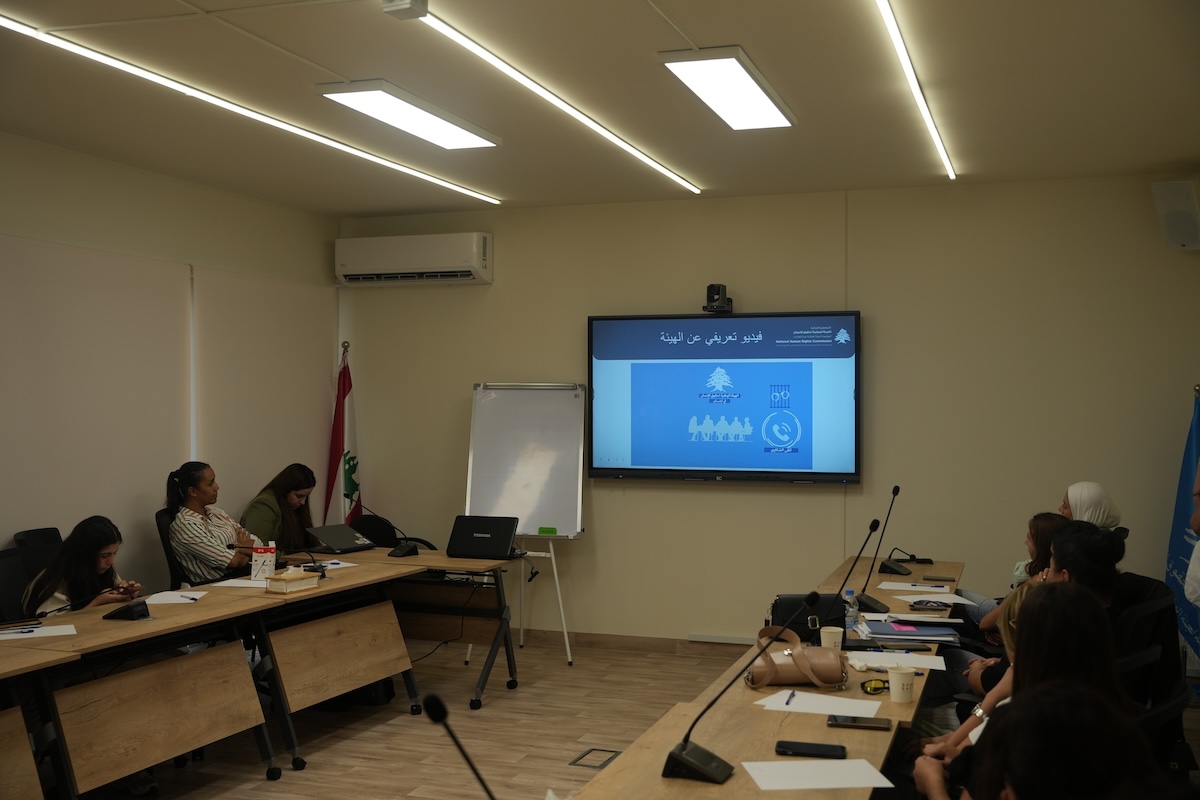
The seminar emphasized the need to move beyond an approach limited to identifying needs and gaps in service provision and toward a legal, rights-based approach that asks whether displaced persons are, in practice, able to exercise their rights.
It is not enough for a service to be included in response programmes or to be theoretically available. It must be consistently available, accessible, acceptable, safe, and of adequate quality, and it must effectively protect individuals and meet their needs. Likewise, monitors should not hastily classify every problem as a violation. They should first identify the available evidence, the right affected, the corresponding legal obligation, and whether the facts indicate a compliance gap or a risk that could develop into a violation if left unaddressed.
The training drew on the findings of the Commission’s field monitoring programme, which used standardized tools to assess shelters and the conditions of their residents. Data were collected through direct observation, interviews with shelter management, focal points, and residents, and verification of available documentation. Quantitative and qualitative indicators were then analysed against applicable legal standards.
The monitoring teams visited 184 of the 845 shelters included on the joint list maintained by the Ministry of Social Affairs and the Lebanese Red Cross. Of these, 62 shelters were found to have closed by the time of the visit, while 122 operational shelters underwent a comprehensive assessment between 15 June and 31 July 2026.
The assessment covered shelter management and accountability, accommodation, water, sanitation and hygiene, food security, health, protection, human rights, referral pathways, livelihoods, access to information, risks related to future housing, and residents’ priority needs.
Four Complementary Frameworks for the Protection of Displaced Persons
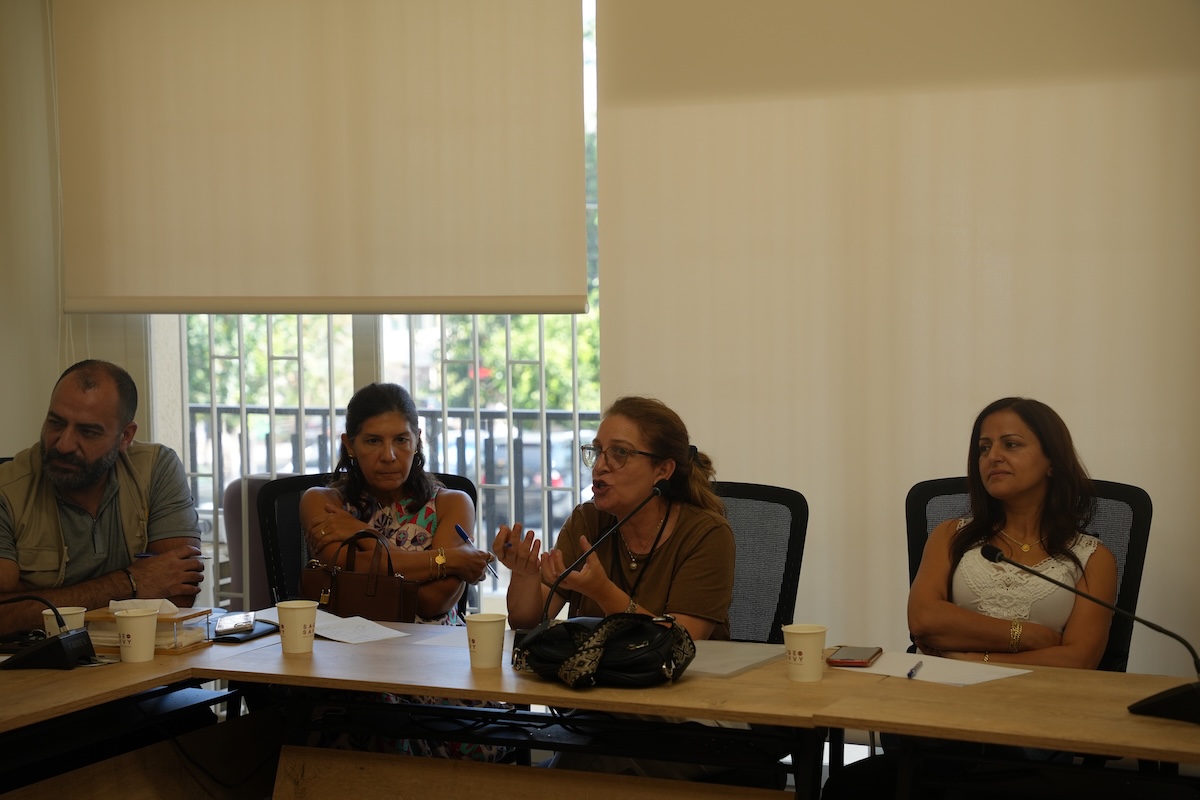
The discussions demonstrated that protecting displaced persons is not merely a humanitarian or ethical obligation, but a legal duty grounded in four complementary frameworks: international human rights law; international humanitarian law applicable to the hostilities that caused the displacement; the Guiding Principles on Internal Displacement and humanitarian standards; and the Lebanese Constitution and legislation.
Lebanon remains bound by the International Covenant on Civil and Political Rights, including its protections of the rights to life, personal security, dignity, equality, privacy, freedom of movement, access to information, and an effective remedy. The International Covenant on Economic, Social and Cultural Rights also requires Lebanon to take steps, to the maximum of its available resources, toward realizing the rights to housing, food, water, health, and social protection without discrimination.
The Convention on the Rights of the Child requires that the best interests of the child be treated as a primary consideration and that children’s rights to health, education, play, and an adequate standard of living be guaranteed. The Convention on the Elimination of All Forms of Discrimination against Women requires effective measures to protect women and girls from sexual violence, exploitation, and abuse, while the Convention on the Rights of Persons with Disabilities requires accessibility to buildings, services, information, social protection, and emergency services.
International humanitarian law applies alongside international human rights law and does not replace it. As civilians, internally displaced persons are protected from the effects of hostilities, while the State remains responsible for respecting their rights, ensuring that their basic needs are met, and treating them with dignity and without discrimination.
The United Nations Guiding Principles on Internal Displacement restate rules that are already binding under international law. Principle 18 affirms the obligation to ensure, at a minimum, safe access to shelter, food, water, and health services. Principle 25 places primary responsibility for providing protection and assistance on national authorities, while Principle 28 requires them to establish the conditions and provide the means necessary for voluntary, safe, and dignified return, local integration, or resettlement.
Absence of a National Legal Framework on Internal Displacement
The seminar concluded that one of the most significant structural gaps is the absence of a specific Lebanese law on internal displacement. There is no national legal definition of an internally displaced person, no clear and binding allocation of responsibilities among public institutions, and no unified framework governing shelters or protecting the rights and property of displaced persons and ensuring durable solutions for them.
This legislative gap does not negate existing rights, as Lebanon’s international obligations remain in force and the preamble to the Lebanese Constitution affirms adherence to the Universal Declaration of Human Rights. However, it means that the implementation of these rights depends to a large extent on temporary coordination arrangements, administrative practices, and the goodwill of the actors involved, rather than on uniform rules subject to oversight and accountability.
The Commission called for the development and adoption of a national legal framework on internal displacement that clearly defines institutional responsibilities, regulates the management of shelters, guarantees equality and non-discrimination, provides mechanisms for complaints and remedies, and protects displaced persons’ right to voluntary, safe, and dignified return, as well as their right to recover their homes, land, and property or receive fair compensation when restitution is not possible.
Critical Gaps
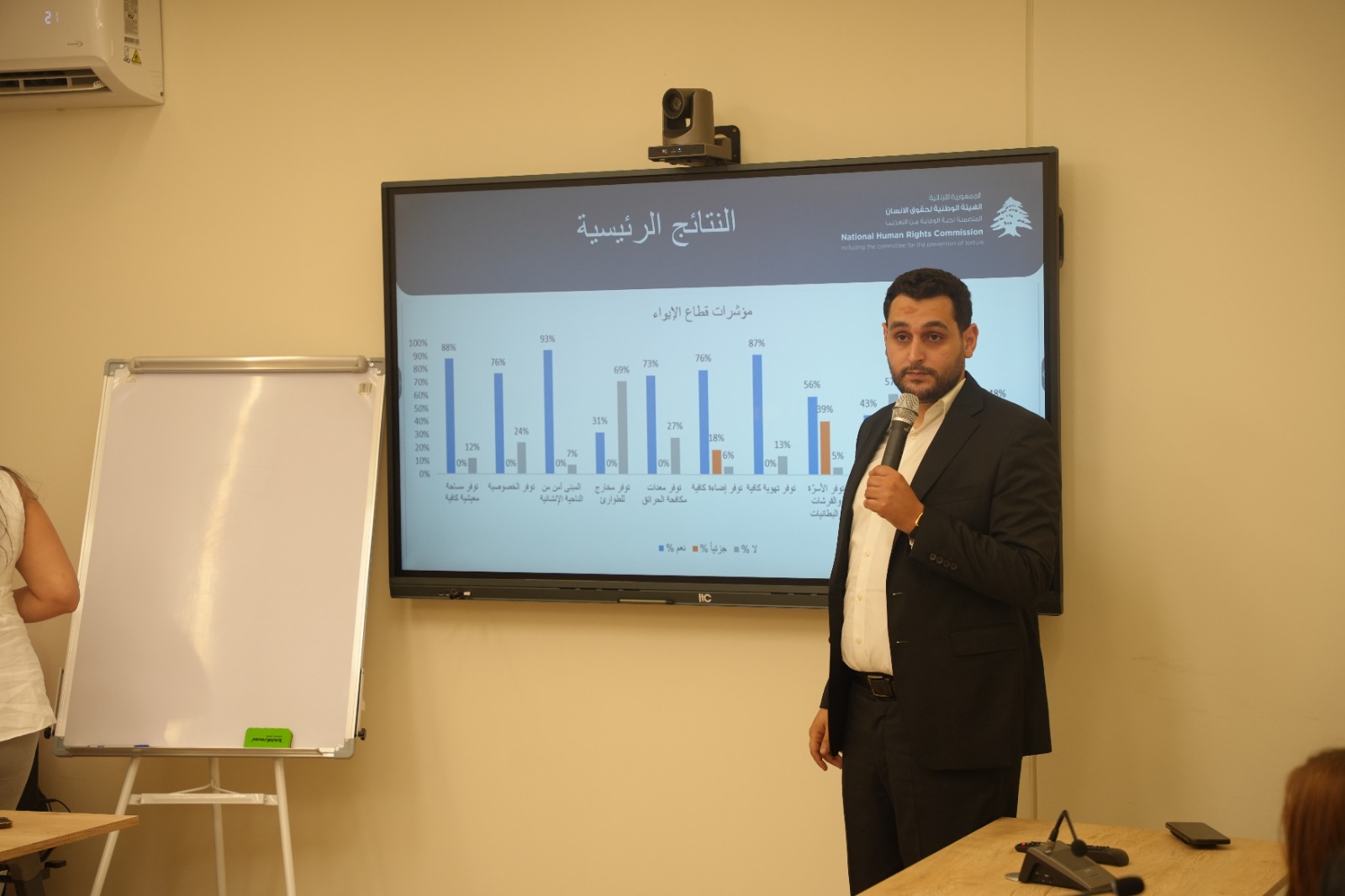
The monitoring findings revealed a significant gap between the formal existence of a service or mechanism and the ability of rights-holders to benefit from it in practice. Medical referral pathways were available in approximately 86.5% of shelters, yet 41.8% of individuals identified as needing a referral did not receive the required service. Access to medication was the most frequently reported unmet need, recorded in 65.7% of shelters, while regular follow-up for chronic diseases was unavailable in 40.3%.
In the area of food security, assistance was provided regularly in 68.7% of shelters, yet approximately half reported the presence of families experiencing food insecurity, while inadequate dietary diversity was recorded in 44.6%. This demonstrates that regular distribution alone is insufficient if the quantities and composition of food assistance do not meet the needs of families, particularly children, older persons, pregnant and breastfeeding women, and people living with chronic diseases.
In terms of safety, 93% of buildings were considered structurally safe. However, emergency exits were absent in 68.8% of shelters, fire-fighting equipment was unavailable in 27.1%, and visible structural hazards were recorded in 49.1%. The Commission called for the adoption of a binding maximum occupancy limit that takes into account the Sphere standard of 3.5 square metres of covered living space per person, as well as the establishment of evacuation and emergency preparedness plans.
A Gap Between Positive Treatment and Institutionalized Accountability
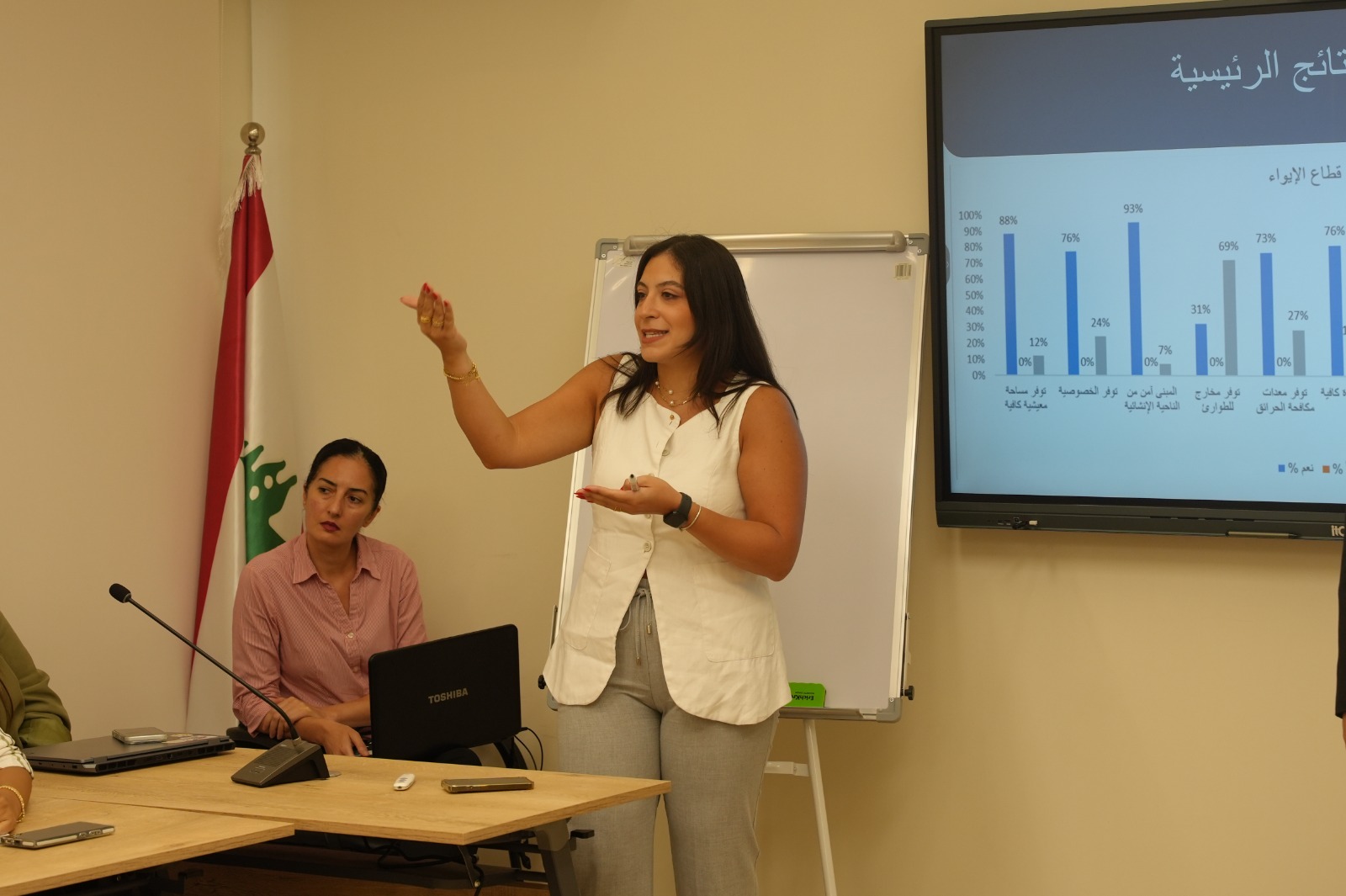
The findings showed that the positive treatment provided by staff is not always supported by adequate institutional systems. While respectful treatment was reported at a rate of 94%, a formal staff code of conduct was displayed and observed in only 19.4% of shelters. Confidential complaints mechanisms were absent in 46.3% of shelters, while information about rights was available in only around half of them.
Participants stressed that respect for rights should not depend solely on good individual conduct, but must be supported by formal, publicly communicated systems that include codes of conduct, confidential and accessible complaints mechanisms, protection against retaliation, documentation of and responses to complaints, and the provision of information to residents about their rights, available services, and entitlements.
Gaps in the protection of women and girls were also identified. Measures to prevent sexual exploitation and abuse were implemented in only 35.8% of shelters, staff had received specialized protection training in 38.8%, and safe and confidential spaces for interviews were available in 46.3%. These indicators do not establish the existence of a pattern of violations, but they do reveal shortcomings in preventive safeguards that make safe reporting and effective response more difficult.
The analysis further showed that persons with disabilities, older persons, women, and girls face cumulative disadvantages across multiple sectors. Shelters were accessible to persons with disabilities in only 42.6% of locations, potentially preventing individuals from accessing accommodation areas, sanitation facilities, care services, and complaints mechanisms.
Practical Outcomes and Recommendations
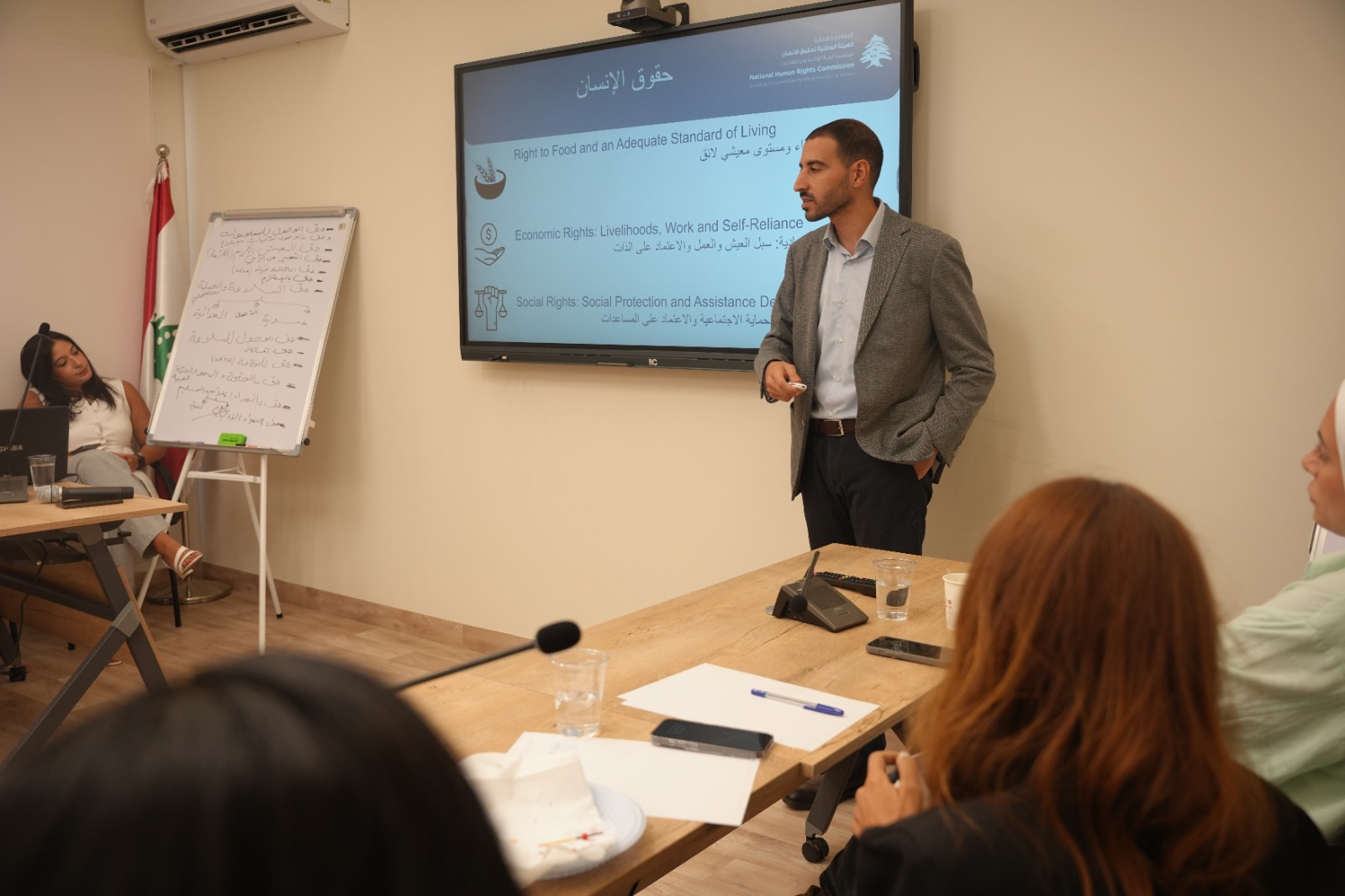
The seminar concluded with a set of priority outcomes and recommendations, including:
- Develop comprehensive national legislation on internal displacement and clearly designate a public authority responsible for the governance of displacement and shelters.
- Adopt binding standards for safety, occupancy, and accessibility, and subject their implementation to independent monitoring.
- Establish confidential and accessible complaints mechanisms, protect complainants against retaliation, and ensure appropriate responses and follow-up.
- Ensure the continuous availability of medication and treatment for chronic diseases, and follow up on health referrals until the required services are actually provided.
- Expand livelihood programmes, vocational training, and cash assistance, given that employment or livelihood opportunities were available in only 26.9% of shelters.
- Strengthen measures to prevent sexual exploitation and abuse, provide staff training, and ensure confidential spaces for case management.
- Ensure continuity of education through adequate connectivity infrastructure and appropriate devices, rather than relying solely on data packages that not all families are able to use.
- Ensure that persons with disabilities can access buildings, sanitation facilities, information, care services, and complaints mechanisms.
- Develop transition and closure plans that guarantee voluntary, safe, informed, and dignified return or relocation, and link shelter closures to the availability of viable housing solutions.
- Institutionalize coordination among the Ministry of Social Affairs, relevant ministries, municipalities, service providers, and the National Human Rights Commission.
- Continue independent monitoring until the last family has left and has secured a safe and sustainable solution.
Shelter Closure Does Not End the Responsibility to Protect
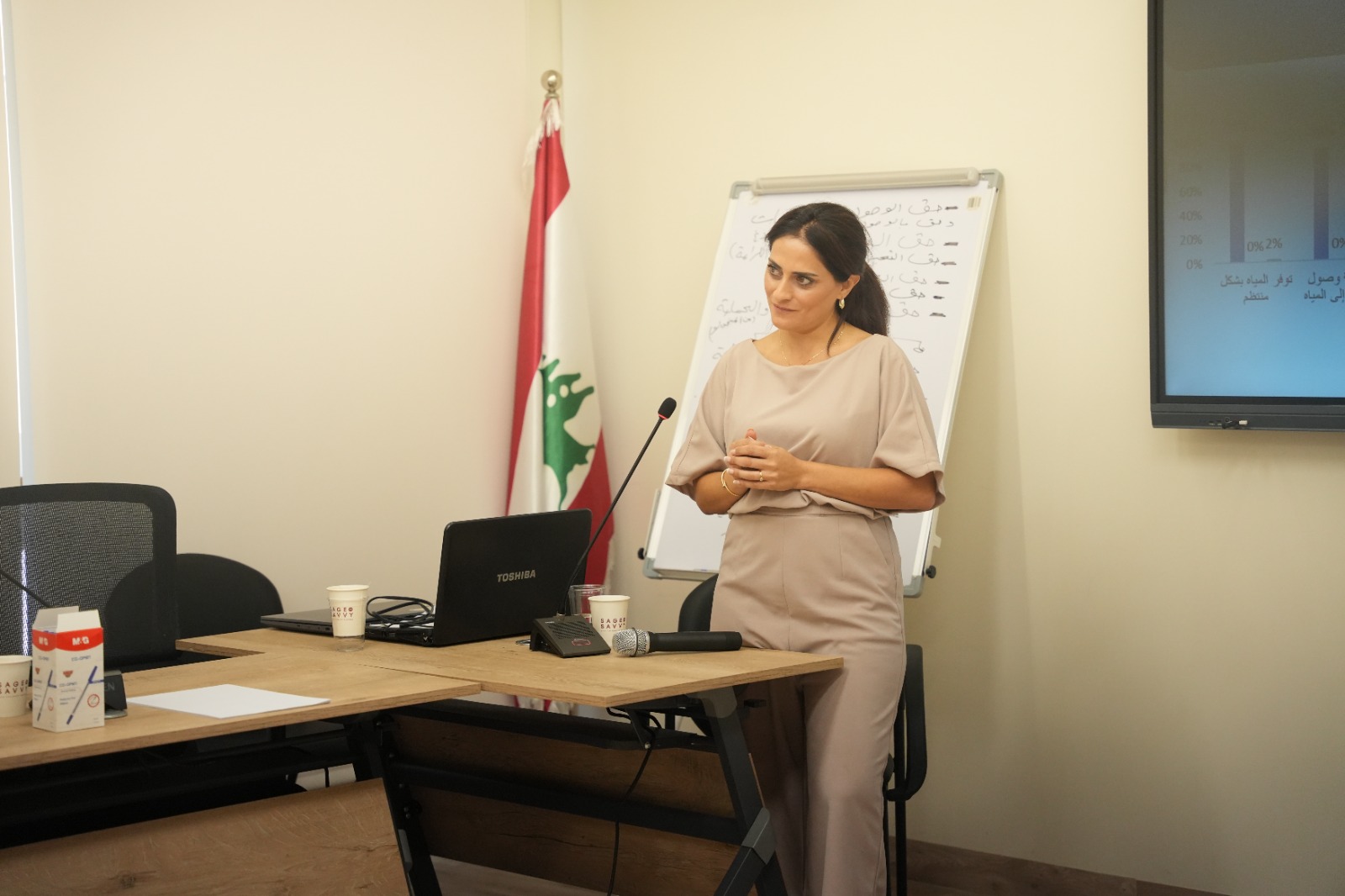
The National Human Rights Commission emphasizes that the declining number of shelters and their gradual closure do not diminish the responsibility to protect, as families who remain until the final stages are often the most vulnerable and have the fewest alternatives available to them.
This issue is particularly significant given that 82.1% of shelters reported hosting families whose homes had been partially damaged, 80.6% reported families whose homes had been completely destroyed, and 73.1% reported families with no alternative housing. Accordingly, the consolidation or closure of shelters must not result in direct or indirect pressure on families to leave before a safe and sustainable alternative is available.
The Commission stressed that monitoring is not intended to hold frontline workers responsible for gaps that are often linked to limited resources and fragmented mandates. Rather, it is intended to provide an independent diagnostic tool that helps identify responsibilities, direct resources, improve the response, and transform good practices into binding institutional standards.
هذه المقالة متاحة أيضًا بـ:

