


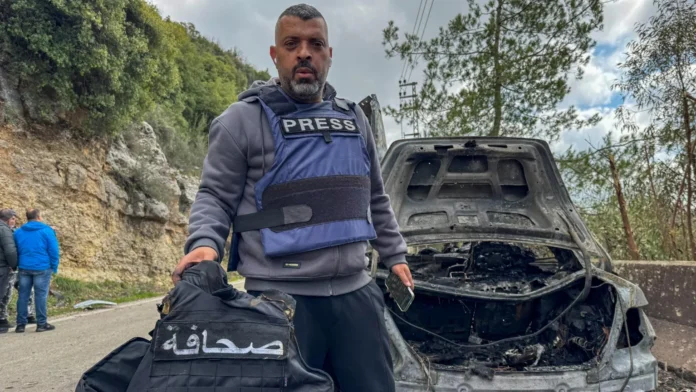
On the International Day to End Impunity for Crimes against Journalists, observed annually on 2 November, the National Human Rights Commission, including the Committee for the Prevention of Torture, affirms that protecting journalists and media workers is an ongoing responsibility. It requires preventing attacks, investigating them, holding those responsible accountable, and ensuring the rights of victims and their families to truth, justice and reparation.
The Commission highlights the alarming findings released by UNESCO to mark this occasion: 189 journalists were killed in 2024 and 2025, a 20% increase compared with the previous reporting period, with nearly two-thirds of the killings occurring in conflict zones. The impunity rate also rose to 86%, underscoring the persistent failure of accountability mechanisms to deliver justice for victims and deter further crimes against journalists.
This occasion carries particular significance in Lebanon, where protecting journalists requires rigorous judicial follow-up on every attack against them, including attacks attributed to Israeli forces during field reporting. The Commission calls for independent, impartial, prompt and effective investigations into the circumstances of each incident, the weapons used, the perpetrators’ knowledge of the presence of journalists, and individual and command responsibility, with a view to prosecuting anyone whose involvement is established, in accordance with due process.
The Commission stresses that journalists are protected as civilians under international humanitarian law, unless and for such time as they directly participate in hostilities. Reporting, filming or documenting violations does not, in itself, constitute direct participation in hostilities. Neither a media outlet’s editorial position nor opinions attributed to a journalist remove that protection.
The Commission also warns of expanding digital threats against journalists, including unlawful surveillance, the hacking of devices and accounts, the disclosure of personal information, threats, smear campaigns and incitement to violence. Protecting sources and the confidentiality of communications is essential to safeguarding journalism. Investigating digital attacks requires independent technical expertise and the preservation of evidence against loss or tampering.
The Commission further draws attention to the additional risks faced by women journalists, including sexual threats, gender-based violence and online abuse. These require tailored protection measures that enable safe reporting and effective follow-up without stigma or retaliation.
In this context, the Commission calls on the Lebanese authorities and relevant stakeholders to:
- Initiate investigations and pursue judicial proceedings concerning the killing, injury, intimidation and assault of journalists, and keep victims and their families informed of progress, while respecting the confidentiality of investigations and the rights of all parties.
- Preserve physical and digital evidence, including recordings, photographs, medical records and munition remnants; seek specialist expertise; and protect witnesses, sources and family members from threats and retaliation.
- Develop a national mechanism for the protection of journalists, in partnership with media institutions, unions and specialist organisations, incorporating risk assessment, rapid responses to threats, and legal, technical and psychological support, within the framework of the United Nations Plan of Action on the Safety of Journalists and the Issue of Impunity.
- Address unlawful surveillance and digital attacks, and ensure that any interference with privacy and communications meets the requirements of legality, necessity and proportionality and is subject to effective judicial oversight.
- Ensure a safe environment for journalism, refrain from using prosecutions and judicial procedures to silence or intimidate journalists because of their legitimate work, and respect their right of access to information and the protection of their sources.
- Strengthen cooperation with relevant international mechanisms to support the documentation of violations, the preservation of evidence and the pursuit of accountability through available legal avenues.
The Commission urges media institutions to provide training, protective equipment, and field and digital security protocols, and to ensure that freelance journalists and contributors are included in protection and support measures.
The Commission affirms that impunity endangers society as a whole. Every attack that goes unpunished narrows the space for freedom of expression, undermines public access to information and encourages further violations. Honouring the victims of crimes against journalists requires translating solidarity into concrete measures for protection, investigation and accountability, so that practising journalism never becomes a reason to be targeted or to live in fear.
هذه المقالة متاحة أيضًا بـ:
 العربية (Arabic)
 Français (French)

