

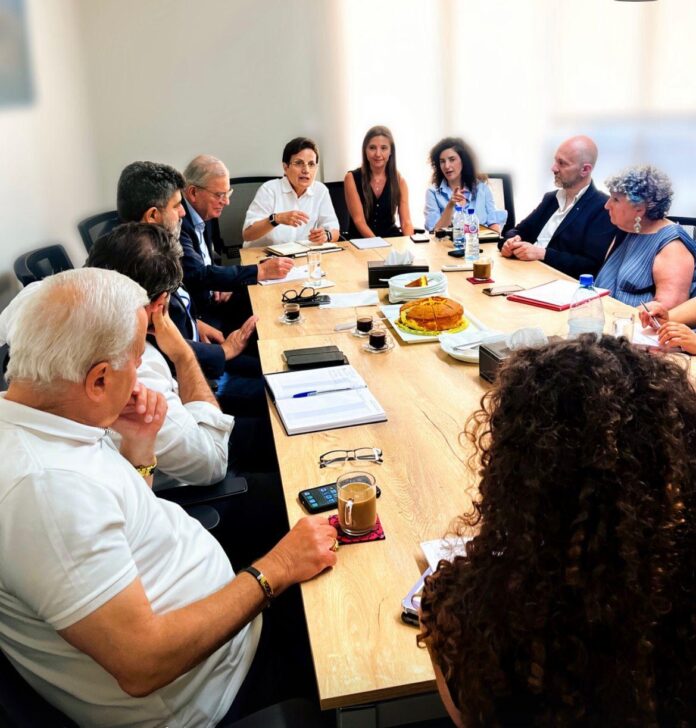
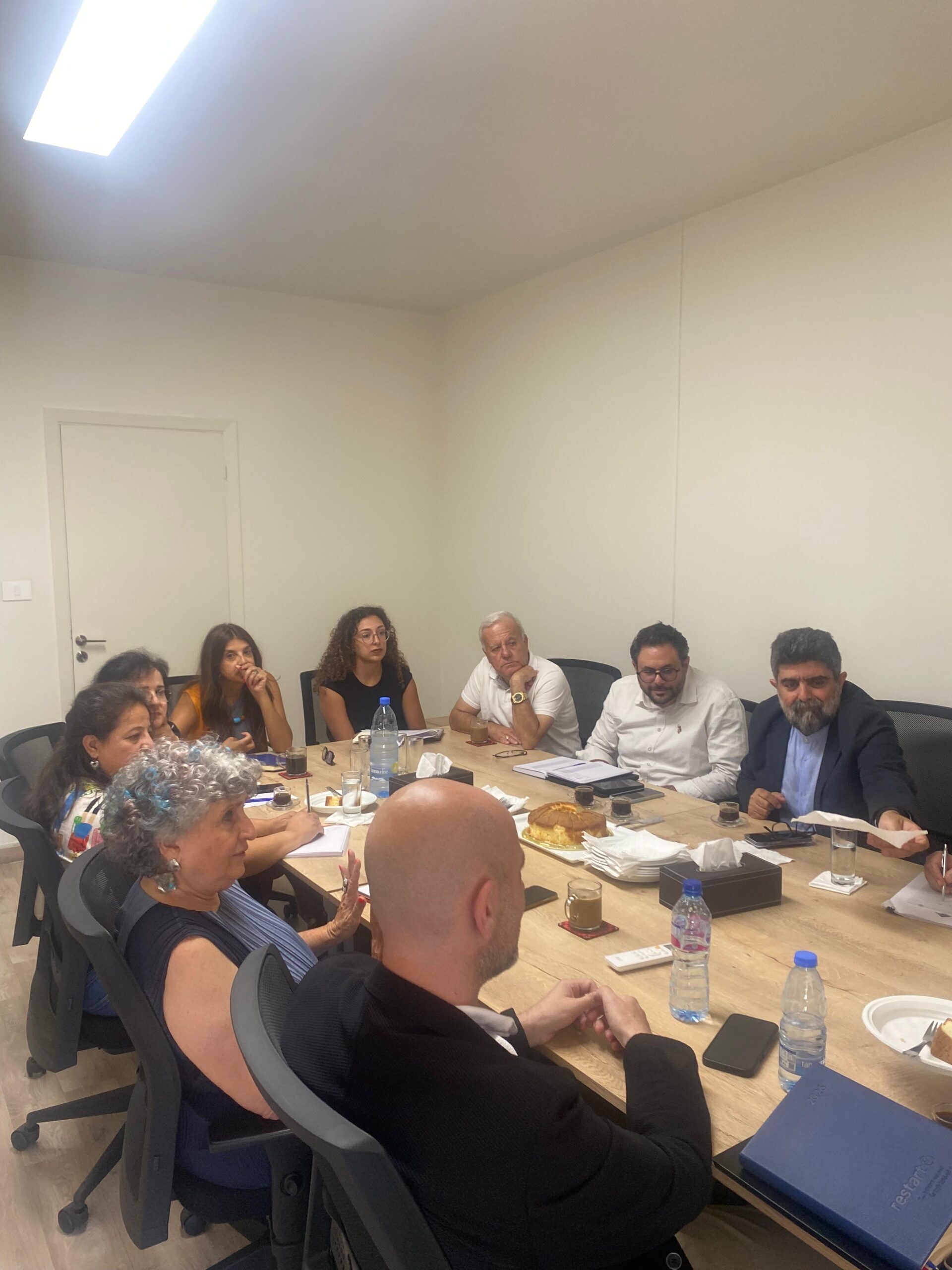
On the occasion of the International Day in Support of Victims of Torture, members of Lebanon’s Committee for the Prevention of Torture (CPT) held a coordination meeting with representatives of the Working Group on Torture Prevention (WGTP) at the premises of the National Human Rights Commission, including the Committee for the Prevention of Torture (NHRC-CPT) in Beirut.
The meeting formed part of the national activities commemorating the International Day in Support of Victims of Torture and reflected the shared commitment of Lebanon’s national preventive mechanism and civil society organizations to eradicate torture, strengthen accountability, and ensure respect for the dignity and rights of all persons deprived of their liberty.
The discussions provided an important opportunity to exchange views on the current state of torture prevention in Lebanon, assess the challenges facing the national protection system, and explore practical avenues for strengthening cooperation and coordination between the Committee for the Prevention of Torture and the Working Group on Torture Prevention. Particular emphasis was placed on reinforcing national efforts to prevent torture and other forms of ill-treatment, enhancing legal and institutional safeguards, improving oversight of places of detention, and promoting full compliance with international human rights standards.
The Working Group on Torture Prevention (WGTP) is one of Lebanon’s leading civil society coalitions working to combat torture and promote human rights. Established in 2007, the coalition emerged as a unified response by Lebanese human rights organizations to the persistent use of torture and ill-treatment, particularly in places of deprivation of liberty, despite Lebanon’s ratification of the United Nations Convention against Torture (UNCAT) in 2000 and the Optional Protocol to the Convention against Torture (OPCAT) in 2008.
Created to strengthen cooperation among civil society organizations, the Working Group coordinates advocacy, legal reform, research, monitoring, documentation, capacity-building, and training initiatives aimed at preventing torture, supporting survivors, promoting rehabilitation, and ensuring accountability for perpetrators. Through nearly two decades of sustained engagement, the WGTP has become a key actor within Lebanon’s human rights community, working closely with national institutions, international organizations, United Nations agencies, donors, and other partners to strengthen legislation, improve detention monitoring mechanisms, advance institutional reforms, and foster a culture of respect for human dignity and the absolute prohibition of torture.
The coalition currently brings together ALEF – Act for Human Rights, Restart Center for Rehabilitation of Victims of Violence and Torture, the Lebanese Center for Human Rights (CLDH), Proud Lebanon, AJEM, Caritas Lebanon, and the Human Rights Institute at the Tripoli Bar Association, combining their expertise and resources to advocate for systemic reforms and enhance the protection of persons deprived of their liberty throughout Lebanon.
During the meeting, participants reviewed the current challenges facing torture prevention efforts in Lebanon amid the country’s ongoing political, economic, humanitarian, and institutional crises. They emphasized the need to reinforce national coordination, strengthen referral and rehabilitation mechanisms for survivors of torture, improve documentation and reporting of violations, and ensure effective implementation of safeguards protecting detainees from torture and ill-treatment.
The Committee and the Working Group reaffirmed the importance of sustained cooperation between the National Preventive Mechanism, civil society organizations, and international partners in order to strengthen Lebanon’s national system for the prevention of torture. They underscored that effective torture prevention requires independent monitoring of places of deprivation of liberty, prompt investigation of allegations of torture, effective accountability mechanisms, and comprehensive support services for survivors, including legal assistance, medical care, psychosocial support, and rehabilitation.
The participants also stressed the importance of implementing Lebanon’s obligations under the United Nations Convention against Torture, the Optional Protocol to the Convention against Torture (OPCAT), and other international human rights instruments. They reiterated that preventing torture requires sustained political commitment, institutional independence, adequate resources, and close cooperation between State institutions and civil society.
Marking the International Day in Support of Victims of Torture, the Committee for the Prevention of Torture renewed its call for the absolute prohibition of torture under all circumstances and without exception. The Committee emphasized that every allegation of torture or other cruel, inhuman, or degrading treatment or punishment must be promptly, independently, impartially, and effectively investigated, and that perpetrators must be held accountable in accordance with the law.
The Committee further called for strengthened protection and rehabilitation services for survivors of torture, ensuring access to justice, effective remedies, medical and psychological care, social reintegration, and compensation, in accordance with international standards and victims’ rights.
Concluding the meeting, both the Committee for the Prevention of Torture and the Working Group on Torture Prevention reaffirmed their shared determination to continue working together to eradicate torture in Lebanon, strengthen the national prevention framework, protect the rights of persons deprived of their liberty, and promote a society founded on human dignity, justice, accountability, and the rule of law.
هذه المقالة متاحة أيضًا بـ:
 العربية (Arabic)
  Français (French)

