

Pursuant to the Paris Principles governing the establishment and functioning of national human rights institutions, and following numerous recommendations addressed to the Lebanese State by the United Nations Human Rights Council and international treaty bodies, Law No. 62 of 27 October 2016, as amended, was adopted, establishing the National Human Rights Commission, including the Committee for the Prevention of Torture.
National human rights institutions are funded by the State but remain independent from it. They are not non-governmental organizations; rather, they act as a “bridge” between civil society and governments. They are known by different names across countries, such as commissions, councils, ombudsman institutions, public defenders, or similar bodies tasked with protecting the rights of the people.
Lebanon acceded to the Optional Protocol to the Convention against Torture and Other Cruel, Inhuman or Degrading Treatment or Punishment through Law No. 12 of 5 September 2008. In implementation of Article 17 of the Protocol, the State undertook to establish an independent national preventive mechanism against torture through the creation of the National Human Rights Commission, including the Committee for the Prevention of Torture.
The Commission was formally constituted by Decree No. 3267 of 19 June 2018 and Decree No. 5147 of 5 July 2019.
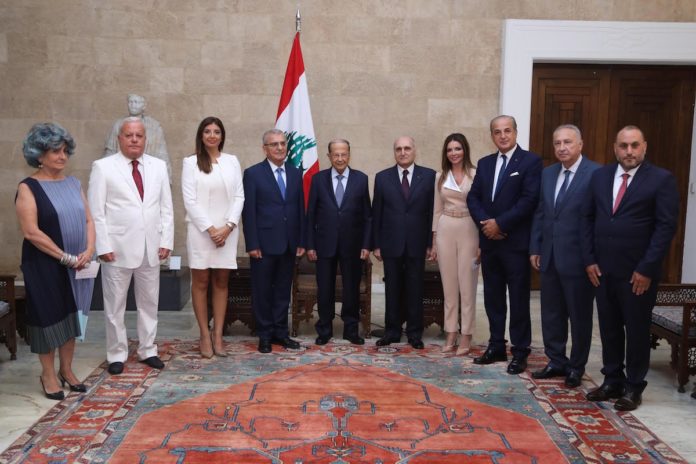
In accordance with Article 5 of Law No. 62/2016, the members of the Commission took the following oath before the President of the Republic on 16 July 2019 and 14 August 2019:
“I swear by Almighty God to carry out my duties within the National Human Rights Commission with integrity, dedication, and independence, and to act in a manner that reflects trust and commitment to the rule of law and to the protection and promotion of human rights.”
Pursuant to Article 6 and in accordance with the provisions of Chapter III of Law No. 62/2016 (Articles 15 to 20 inclusive), the Commission, on 12 November 2019, elected its President and Bureau members and distributed responsibilities among its members as follows:
Dr. Fadi Gerges – President of the Commission
Judge Khalil Abu Rajili – Head of the Committee for the Prevention of Torture and Vice-President of the Commission
Dr. Rana Al-Jamal, Lawyer – Secretary
Mr. Ali Youssef – Treasurer and Commissioner for Complaints
Mr. Bassam Al Kantar – Commissioner for International Relations and Commissioner for Media and Information Technology
Prof. Fadl Daher – Commissioner for Studies and Monitoring and Commissioner for Education and Development
Dr. Josiane Madi Skaf – Member of the Committee for the Prevention of Torture
Mr. Raymond Madlej, Lawyer – Member of the Committee for the Prevention of Torture
Ms. Rida Ramez Azar – Member of the Committee for the Prevention of Torture
Dr. Bilal Sablouh – Member of the Committee for the Prevention of Torture
Mandate of the National Human Rights Commission
Law No. 62/2016 defines the mandate of the National Human Rights Commission as follows:
The Commission works to protect and promote human rights in Lebanon in accordance with the standards set out in the Lebanese Constitution, the Universal Declaration of Human Rights, relevant international treaties and conventions, and Lebanese laws consistent with these standards, in addition to carrying out the specific tasks defined by this law. In doing so, it may communicate independently with relevant international and national human rights bodies.
In particular, the Commission is entrusted with the following tasks:
- Monitoring Lebanon’s compliance with human rights and international humanitarian law and issuing and publishing special and periodic reports.
- Contributing independently to the reports submitted by the Lebanese State.
- Providing opinions on matters referred to it by competent authorities or on its own initiative regarding compliance with human rights standards.
It may also express opinions on all legislation, decrees, decisions, draft laws, and policies in this regard. - Receiving complaints and notifications related to human rights violations and contributing to their resolution through negotiation, mediation, or litigation.
- Promoting human rights culture and supporting and developing human rights education programs.
Mandate of the Committee for the Prevention of Torture
Law No. 62/2016 defines the mandate of the Committee for the Prevention of Torture as follows:
The Committee operates within the Commission to protect the rights of persons deprived of their liberty, in accordance with the provisions of this law and Lebanon’s obligations under the Optional Protocol to the Convention against Torture and Other Cruel, Inhuman or Degrading Treatment or Punishment.
Under the Optional Protocol, the Committee serves as the National Preventive Mechanism, tasked with protecting the rights of detainees and persons deprived of liberty, and enjoys independent legal personality in all matters related to the prevention of torture.
The Committee, or those it designates from among its members, staff, or contracted experts, has unrestricted authority to enter and visit all places of deprivation of liberty and their facilities in Lebanon without exception, with the aim of protecting individuals from torture and other forms of ill-treatment or arbitrary detention, and to cooperate and engage in dialogue with the competent authorities to improve relevant laws and regulations.
The Committee or its delegates may:
- Conduct regular or unannounced visits at any time to places of deprivation of liberty without prior notice and without requiring authorization from any administrative, judicial, or other authority.
- Conduct private or group interviews with any persons deprived of liberty, in full confidentiality and without supervision, with interpretation if necessary.
- Meet with any other person it considers able to provide relevant information or assistance, and exercise unrestricted authority to obtain information confidentially as required for its work. The Committee does not publish any information without the consent of its source.
- Receive complaints or requests for interviews from the aforementioned persons or conduct any medical examination or assessment.
Article 27(b) of Law No. 62/2016 grants the Committee the right to communicate directly with the United Nations Subcommittee on Prevention of Torture and to provide it with information when necessary, as well as to meet with it periodically or whenever required.
هذه المقالة متاحة أيضًا بـ:
 العربية (Arabic)
  Français (French)

