
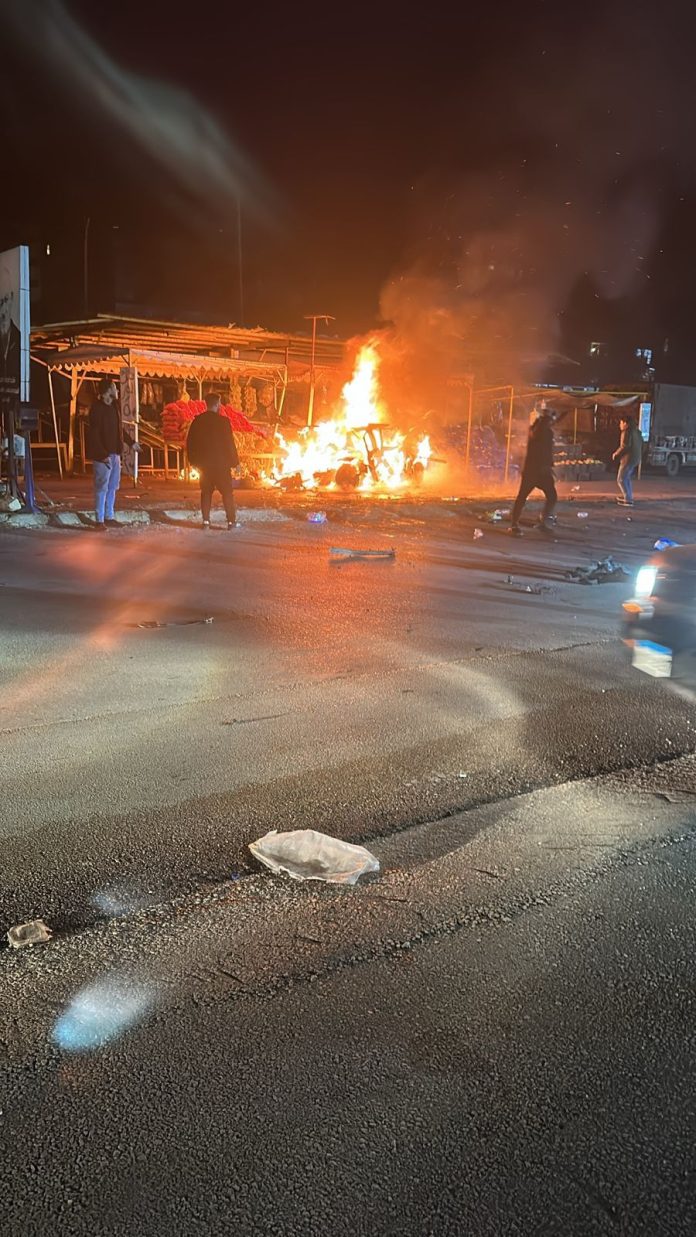
The National Human Rights Commission, including the Committee for the Prevention of Torture, strongly condemned the airstrikes carried out by Israel at dawn on Monday against densely populated residential neighborhoods in Beirut’s southern suburbs and several towns in southern Lebanon, affirming that these attacks constitute serious violations of international humanitarian law.
The Commission announced that its International Humanitarian Law Committee is actively documenting grave violations committed on Lebanese territory and is establishing a comprehensive national registry of killings, injuries, and other civilian harm. The Commission is also investigating these incidents as potential war crimes and is verifying photographic evidence and video footage captured in the aftermath of the attacks.
According to data issued by the Public Health Emergency Operations Center at the Ministry of Public Health, the strikes resulted in the killing of 31 civilians and the injury of at least 149 others. The attacks targeted the areas of Haret Hreik, Burj Al-Barajneh, and Hadath in Beirut’s southern suburbs, as well as the towns of Al-Shahabiya, Al-Sultaniyah, Adshit, Harouf, Toul, Al-Kfour, Yaroun, Aitaroun, and Al-Khiam in southern Lebanon.
Based on its preliminary findings, the Commission confirmed that no effective prior warnings were issued by the Israeli army to residents to evacuate these areas before the strikes. Although Israel later claimed that military targets had been struck, no evidence has been presented to substantiate these allegations. The Commission emphasized that even if a specific individual was allegedly considered a military target, the means and methods used in attacking densely populated residential buildings strongly indicate that the strikes were likely indiscriminate.
The Commission reiterated that the principle of distinction, a cornerstone of international humanitarian law, obliges parties to an armed conflict to distinguish at all times between combatants and military objectives on the one hand, and civilians and civilian objects on the other, and to direct operations solely against military objectives. International humanitarian law further prohibits indiscriminate attacks, namely those that strike military objectives and civilians without distinction.
The principle of precaution also requires all feasible measures to be taken to avoid or minimize incidental harm to civilians and civilian objects, including issuing effective advance warnings and selecting means and methods of warfare that reduce civilian damage to the greatest extent possible.
The Commission further noted that Israeli forces have threatened 53 towns in southern Lebanon, the Bekaa, and western Bekaa with bombardment, exacerbating fear among civilians and placing them at imminent risk, in the absence of guarantees that international humanitarian law will be respected.
Given the recurring pattern of grave violations committed in Lebanon without investigation or accountability, the Commission called upon the international community to intensify efforts to ensure accountability, including through the exercise of national or universal jurisdiction to investigate crimes under international law and prosecute those responsible.
The Commission also urged the Lebanese government to:
First, accept the jurisdiction of the International Criminal Court pursuant to Article 12, paragraph 3, of the Rome Statute, as a step toward accession.
Second, complete and adopt national legislation criminalizing war crimes and other international crimes in line with Lebanon’s international obligations.
Third, provide full support to national judicial investigations and to the documentation efforts undertaken by the Commission and other competent authorities.
The Commission concluded that, based on reasonable grounds, the airstrikes carried out at dawn on Monday constitute violations of international humanitarian law, either as indiscriminate attacks or as direct attacks against civilians or civilian objects, and must be investigated as war crimes.
Background
The National Human Rights Commission acts pursuant to Law No. 62/2016, as amended, particularly Article 16, which grants it the authority to monitor and document violations of human rights and international humanitarian law during armed conflict and to pursue all available means to combat impunity.
Decree No. 1762 of 7 November 2025, concerning the Commission’s internal regulations, established the International Humanitarian Law Committee within the Commission and granted it clear powers to monitor and document violations, provide opinions on relevant legislative and administrative texts, submit recommendations to public authorities, and promote awareness of international humanitarian law.
هذه المقالة متاحة أيضًا بـ:

