
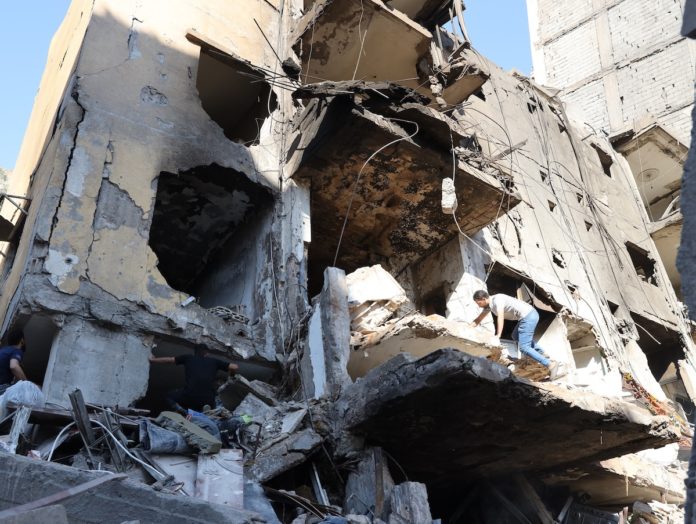
On December 7, 2024, the Lebanese Council of Ministers convened in Tyre for a special session, symbolizing solidarity with the southern region of Lebanon. During this session, the government approved a draft law for reconstruction and forwarded it to Parliament for further approval. This move followed the implementation of a ceasefire on November 27, marking the end of a devastating two-month-long conflict.
The draft law primarily focuses on enabling the rebuilding of structures damaged or destroyed during the conflict. It allows for the reconstruction of buildings as they were prior to their destruction, while introducing specific conditions, such as adherence to planning regulations and exemptions from certain fees. However, it replicates much of the framework used in the 2014 law with minor adjustments, leading to widespread criticism.
Key Issues Highlighted
- Narrow Focus on Physical Reconstruction
The draft law largely limits reconstruction to rebuilding structures, neglecting broader aspects of recovery, such as:- Reviving local economies and restoring livelihoods.
- Strengthening social cohesion among affected communities.
- Addressing environmental recovery and sustainable land management.
- Exclusion of Informal Settlements
The law fails to address challenges specific to informal settlements and unregistered properties, which are prevalent in many areas affected by the conflict. This raises questions about the equity and inclusivity of the proposed reconstruction efforts. - Tenant Vulnerability
By prioritizing property owners in the reconstruction process, the law leaves tenants—many of whom are among the most vulnerable—at risk of displacement. If property owners choose not to rebuild or repair, tenants are left without viable housing options. - Institutional and Administrative Gaps
The draft law does not specify the institutional framework responsible for damage assessment and compensation distribution. This lack of clarity opens the door to potential political interference, mirroring issues from previous crises, such as the Beirut port explosion in 2020. - Regional and Contextual Insensitivity
The law fails to account for the diverse levels of destruction across different regions of Lebanon, as well as the unique challenges faced by each area. A one-size-fits-all approach risks neglecting the specific needs of severely affected communities.
The Need for a Comprehensive Approach
The analysis emphasizes that reconstruction cannot be limited to rebuilding physical structures. Effective recovery must include:
- Addressing the social and economic dimensions of reconstruction to ensure sustainable and inclusive development.
- Implementing transparent and equitable mechanisms for compensation and reconstruction to prevent exploitation and ensure fairness.
- Prioritizing community engagement and local participation to tailor solutions to the unique needs of each affected area.
Conclusion
The Land Policy Observatory warns that by replicating the framework of the 2014 law, the draft law risks repeating the mistakes of past reconstruction efforts. A broader and more inclusive vision is essential to ensure the recovery process restores not just buildings, but the lives, livelihoods, and dignity of those affected.
For the full analysis in Arabic, please visit the Land Policy Observatory’s website.
هذه المقالة متاحة أيضًا بـ:

