
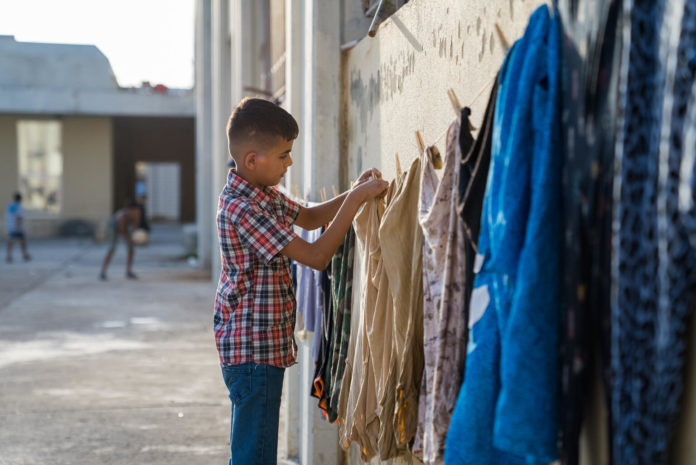
Ongoing hostilities in southern Lebanon are taking a devastating toll on the population, forcing approximately over than 90,000 people – including 30,000 children – from their homes. According to the latest report from the Ministry of Public Health, 8 children are among the 344 people killed and 75 children among the 1359 people injured since the escalation of the hostilities in October 2023.
The increase in armed conflict has damaged civilian infrastructure and facilities and has also impacted the essential services that children and families depend on, including significant damage to nine water stations, which serve a population of 100,000 people. More than 70 schools are currently closed, affecting around 20,000 students and significantly affecting their education. Around 23 healthcare facilities – serving 4,000 people – are closed due to the hostilities.
“As the conflict impacting the south of Lebanon is in its seventh month, we are deeply alarmed by the situation of children and families who have been forced from their homes, and the profound long-term impact the violence is taking on children’s safety, health and access to education,” said UNICEF Representative in Lebanon, Edouard Beigbeder. “As long as the situation remains so volatile, more children will suffer. Protection of children is an obligation under the International Humanitarian Law and every child deserves to be safe.”
Prior to the onset of this conflict, Lebanon’s essential services, including health and education systems, were already on the brink of collapse after years of being overstretched. The health system is unable to meet the demands for public healthcare due to a scarcity of resources including energy, human resources, equipment, and medication. The unprecedented financial and economic crises that have devastated the country since 2019 have exacerbated existing economic vulnerabilities, resulting in the loss of jobs and income, high inflation, and a shortage of essential services including electricity and medication.
“As long as the situation remains so volatile, more children will suffer. Protection of children is an obligation under the International Humanitarian Law and every child deserves to be safe.”
UNICEF, working with partners, have been delivering vital aid to families affected by the hostilities, including life-saving medical supplies, hygiene kits, and nutrition supplies to the displaced families who are living in collective shelters and in communities across Lebanon. UNICEF has also delivered fuel, water, water tanks, winter clothes and blankets. A one-time emergency cash support was jointly delivered with the Ministry of Social Affairs to address the immediate needs of 85,000 people. A number of internally displaced children were able to resume their education in public schools and received new school supplies and transportation assistance.
“The situation in the south is adding to the ongoing multiple crises that the country has been facing since 2019,” said Beigbeder. “We call for an immediate ceasefire and the protection of children and civilians. We must redouble our efforts to make sure every child in Lebanon is in school and learning, is protected from physical and mental harm, and has the opportunity to thrive and contribute to society.”
[dflip id=”1921″ ][/dflip]
هذه المقالة متاحة أيضًا بـ:

