
On 10 October, World Mental Health Day offers Lebanon an opportunity to strengthen a national commitment: everyone should be able to access mental health support that respects their dignity, autonomy and rights. Against the pressures of conflict, displacement and economic insecurity, Lebanon’s response must combine accessible services, protection from discrimination and abuse, and meaningful participation by people with lived experience.
The World Health Organization’s theme for World Mental Health Day 2026 is “Lived experiences heard: real voices, real change.” It calls for people with lived experience of mental health conditions to help shape the policies, services and decisions that affect their lives. Their knowledge should influence how care is planned, delivered and evaluated.
For the National Human Rights Commission, including the Committee for the Prevention of Torture (NHRC-CPT), this message has particular relevance to Lebanon. Mental health reform must protect the rights of people who seek support, including their right to be heard, to receive understandable information, to participate in decisions and to obtain remedies when they experience abuse.
Lebanon has a national framework on which to build. The Ministry of Public Health’s National Mental Health Strategy 2024–2030 provides a roadmap for improving mental health and recognises that progress requires addressing the social, economic and political factors that undermine well-being and recovery.
World Mental Health Day should therefore encourage practical scrutiny of how national commitments translate into people’s daily experiences.
Why mental health must be central to Lebanon’s recovery
Mental health is closely connected to the conditions in which people live. Safety, housing, income, education, work, social relationships and access to healthcare can all affect well-being.
In Lebanon, these connections are especially important. Families coping with bereavement, displacement, damaged homes or financial insecurity may face overlapping pressures. Healthcare workers, emergency responders, teachers and caregivers may also need support while assisting others.
The Ministry of Public Health’s emergency response resources explicitly recognise the grief, distress and anxiety associated with attacks, loss and displacement. Its mental health and psychosocial response brings together the National Mental Health Programme, WHO, UNICEF and partners across sectors.
Recovery planning should therefore include mental health from the outset. Reopening a school, restoring healthcare or helping a family secure accommodation can also support psychological well-being. These measures should be connected to appropriate psychosocial support and clinical care where needed.
Responses must recognise that people experience adversity differently. Distress following difficult events does not automatically indicate a mental health disorder. Support should respond to individual needs, respect people’s preferences and provide pathways to professional care when necessary.
Giving people with lived experience a real role in decisions
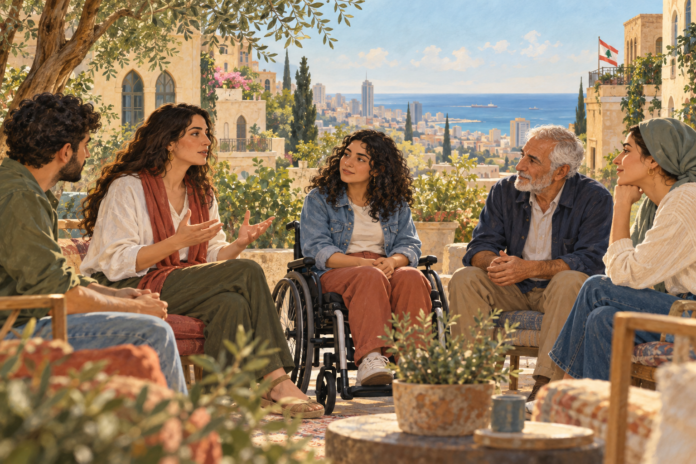
The 2026 campaign asks institutions to recognise lived experience as expertise. People who have sought care, received it or been unable to obtain it can identify barriers that professional assessments may overlook.
For Lebanon, meaningful participation could help answer concrete questions: Are services affordable? Are appointments and referrals easy to navigate? Is information understandable? Do people feel respected? Can they raise concerns safely?
Consultation should create opportunities to influence decisions. People with lived experience should be involved in developing policies, reviewing services and assessing results. Participation should be accessible, voluntary and supported, with clear information about how contributions will be used.
Institutions should also respect diversity. One person cannot represent every experience. Participation should include people from different regions and backgrounds, including persons with psychosocial disabilities and those facing financial, communication or mobility barriers.
Public storytelling must remain a choice. Nobody should have to disclose private information or recount painful experiences to gain access to support or participate in reform.
Building on Lebanon’s National Mental Health Strategy
The National Mental Health Strategy 2024–2030 was developed through assessment and consultation, including with people with lived experience. Its priorities include improving access to quality care, supporting the workforce, preventing harmful practices, strengthening evidence and developing the legal, policy and financing arrangements needed for reform.
This framework provides a basis for coordinated action. Implementation should be accompanied by clear responsibilities, sustained resources and public reporting on progress.
Useful measures of progress would include whether people can obtain timely care, continue treatment during emergencies, access services outside major urban centres and report concerns without fear.
Evaluation should also examine the experience of care. Increasing the number of consultations is valuable, but quality includes respect, confidentiality, participation and effective follow-up.
Making services accessible and affordable
Access depends on more than the existence of a service. Cost, transport, opening hours, information, accessibility and fear of stigma can influence whether someone seeks support.
Lebanon’s response should strengthen links between primary healthcare, specialised care and community support. Clear referral pathways can help people find appropriate assistance without repeatedly navigating disconnected services.
Affordability must include the full cost of care: consultations, prescribed medication, transport and follow-up. People with limited income or irregular employment need options they can realistically use.
The Ministry of Public Health’s National Mental Health Programme provides information about services and support resources, including Step-by-Step, a free and confidential programme for people experiencing stress and difficult emotions. Its resources also include information on affordable or free services in Lebanon.
Digital support can expand access, but service planning should also account for people who lack reliable connectivity, private space or the ability to use digital tools.
Protecting dignity and autonomy within care
Respect for human rights is a component of quality mental healthcare.
People should receive clear information, have their privacy protected and be supported to participate in decisions about their care. Accessible complaints mechanisms and independent oversight are essential when treatment or living conditions raise concerns.
The NHRC-CPT has already addressed these issues publicly. In its September 2026 report on Commissioner Dr. Josyan Madi-Skaff’s participation in Lebanon’s national mental health event, the Commission highlighted dignity, autonomy and participation in treatment decisions. It also identified rights concerns associated with involuntary admission, restraint, isolation and forced treatment, and emphasised safeguards, monitoring and accountability.
These concerns require sustained attention. Institutions should strengthen supported decision-making, develop approaches that prevent coercion and ensure that allegations of abuse receive an effective response.
People must be able to raise concerns without risking retaliation or losing access to care.
Expanding community-based support
WHO’s 2026 campaign highlights the transition from long-stay psychiatric institutions towards community-based, person-centred care. It stresses that this transition requires careful planning of funding, services and support.
For Lebanon, community-based support should help people live with dignity and maintain relationships, education, employment and participation in society.
That requires more than changing the location of treatment. People may need accessible housing, social protection, crisis support, rehabilitation and assistance with daily living. Families and caregivers may also need information, training and support.
Any transition should be planned with the people concerned, according to their needs and preferences. Closing a facility without adequate alternatives can expose people to homelessness, interrupted care or greater dependence on already overstretched families.
Community care must be supported by reliable services and an accountable system.
Maintaining care during emergencies
Conflict and displacement can interrupt consultations, medication access and established support networks. Emergency planning must address these risks for people already receiving care as well as those seeking assistance for the first time.
The Ministry’s preparedness and response framework identifies continuity of services, access to psychotropic medicines, public communication and training for healthcare professionals and frontline responders as priorities.
Practical implementation should include clear information for displaced people, coordination between providers and referral arrangements that remain usable when facilities or transport routes are disrupted.
Confidentiality also needs protection during emergencies. Information should be shared only through appropriate procedures, and people should understand how their personal data will be used.
Support for healthcare and humanitarian workers should be included in operational planning. Their well-being affects both their own rights and the continuity of services.
Protecting children, young people and people facing exclusion
Children and adolescents need support suited to their age and circumstances. Schools can provide stability, identify difficulties and connect families with appropriate services, provided staff receive training and referral options are available.
Young people should have opportunities to discuss concerns without humiliation or discrimination. Their participation can improve the relevance of services and prevention programmes.
Mental health support should also be accessible to persons with disabilities, older people, refugees, migrant workers, survivors of violence and people deprived of liberty.
In detention settings, care must be linked to protection from violence, humane conditions and continuity of treatment. Psychological distress should prompt an appropriate response rather than punishment or neglect.
For survivors of gender-based violence, mental health services and protection services should coordinate carefully, respecting confidentiality and the person’s choices.
Preventing suicide and making support visible
Lebanon marked an important national development on 10 September 2026, when an official event announced 10 September as the National Suicide Prevention and Mental Health Awareness Day. Organised through the Ministry of Public Health’s National Mental Health Programme with Embrace and ABAAD, the event placed prevention within the wider reform of the mental health system.
The announcement should be supported by continuing action: accessible assistance, appropriate follow-up, responsible public communication and coordination across health, education, social protection and other sectors.
Public messages should encourage help-seeking without blame or stigma. They should avoid sensational coverage and make support information easy to find.
In Lebanon, the national Lifeline 1564 provides psychological support and suicide prevention assistance around the clock, in partnership with Embrace. The Ministry describes it as a space where people experiencing severe distress or thoughts of self-harm can speak with trained staff and receive support and referral information.
The NHRC-CPT’s contribution to a rights-based approach
The Commission’s engagement extends beyond awareness campaigns. With support from the National Mental Health Programme, it submitted a contribution to the Office of the UN High Commissioner for Human Rights on mental health and human rights.
The submission addressed legal and policy measures, implementation challenges and recommendations for applying a human rights perspective to mental health in Lebanon. It emphasised dignity, non-discrimination and access to care.
Within its mandate, the Commission can contribute through monitoring, complaints handling, policy review, awareness and cooperation with national and international partners.
Independent scrutiny has particular importance wherever people are deprived of liberty, including mental health institutions where individuals cannot leave voluntarily. Oversight should help identify risks, hear people’s concerns and recommend corrective measures.
Turning World Mental Health Day into practical progress
For Lebanon, priorities should include:
- Meaningful participation: Involve people with lived experience in policy development, service design and evaluation.
- Affordable access: Strengthen primary healthcare, referral pathways and accessible community services.
- Continuity during crises: Maintain treatment, medication access and support when people are displaced or services disrupted.
- Rights within care: Protect autonomy, confidentiality and access to complaints and remedies.
- Community-based support: Develop housing, social and healthcare arrangements that enable independent living and inclusion.
- Prevention and early support: Connect schools, workplaces and community services with appropriate assistance.
- Protection from discrimination: Address barriers that prevent people from seeking care or participating in society.
- Accountable implementation: Publish progress against the National Mental Health Strategy and use service users’ feedback to improve outcomes.
World Mental Health Day 2026 offers Lebanon an opportunity to connect these priorities with its existing national strategy and the work of its public institutions, civil society and communities.
The measure of progress is whether people can obtain support when they need it, receive care that respects their choices and dignity, and help shape the system on which they rely. Placing their voices and rights at the centre of reform is essential to Lebanon’s recovery.
Support information: For psychological support and suicide prevention assistance in Lebanon, call the national Lifeline 1564, available 24 hours a day, seven days a week. Information on other services and resources is available through the Ministry of Public Health’s National Mental Health Programme.
Official references
- WHO: World Mental Health Day 2026
- Ministry of Public Health: National Mental Health Strategy 2024–2030
- Ministry of Public Health: National Mental Health Programme and support resources
- NHRC-CPT: Dr. Josyan Madi-Skaff on protecting the rights of mental health service users
- NHRC-CPT: Contribution to OHCHR on mental health and human rights
- Ministry of Public Health: National Suicide Prevention and Mental Health Awareness Day
هذه المقالة متاحة أيضًا بـ:

