
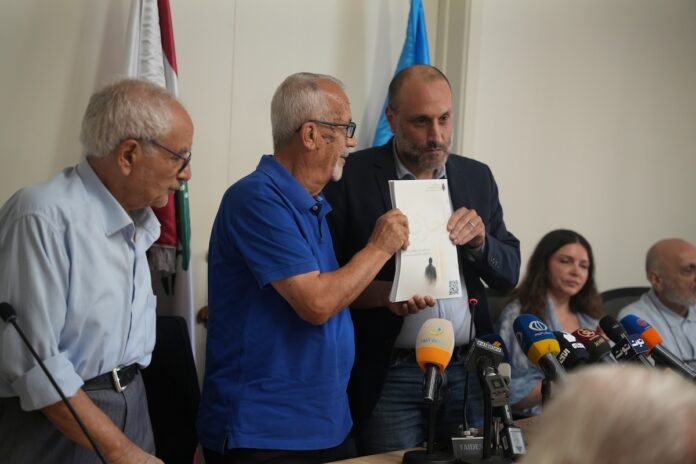
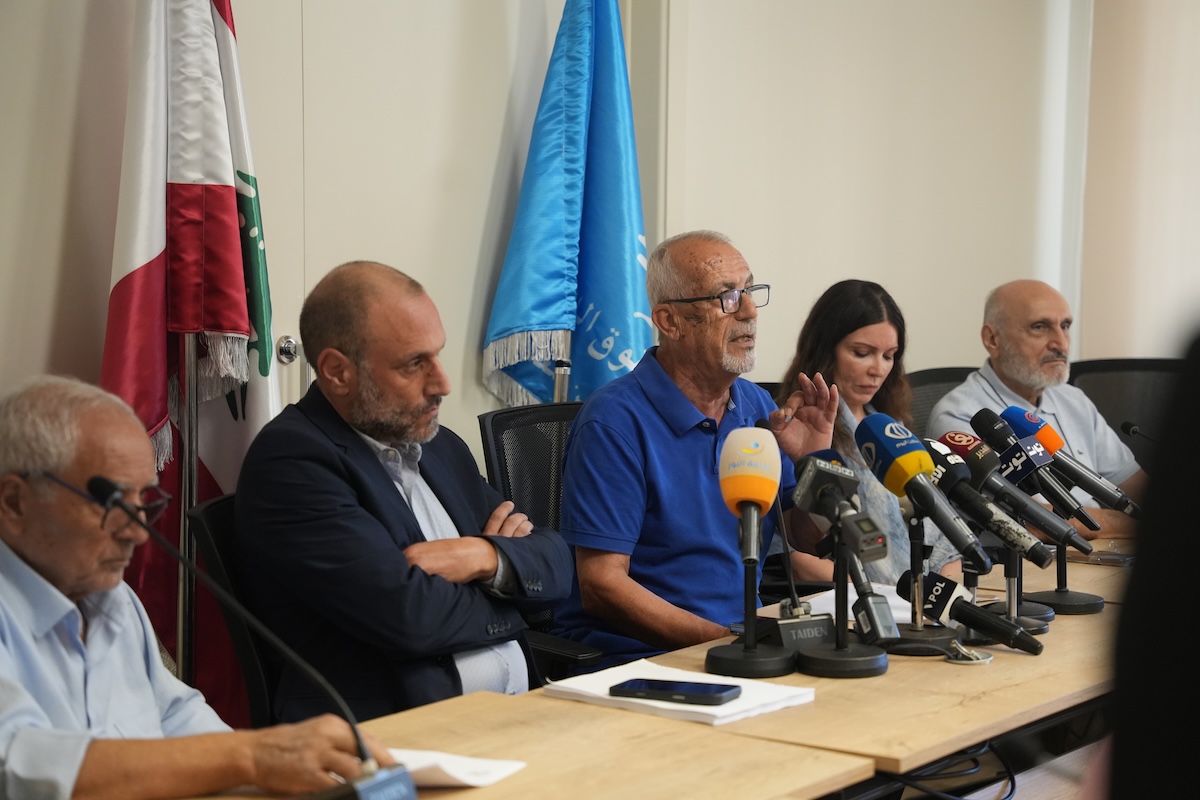
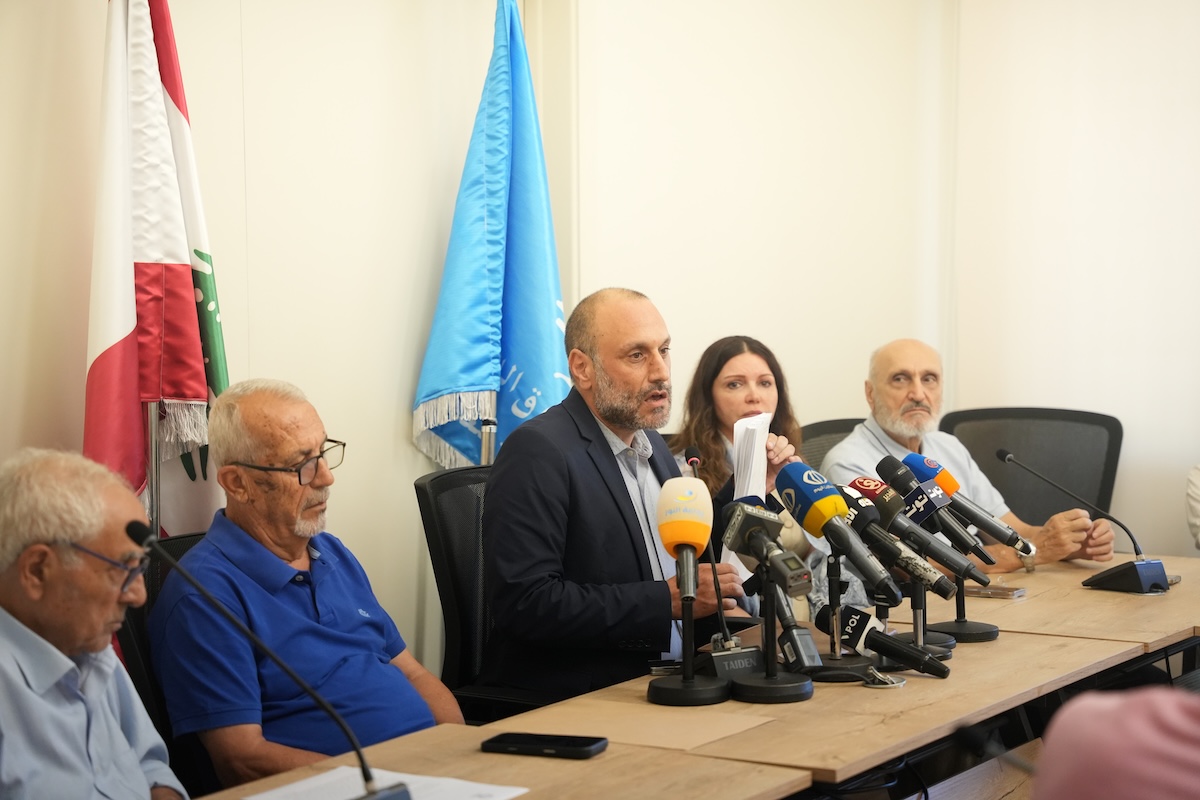
A press conference was held at the headquarters of the National Human Rights Commission, including the Committee for the Prevention of Torture, on Sami El Solh Boulevard in Beirut, to launch a draft resolution entitled “The Human Rights Situation of Lebanese Detainees and Victims of Enforced Disappearance in Israel”, as well as a report entitled “The Legal Status of Lebanese Prisoners, Detainees, Victims of Enforced Disappearance and Missing Persons Held by Israel”, in preparation for their submission to the United Nations Human Rights Council in Geneva.
The press conference was organized by the Khiam Rehabilitation Center for Victims of Torture and the Qana Human Rights Observatory. It was attended by Kinga Jánik, representative of the Regional Office for the Middle East and North Africa of the Office of the United Nations High Commissioner for Human Rights, as well as representatives of The Legal Agenda, the Lebanese Center for Human Rights, the National Commission for the Missing and Forcibly Disappeared, the National Human Rights Commission, including the Committee for the Prevention of Torture, and the Lebanese Association of Prisoners and Liberated Prisoners. Representatives of several human rights and humanitarian organizations, political parties, families of prisoners, detainees, victims of enforced disappearance and missing persons, and members of the media also attended.
Speakers at the press conference included Dr Mohammad Tay, Director-General of the Qana Human Rights Observatory; Mohammad Safa, President of the Khiam Rehabilitation Center for Victims of Torture; and Bassam Al Kantar, Commissioner for International Relations and Media at the National Human Rights Commission.
A draft resolution grounded in human rights, not political alignment
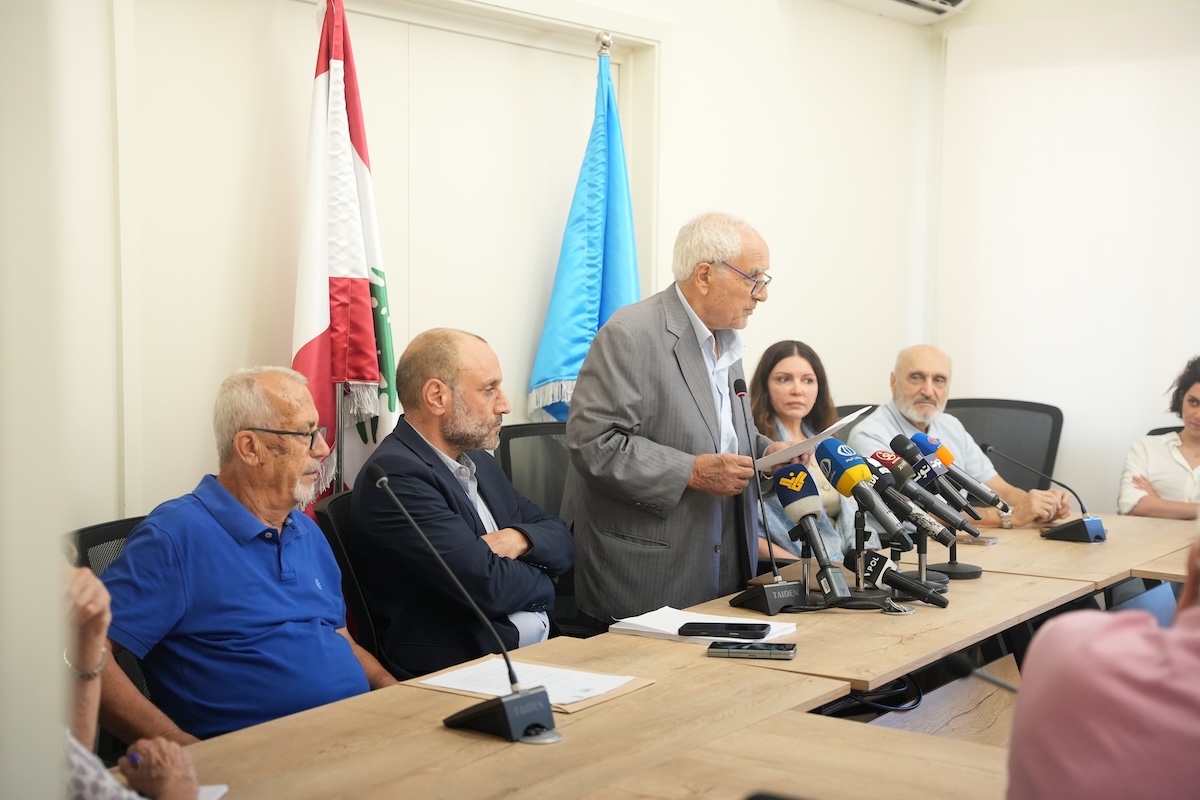
Dr Mohammad Tay stressed that the draft resolution is not based on a political position and does not seek to instrumentalize a humanitarian issue in any political dispute. Rather, it is grounded in the human rights to liberty, dignity and life; the right of families to know the fate of their loved ones; and the international community’s duty to ensure that no person remains missing, without information about their whereabouts, legal status or health.
He noted that Lebanese nationals had been captured, detained or gone missing during Israeli attacks, while complete information about their number, fate, whereabouts and conditions of detention remains unavailable. He emphasized that behind every name is a family waiting and demanding the truth, and that this issue must be addressed in accordance with international human rights law and international humanitarian law.
He explained that the draft resolution is based on the Universal Declaration of Human Rights; the International Covenants on Civil and Political Rights and on Economic, Social and Cultural Rights; the Geneva Conventions; the Convention against Torture; and international standards concerning enforced disappearance and the treatment of persons deprived of their liberty.
He added that the draft calls for the release of civilians subjected to arbitrary detention; the release and repatriation of prisoners of war once the lawful grounds for their continued captivity have ceased; humane treatment for all detainees; protection from torture and other ill-treatment; access to medical care; and respect for their rights and judicial guarantees.
The draft also stresses the need to grant the International Committee of the Red Cross immediate, regular and unhindered access to all Lebanese detainees and to verify their whereabouts, health and legal status, and conditions of detention, in accordance with its humanitarian mandate.
Tay noted that the issue of Lebanese detainees had previously received direct attention within the United Nations system, particularly through Commission on Human Rights Resolution 2003/8. The current initiative, he said, seeks to restore the issue to its proper place within the international human rights system in light of new facts and developments.
He explained that the draft resolution goes beyond calling for the fate of detainees and disappeared persons to be disclosed by proposing the establishment of an effective and sustained international follow-up process. It calls on the Working Group on Enforced or Involuntary Disappearances to give particular attention to the Lebanese cases and urges the relevant United Nations mechanisms on arbitrary detention and torture to follow up on information relating to the issue.
The draft requests the United Nations High Commissioner for Human Rights to monitor the issue, document relevant information, engage with the parties concerned and submit a written report to the Human Rights Council, followed by an interactive dialogue. This would ensure that the process does not end with the adoption of a resolution, only for the issue to be subsequently set aside.
Tay emphasized that enforced disappearance affects not only the disappeared person but also their entire family, leaving relatives in a prolonged state of waiting marked by hope, fear and uncertainty. He underscored three interconnected and non-negotiable rights: the right to truth, the right to justice and the right to reparation.
He concluded: “This is not a matter of numbers, nor one of negotiating over people, nor a file that should remain unresolved pending political settlements. Every detainee is a human being with rights, every disappeared person has a name and a family, and every family has the right to know.”
Safa: We Want to Bring the Issue from the National Level to the Highest International Forums
هذه المقالة متاحة أيضًا بـ:

