

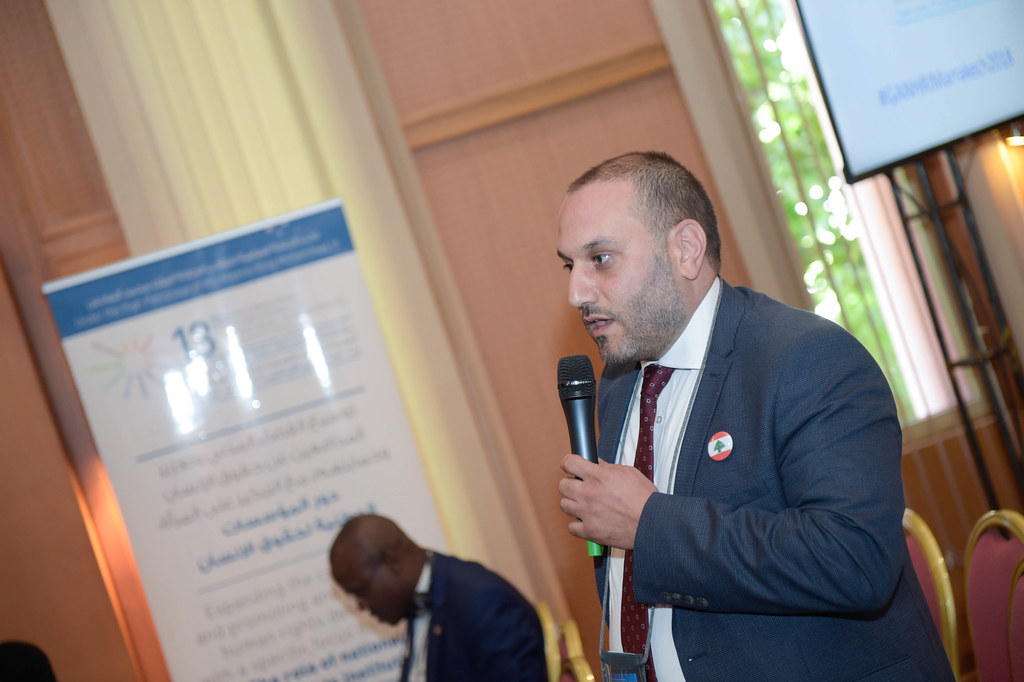
Bassam Al Kantar, representative of the National Human Rights Commission, stated that the participation of the Lebanese Commission in this international conference constitutes a highly significant step in the institution’s establishment process and in strengthening its presence within the international system of national human rights institutions.
Al Kantar emphasized that, despite the Commission’s recent establishment and the challenges it faces in Lebanon, it aspires to play an active role in the protection of human rights, the promotion of civic space, and the consolidation of the independence of national institutions in accordance with the Paris Principles.
He added that the Commission’s participation in the conference provides an important opportunity to benefit from international expertise and comparative experiences, particularly in the areas of protecting human rights defenders, strengthening monitoring and documentation mechanisms, and engaging with United Nations mechanisms and relevant regional and international human rights organizations.
Al Kantar further noted that Lebanon today is in need of a strong and independent national institution capable of building trust between citizens and institutions, contributing to the protection of public freedoms, reinforcing the rule of law, and combating violations. He stressed that the Commission seeks to serve as a national platform for dialogue and cooperation with civil society organizations and human rights defenders.
He also underlined that the protection of civic space is no longer merely a domestic issue, but has become an essential component of the international human rights protection system, which requires stronger cooperation and solidarity among national human rights institutions at both the regional and international levels.
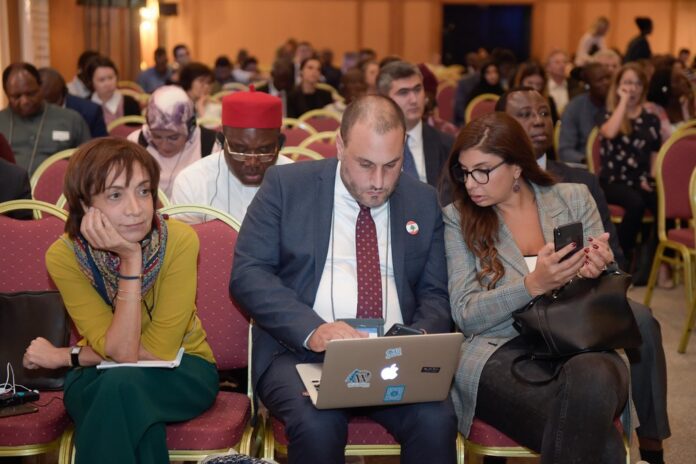
The conference featured extensive and interactive discussions reflecting the diversity of experiences and perspectives among national human rights institutions and international partners. The discussions focused on several key themes, including:
- The essential elements required to create an enabling environment for the work of human rights defenders;
- Mechanisms for monitoring civic space and addressing the challenges and threats affecting it;
- The protection of human rights defenders, particularly women human rights defenders;
- The protection of national human rights institutions themselves as human rights defenders;
- The development of effective communication strategies on human rights and the promotion of positive narratives.
The conference concluded with the adoption of the “Marrakech Declaration,” which set out the commitments of national human rights institutions and a future roadmap aimed at strengthening their role in protecting human rights defenders and expanding civic space.
The Declaration emphasized a number of core commitments, including:
- Contributing to the establishment of national protection systems for human rights defenders based on a comprehensive and inclusive enabling environment;
- Supporting the implementation of the United Nations Declaration on Human Rights Defenders;
- Promoting positive narratives regarding the importance of human rights and the legitimate role of human rights defenders, particularly women human rights defenders;
- Developing national and regional networks of human rights defenders and strengthening cooperation with civil society;
- Establishing early warning mechanisms and effective focal points within national human rights institutions;
- Enhancing engagement with international and regional human rights systems in support of human rights defenders and following up on the implementation of relevant international recommendations.
The Marrakech Declaration also called upon the Global Alliance of National Human Rights Institutions, its regional networks, and all national human rights institutions to strengthen cooperation, exchange expertise, and build joint capacities, including through the development of regional action plans and the establishment of a specialized mechanism on human rights defenders within the Global Alliance.
The National Human Rights Commission in Lebanon affirmed that its participation in the conference forms part of its efforts to strengthen its engagement with international and regional networks of national human rights institutions and to benefit from comparative experiences in the fields of protecting civic space and strengthening the protection of human rights defenders, particularly women human rights defenders, in line with international standards and the Paris Principles.
Participants also noted that the conference marked the seventieth anniversary of the Universal Declaration of Human Rights, the twenty-fifth anniversary of the adoption of the Paris Principles and the establishment of the international network of national human rights institutions, as well as the twentieth anniversary of the adoption of the United Nations Declaration on Human Rights Defenders.
هذه المقالة متاحة أيضًا بـ:
 العربية (Arabic)

