

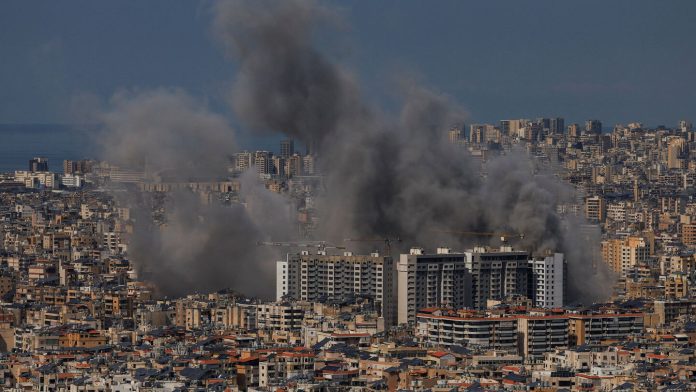
The National Human Rights Commission in Lebanon, including the Committee for the Prevention of Torture (NHRC-CPT), expresses deep concern over the rapidly deteriorating humanitarian situation in Lebanon following the Israeli aggression since early March 2026.
According to Flash Update #10 – Escalation of Hostilities in Lebanon, as of 19 March 2026, published by the United Nations Office for the Coordination of Humanitarian Affairs (OCHA) on 21 March 2026, the humanitarian situation in Lebanon has sharply deteriorated amid ongoing hostilities.
Widespread Civilian Harm and Displacement
The escalation has resulted in over 1,000 deaths and 2,584 injuries, with children disproportionately affected. The intensity and geographic expansion of attacks continue to impact civilian populations and infrastructure across the country.
Displacement dynamics remain alarming, with over 1.2 million people displaced, including more than 134,000 individuals currently residing in 636 collective shelters. These facilities are operating beyond capacity, lacking adequate access to electricity, water, sanitation, and privacy, thereby heightening protection risks for vulnerable groups.
Attacks on Healthcare, Journalists, and Humanitarian Personnel
NHRC-CPT underscores the grave implications of continued attacks on protected persons and objects. At least 31 healthcare workers have been killed, and multiple hospitals and primary healthcare centers have been rendered non-operational, severely restricting access to essential medical services.
The reported killing and injury of journalists further raise serious concerns regarding compliance with international humanitarian law, which explicitly protects media personnel in situations of armed conflict.
Destruction of Civilian Infrastructure
The destruction of residential buildings, roads, bridges, and water infrastructure continues to disrupt access to essential services and impede humanitarian operations. Damage to critical infrastructure is further exacerbating humanitarian needs and limiting response capacity.
Legal Framework and Obligations
The Commission recalls that all parties to the conflict are bound by international humanitarian law, including the obligation to:
- Distinguish between civilians and combatants,
- Refrain from indiscriminate or disproportionate attacks,
- Take all feasible precautions to protect civilians,
- Ensure the protection of medical personnel, humanitarian workers, and journalists.
Displacement orders must comply with legal standards of necessity, proportionality, and clarity, and must not result in arbitrary or forced displacement.
Call for Immediate Action
NHRC-CPT calls for:
- The immediate protection of civilians and civilian infrastructure,
- Full respect for international humanitarian law,
- The protection of healthcare workers, journalists, and humanitarian personnel,
- Unhindered humanitarian access,
- Accountability for violations through independent and impartial investigations.
The Commission reiterates that the protection of civilians is a fundamental legal obligation that must be upheld at all times.
هذه المقالة متاحة أيضًا بـ:
 العربية (Arabic)
  Français (French)

