
The report has been updated regarding the number of people sentenced to death up to the end of 2025
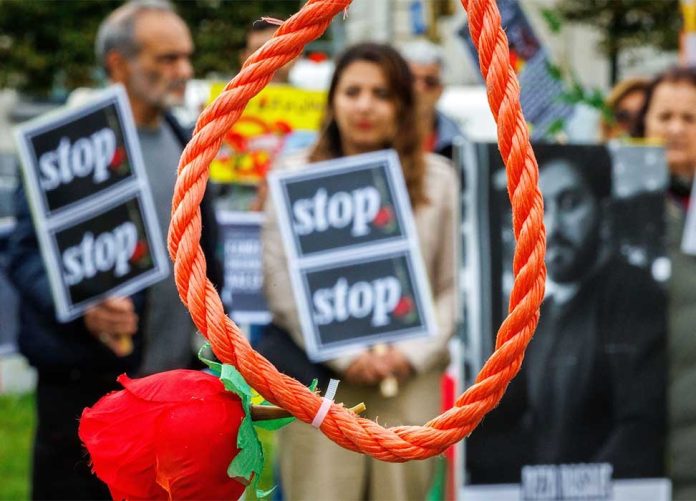
The National Human Rights Commission, which includes the Committee for the Prevention of Torture, called on the Lebanese Parliament to place the draft law abolishing the death penalty on the agenda of its next legislative session and to work toward its adoption. Such a step would constitute a pivotal legislative milestone for strengthening the protection of the right to life and consolidating Lebanon’s commitment to international human rights standards.
This call comes in light of the progress made by the draft law aimed at abolishing the death penalty in Lebanon, after it was discussed by the Parliamentary Human Rights Committee and approved with some amendments, in preparation for referring it to the Parliament’s General Assembly for a vote. The Council of Ministers discussed the draft law during its session held on November 20, 2025, and issued a detailed written opinion of four pages expressing full support for the proposal, accompanied by two memoranda issued by the Ministry of Justice and the Ministry of Social Affairs. This marks the first time that a proposal to abolish the death penalty has been presented this clearly before the Council of Ministers and has received officially declared support.
The Commission also notes that Lebanon has not carried out any executions since January 17, 2004, meaning that the country has effectively lived under a de facto moratorium on executions for more than twenty-two years. Recent international data also show that no executions were recorded in Lebanon in 2025, while at least two new death sentences were issued in 2024. The report titled “Distribution of Current Prisoners by Sentence Duration, Category, and Type of Offence” (print date: 27 January 2026), issued by the Directorate of Prisons at the Ministry of Justice, indicates that 85 prisoners were sentenced to death as of the end of 2025.
According to recent data released by the Together Against the Death Penalty (ECPM) coalition in collaboration with the Lebanese Association for Civil Rights (LACR) and the Justice and Mercy Association (AJEM), the number of people sentenced to death in Lebanon reached 84 by the end of 2024, including at least one woman. Cases have also been recorded indicating that some of those sentenced to death have been subjected to conditions that may amount to ill-treatment, including deterioration in their mental and physical health and repeated suicide attempts. These figures reflect the complex nature of the death penalty, not only as an extreme punishment but also as a form of prolonged detention under harsh conditions.
The Commission believes that maintaining the death penalty in legal texts despite not enforcing it creates a contradiction between legislation and practice and leaves dozens of individuals under the weight of an irreversible final punishment. This calls for a clear legislative solution by abolishing it and replacing it with the next most severe penalties. The use of the death penalty is incompatible with the right to life and the right to live free from torture or cruel, inhuman, or degrading treatment or punishment. There is growing global consensus in favor of abolishing the death penalty. Around 170 countries have abolished the death penalty or stopped applying it either in law or in practice. However, despite this trend toward abolition, it is still used in a limited number of countries, largely due to the persistent myth that it deters crime. A small number of states also continue to allow the death penalty for offenses other than the most serious crimes involving intentional killing, including drug-related offenses or terrorism charges.
Text of the Draft Law
The draft law aimed at abolishing the death penalty in Lebanon includes the following provisions:
Article 1:
The death penalty is abolished wherever it appears, particularly in the Penal Code, and is replaced with the next most severe penalty.
Article 2:
Persons sentenced to death before the issuance of this law shall benefit from its provisions, with the possibility of benefiting from the Law on the Execution of Sentences No. 463/2002 and its amendments under Law No. 183/2011.
Article 3:
This law shall enter into force immediately upon its publication in the Official Gazette.
Amendment Adopted by the Parliamentary Human Rights Committee
The Parliamentary Human Rights Committee approved the addition of a procedural amendment concerning those sentenced to death prior to the issuance of the law, which states:
“If a person sentenced to death submits a request to reduce their sentence, and the victim’s family objects, the Committee for the Reduction of Sentences shall postpone consideration of the request for a period of two years, only once, even if the convicted person has paid the compensation owed to the victim’s family.”
Background
The Lebanese Civil Rights Organization proposed a new law to abolish the death penalty and submitted it to Parliament on October 7, 2025. It was registered under number 160/2025 and signed by seven members of Parliament from various parliamentary blocs (Elias Hankach, Osama Saad Al-Masri, Paula Yacoubian, Georges Okais, Faisal Sayegh, Halima Kaakour, and Michel Doueihi). The organization named the proposal the “Walid Slaibi Law” in honor of the late non-violent thinker Walid Slaibi, a pioneer of the national campaign to abolish the death penalty in Lebanon since 1997, in partnership with Dr. Ougarit Younan.
The explanatory memorandum supporting the proposal relied on several considerations, including the need to “humanize punishments” as part of a civilizational responsibility tied to the progress of nations. In detail, the memorandum focused on the following points:
-
Lebanon’s alignment with the international community of states opposing the death penalty, following its signing at the United Nations of Resolution 62/194 issued in 2007 on a moratorium on the use of the death penalty, and its vote in favor of this resolution three consecutive times in 2020, 2022, and 2024, reflecting a clear will to reject capital punishment.
-
The passage of 21 years without any executions (2004–2025), which demonstrates that successive Lebanese governments, despite difficult general circumstances, have consistently refrained from implementing death sentences. This places Lebanon among countries that have effectively abolished the death penalty in practice according to international standards, since it has not carried out any execution for more than ten consecutive years.
-
The repeal in 2001 of Law 302/94, known as the “killer law,” which was achieved through a remarkable vote in Parliament (94%). This marked the beginning of the legal path toward opposing the death penalty, followed since 2004 by a continuous political will not to carry out executions up to the present day. Consequently, the prevailing direction in Lebanon reflects a sustained position in favor of reconsidering this punishment.
In addition, the explanatory memorandum cited other obligations, including Lebanon’s status as a founding member of the international human rights system and a party to several global and regional instruments that support the right to life, such as the Universal Declaration of Human Rights, which has become an integral part of the preamble to the Lebanese Constitution and is therefore binding for Lebanon. These also include the International Covenant on Civil and Political Rights, particularly its Second Optional Protocol aiming at the abolition of the death penalty (it should be noted that Lebanon has not yet ratified this protocol), as well as the Convention on the Rights of the Child, the Arab Charter on Human Rights, and others.
Furthermore, the memorandum emphasized the necessity of addressing the root causes of crime by developing preventive policies aimed at reducing criminal activity, especially since evidence shows that there is no relationship between the application of the death penalty and crime deterrence. Lebanon itself experienced this reality, as noted in the memorandum, when 14 people were executed over a four-year period (1994–1998) under the pretext of adopting stricter measures after the war; nevertheless, crimes continued, and the death penalty proved neither a deterrent nor a solution.
هذه المقالة متاحة أيضًا بـ:

