
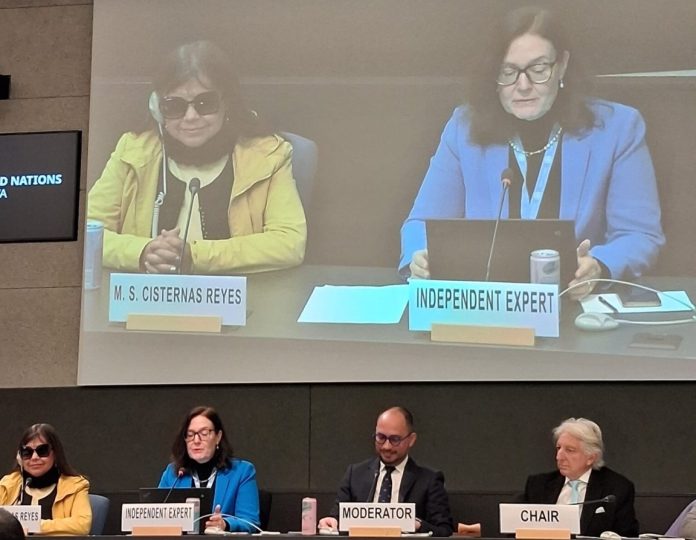
In a development decades in the making, the first organizational meeting of the Open-ended Intergovernmental Working Group on the human rights of older persons convened at the Palais des Nations, launching the formal process toward a legally binding international instrument dedicated to protecting and promoting the rights of older persons.
The meeting did not conclude with agreement on a procedural framework. Yet, far from signaling stagnation, it marked a decisive opening of negotiations, created a space for substantive dialogue, and paved the way for written submissions and renewed discussions in the summer. For National Human Rights Institutions, this was not merely an observer moment, but a defining opportunity.
A New Phase in Global Protection
Established by United Nations Human Rights Council Resolution 58/13 in April 2025, the Intergovernmental Working Group represents the culmination of sustained advocacy by civil society organizations, independent experts, and NHRIs worldwide. The resolution explicitly recognizes NHRIs as key stakeholders and calls on them to contribute “actively and constructively” to the process.
This recognition was visible in Geneva.
Global Alliance of National Human Rights Institutions participated alongside several of its member institutions and representatives of its Working Group on the Human Rights of Older Persons. Their message was clear, NHRIs are uniquely positioned at the intersection of States, civil society, and rights-holders.
Operating within domestic legal systems while maintaining independence under the Paris Principles, NHRIs bring a rare combination of proximity to older persons and institutional authority. They translate lived experiences into policy recommendations, monitor compliance gaps, and ensure that abstract commitments are grounded in everyday realities.
Participation, Accountability, and Closing Protection Gaps
Throughout the session, Member States and the Chair underscored the need for meaningful participation of older persons, civil society organizations, and NHRIs. This emphasis on inclusiveness reflected a broader understanding that legitimacy and effectiveness depend on genuine engagement.
NHRIs from Greece, Guatemala, Nigeria, South Africa, and Uganda delivered interventions highlighting persistent protection gaps, age-based discrimination, and barriers to justice. Their contributions focused on three interlocking pillars, participation, accountability, and enforceability.
During a panel discussion on the elements of a future treaty, Commissioner Beda Angeles Epres of the Philippines Commission on Human Rights proposed that the new instrument should formally empower NHRIs as national monitoring mechanisms. She also advocated for the inclusion of an individual complaint mechanism and stronger accountability provisions.
These proposals reflect a growing consensus among human rights actors that older persons’ rights cannot remain fragmented across existing frameworks. Instead, a dedicated, comprehensive instrument is needed to address systemic ageism, social exclusion, inadequate social protection, and discrimination in healthcare, housing, and access to justice.
An Independent Expert’s Perspective
Claudia Mahler, the Independent Expert on the enjoyment of human rights by older persons, offered a candid reflection after the session. She welcomed the visible engagement of NHRIs from all regions, emphasizing that their mandates, national-level experience, and closeness to rights-holders make them indispensable to the drafting process.
Her remarks underscored a fundamental point, the treaty process is not solely about negotiating text. It is about reshaping how societies perceive ageing, dignity, autonomy, and equality.
Towards July and October
Although delegations did not finalize a procedural framework, the Chair confirmed that the process will soon open for written contributions. Member States, NHRIs, civil society organizations, and other stakeholders will be invited to submit proposals, ensuring that momentum continues.
Two substantive sessions are scheduled for July and October 2026. These meetings will move beyond organizational matters and begin addressing the core content of the proposed instrument.
Transparency, inclusiveness, and accessibility will be essential at every stage. The meaningful participation of older persons themselves, along with their representative organizations, remains central to the credibility of the process.
Coordinated NHRI Engagement
To support structured and sustained participation, GANHRI has developed a dedicated strategy on engagement with the Working Group. The approach combines broad information-sharing and capacity-building with deeper engagement for institutions prepared to contribute substantive legal and policy inputs.
This two-tiered model recognizes the diversity of NHRI capacities while ensuring collective coherence.
A Landmark Moment
For decades, older persons’ rights have often been treated as implicit within existing human rights treaties. The Geneva meeting signals a shift from implication to explicit recognition.
While procedural agreement remains pending, the organizational session confirmed that the process is underway, the stakeholders are mobilized, and the momentum is real.
For NHRIs, the message is equally clear. Their national mandates, investigative powers, monitoring roles, and proximity to communities place them at the heart of this evolving architecture. As the Intergovernmental Working Group advances, their contributions will shape not only the text of a treaty, but the future of ageing with dignity worldwide.
Background
Established through Human Rights Council Resolution 58/13 in April 2025, the IGWG represents the culmination of decades of advocacy by civil society, independent experts, and NHRIs. The resolution explicitly recognizes NHRIs as key stakeholders and encourages them to “contribute actively and constructively to the work of the working group.”
هذه المقالة متاحة أيضًا بـ:

