


he National Human Rights Commission, including the Committee for the Prevention of Torture, announced that it has addressed an official letter to the Government Commissioner to the Military Court, Judge Claude Ghanem, requesting to be provided with the results of the ongoing investigations into the death of Mohammad Harqous, in accordance with Article 25 of Law No. 62/2016 establishing the Commission.
This step falls within the legal powers granted to the Committee for the Prevention of Torture, particularly paragraph (b) of Article 25, which stipulates:
“The Committee has the right to review the content and progress of complaints, claims, or defenses submitted to judicial, disciplinary, or administrative authorities in which allegations of torture or cruel, inhuman, or degrading treatment or punishment are raised.
Any judicial or disciplinary decision issued in cases of torture or cruel, inhuman, or degrading treatment or punishment shall be communicated to the Committee by the authority that issued it within one month from the date of issuance.”
In its letter, the Commission emphasized that its request covers the course of the investigation, the results of forensic and autopsy reports, and any judicial decisions or measures taken or to be taken in this case within one month of their issuance. This is intended to ensure compliance with the legal procedures governing crimes of torture and to enhance transparency and accountability.
The Commission’s Role Within Its Legal Mandate
The National Human Rights Commission stressed that its intervention does not aim to replace the judiciary, but rather falls within its legally mandated supervisory role and its commitment to ensuring compliance with national and international standards in investigating allegations of torture or cruel, inhuman, or degrading treatment.
The Commission further emphasized that any death in custody requires a prompt, independent, and transparent investigation, with the victim’s family granted access to relevant information, and with safeguards in place to prevent conflicts of interest within the investigating authority.
Reaffirming the Principle of Accountability
In concluding its statement, the Commission reaffirmed that combating torture constitutes a constitutional and international obligation of the Lebanese State, and that the implementation of Article 25 of its founding law represents a fundamental guarantee for strengthening institutional oversight and preventing impunity.
It also confirmed that it will continue to follow up on this case within the scope of its legal mandate until the full truth is established and judicial procedures and the rights of the victim and his family are fully respected.
Detailed Documentation of the Case of Mohammad Harqous’ Death
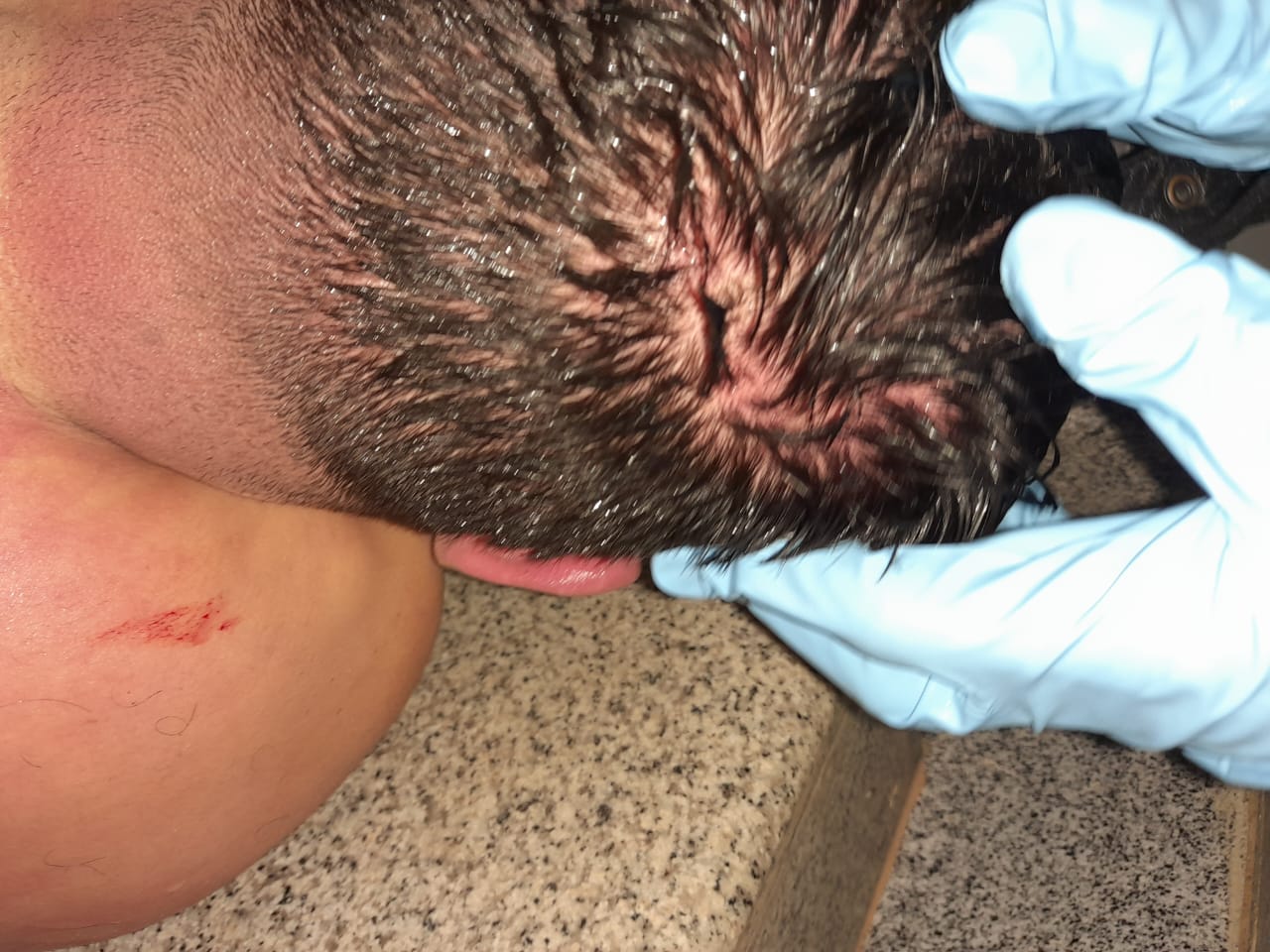
According to the forensic report issued by Dr. Elias Khoury, the cause of Harqous’ death “resulted from exposure to trauma and injury caused by blunt, non-sharp objects, particularly to the skull, which led to severe and acute cerebral hemorrhage accompanied by generalized cerebral edema. This caused increased intracranial pressure, resulting in the disruption of vital functions, including respiratory and cardiac functions, and ultimately death.”
The case of Mohammad Harqous remains judicially pending, and the causes of death have not yet been conclusively determined before the public or the family. However, independent medical indicators raise serious suspicions that he was subjected to torture leading to death.
Does this case represent a turning point in breaking the pattern of impunity for torture crimes in Lebanon, or is it another chapter in an unresolved cycle?
First: Basic Facts
On January 6, 2026, Mohammad Harqous, aged 31, was taken from the Airport Road area in the southern suburbs of Beirut while at work by individuals wearing civilian clothing, according to his wife, who was with him at the time. Some of those individuals identified themselves as members of Hezbollah, while later official information indicated that he was arrested by the Lebanese Army for investigation.
On the following day, January 7, 2026, his father, Farah Harqous, received his body from the Military Hospital, where he was informed that the cause of death was sudden cardiac arrest due to stress, according to two forensic reports issued by the hospital.
However, after noticing clear signs of violence on the body, the family hired forensic doctor Elias Khoury at their own expense. His report dated January 8, 2026, and its addendum of January 10, 2026, concluded that death resulted from acute cerebral hemorrhage caused by blunt force trauma, particularly to the back of the head. This led to increased intracranial pressure and the shutdown of vital functions.
The supplementary report relied on a CT scan of Mohammad Harqous’ skull and brain, stamped and signed by radiology specialist Dr. Ali Moussa Houmani, conducted at Al-Bourj Hospital.
Second: Medical Indicators and Evidence of Violence
The independent report documented the presence of:
-
A flat circular area at the back of the head measuring approximately 7 cm in diameter,
-
Bruises on the forehead, back, shoulder, and knee,
-
Superficial abrasions on the chest and elbow,
-
Bluish discoloration of the extremities, likely resulting from internal bleeding.
The doctor estimated the time of death to be around midnight on January 6–7, 2026, several hours after his arrest.
On January 21, 2026, an official autopsy was conducted by order of the Government Commissioner to the Military Court by a panel of three forensic doctors. However, despite the issuance of the results on February 16, 2026, they were submitted to Military Intelligence and were not immediately delivered to the competent judge or to the complainant, raising serious concerns regarding the transparency of the investigation.
Third: Judicial Proceedings
On January 12, 2026, lawyer Hassan Ibrahim, acting on behalf of the victim’s father, filed a complaint before the Public Prosecutor’s Office for the crime of torture resulting in death, pursuant to Law No. 65/2017 criminalizing torture and punishing its perpetrators.
The file was referred on the same day to the Government Commissioner to the Military Court, Judge Claude Ghanem, who initiated the investigation and heard the testimonies of forensic doctors.
On January 17, 2026, the Army Command issued a statement announcing the “expansion of the investigation under the supervision of the competent judiciary.”
In this context, a legal issue arises concerning Article 24 bis of the Code of Criminal Procedure, added by Law No. 65/2017, which prohibits security agencies from conducting investigations into torture crimes and obliges the competent judge to personally conduct the investigation, except for technical tasks.
هذه المقالة متاحة أيضًا بـ:
 العربية (Arabic)
  Français (French)

