

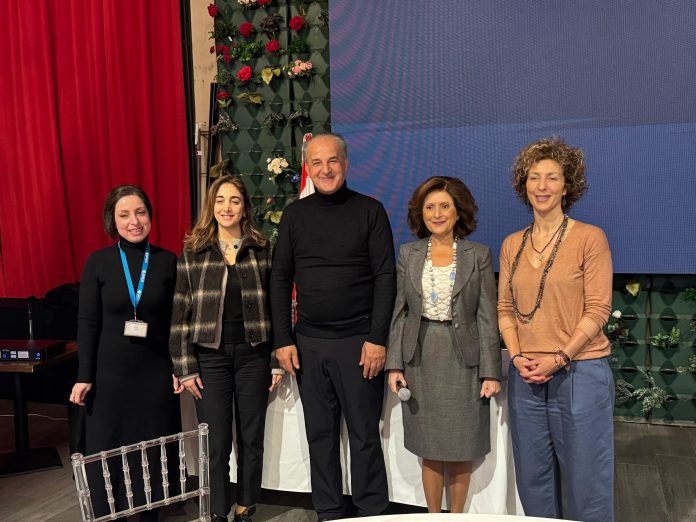
On Wednesday, February 12, 2025, the Human Rights Institute at the Beirut Bar Association, in collaboration with UNICEF and with the support of the Swiss Agency for Development and Cooperation (SDC), organized a training session on “Children in Contact with the Law During Investigation and Detention: Realities, Challenges, and the Role of Lawyers.” This session was part of the continuous training program dedicated to lawyers.
The session was inaugurated by the President of the Bar Association, Mr. Fadi Masri, who praised the pivotal role that lawyers play in defending the rights of children in contact with the law. In his speech, he emphasized the importance of such training programs in enhancing legal expertise and strengthening the capacities of lawyers, enabling them to perform their duties efficiently and professionally while ensuring the best interests and rights of the child.
Additionally, Ms. Elisabeth Zakharia Sioufi, Director of the Human Rights Institute, delivered a presentation addressing the essential standards that should be adopted in various administrative and judicial procedures concerning children, including:
- Special procedures for children during judicial investigations.
- Frameworks and mechanisms for cooperation between lawyers and social workers in child-related cases.
- Children’s rights during judicial proceedings.
- The role of the National Human Rights Commission in monitoring the conditions of detained children.
The Role of the National Human Rights Commission in Child Protection
The session was attended by Dr. Fadi Gerges, President of the National Human Rights Commission, including the Committee for the Prevention of Torture. He presented a discussion on monitoring children’s conditions during detention and custody, highlighting the key challenges faced by detained children. He also elaborated on the commission’s oversight role in detecting violations and ensuring compliance with human rights standards in detention centers. Furthermore, he stressed the need to strengthen legal alternatives to prevent child detention, in line with international child rights conventions.
Alternative Measures and Fair Trial Guarantees for Children
Throughout the training, various legal and procedural topics related to child protection were discussed. Judge Fatima Majed, a magistrate handling juvenile and personal status cases in Beirut and an advisor at the Beirut Criminal Court, gave a presentation on alternative measures to detention during investigation and trial. She explained the importance of implementing such measures to mitigate the psychological and social harm caused to detained children.
Additionally, Judge Arlette Tabet, an investigative judge in Mount Lebanon and a single criminal judge in Baabda, addressed the legality of detaining juvenile offenders and the necessary procedures to be followed during the preliminary and initial investigation phases. She emphasized the importance of adhering to human rights standards during the arrest and investigation processes involving children.
Case Studies and Practical Applications
At the conclusion of the sessions, a representative from “Al-Haraka Al-Ijtima’iyya” (The Social Movement) presented case studies and practical exercises, shedding light on the real-world challenges faced by children in contact with the law. The discussion also explored ways to improve mechanisms for handling children at various stages of judicial proceedings.
This training session is part of the ongoing efforts of the Human Rights Institute at the Beirut Bar Association to enhance lawyers’ capacities in the field of child rights, contributing to the establishment of a justice system that upholds children’s rights and ensures a fair and humane legal environment for them.
هذه المقالة متاحة أيضًا بـ:
 العربية (Arabic)

