
Detention cells and holding facilities in Lebanon reflect a complex picture of accumulated crises affecting the criminal justice system, crises that deeply touch upon fundamental human rights. Pretrial detention, which is supposed to be an exceptional and temporary measure, often turns in practice into a long-term reality, during which detainees’ dignity is put to the test, as is the state’s ability to respect its legal and humanitarian obligations.
In this context, the National Human Rights Commission, including the Committee for the Prevention of Torture, carried out a series of field visits to a number of Internal Security Forces police stations and detention cells in different regions during 2025. These visits were conducted within the framework of a project supported by the United Nations Development Programme, aimed at monitoring detention conditions, providing legal consultations to detainees, and contributing to the reduction of overcrowding through activating available legal mechanisms, in particular requests for release for detainees who meet the legal requirements.
The field visits carried out by the National Human Rights Commission, including the Committee for the Prevention of Torture, covered a number of police stations and detention cells التابعة to the Internal Security Forces in various areas. The visits were distributed among the following centers: Halba Police Station, the Judicial Detachment in Halba, Beino Police Station, Qobayat Police Station, Chiyah Police Unit, Brummana Police Station, in addition to the Sofar and Hammana detention facilities designated for juveniles. Follow-up also included other centers during subsequent visits, as part of a gradual approach aimed at covering the largest possible number of places of detention, in accordance with monitoring priorities and humanitarian and legal needs.
A methodology based on inspection and intervention
These visits were characterized by a dual approach that combined direct field monitoring with practical legal intervention. They were not limited to documenting the conditions of detention cells in terms of space, cleanliness, ventilation, and capacity, but also included individual interviews with detainees, reviews of detention registers, scrutiny of judicial files, and verification of the legality and duration of detention.
Wherever possible, requests for release were prepared, initial legal consultations were provided, and judicial procedures were explained to detainees, many of whom lack legal knowledge or the financial means to appoint lawyers. This approach constituted a practical tool for alleviating overcrowding, while at the same time serving as an entry point to strengthening detainees’ trust in the legal process.
Detention under pressure: overcrowding as a common denominator
The multiple visits showed that overcrowding is the most prominent common denominator among most of the detention cells inspected. In several centers, detainees were found in numbers exceeding the actual holding capacity, in cramped spaces that fail to meet minimum humanitarian standards, forcing detainees to sleep on the floor or take turns sitting and lying down.
This problem is exacerbated by high temperatures in summer and poor natural or artificial ventilation, negatively affecting detainees’ physical and mental health. In some centers, temporary solutions were adopted, such as installing floor air conditioners or fans, but these measures remain partial and do not address the root causes of the problem.
Aging infrastructure and unmet basic needs
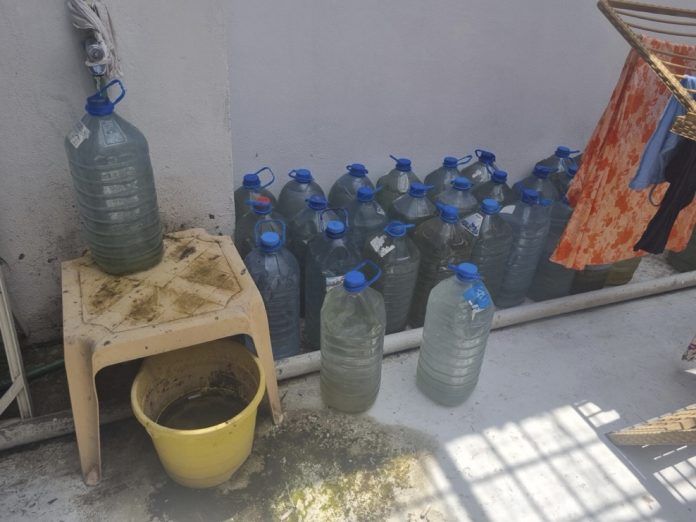
In addition to overcrowding, the visits revealed a noticeable deterioration in the infrastructure of a number of detention facilities. Cracked walls, worn floors, humidity, and the absence of regular maintenance were recurrent features. In some centers, the lack of hot water or the weakness of sewage networks was also noted, directly affecting hygiene and public health conditions, especially in colder regions or during winter.
Although some technical improvements have been introduced in a number of police stations, such as installing solar energy systems to secure electricity, these steps, important as they are, do not compensate for the need for comprehensive rehabilitation of the detention facilities themselves, nor for the absence of a clear national policy for upgrading places of detention.
Security personnel between pressure and commitment
The assessment did not focus solely on detainees’ conditions, but also examined the situation of security personnel working in these centers. Meetings revealed a clear shortage in the number of officers compared to the workload they shoulder, especially in police stations covering wide geographical areas or densely populated regions.
Despite this pressure, a number of station chiefs and officers demonstrated notable cooperation with the visiting teams and an understanding of the importance of the role played by the National Human Rights Commission. Many expressed their awareness that improving detention conditions is not only in the interest of detainees, but also alleviates daily burdens on personnel and promotes a more humane and professional working environment.
Pretrial detention between law and practice
At the legal level, the review of files revealed significant disparities between cases. While some detainees were found to have been held for short periods and did not yet meet the conditions for release, other files revealed cases of prolonged detention, detainees without legal representation, or individuals completely unaware of their judicial status.
In this context, legal intervention played a pivotal role, whether through preparing requests for release, submitting objections to old in absentia judgments, or even explaining the most basic rights and procedures to detainees. Particular humanitarian cases emerged, involving detainees suffering from extreme poverty or fragile social conditions, highlighting the deep interconnection between criminal justice and social justice.
Impact of intervention: small steps with tangible effect
Despite limited resources, the visits showed that direct legal intervention can make a tangible difference. Preparing a request for release or reopening a neglected file does not only change the fate of one individual, but also reduces pressure inside the detention facility and reaffirms that the law remains a viable path, even in the most fragile environments.
Moreover, the visit itself, listening to detainees and explaining their rights, carries an important symbolic dimension, restoring the notion of independent oversight and reminding that places of detention are not spaces isolated from accountability.
Conclusions beyond the walls
These visits demonstrate that the crisis of detention facilities in Lebanon is not a local or temporary issue, but rather an expression of a structural dysfunction that requires a comprehensive approach. Overcrowding, deteriorating infrastructure, slow judicial procedures, and shortages in human resources are interconnected elements that cannot be addressed in isolation from broader reform of the criminal justice system.
In this regard, the National Human Rights Commission, including the Committee for the Prevention of Torture, affirms that continuing field visits and strengthening cooperation with the Internal Security Forces and the judiciary constitute a key entry point for improving detention conditions. However, a sustainable solution ultimately depends on clear political will, real investment in infrastructure, and the activation of alternatives to pretrial detention, in a manner that guarantees respect for human dignity, the rule of law, and the right to a fair trial within a reasonable time.
هذه المقالة متاحة أيضًا بـ:

