


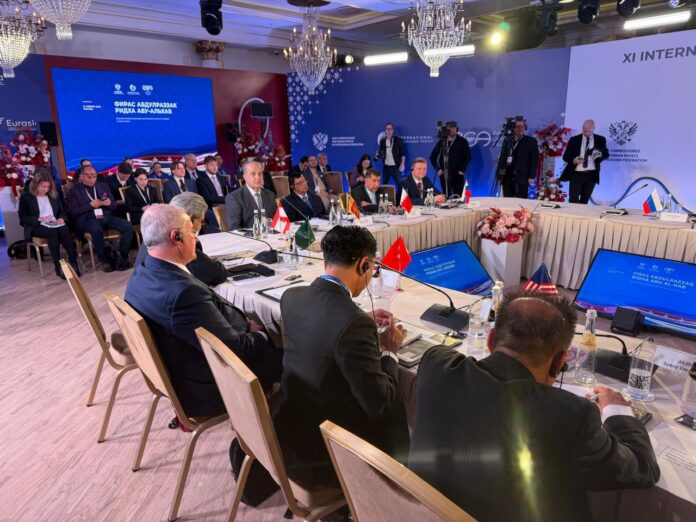
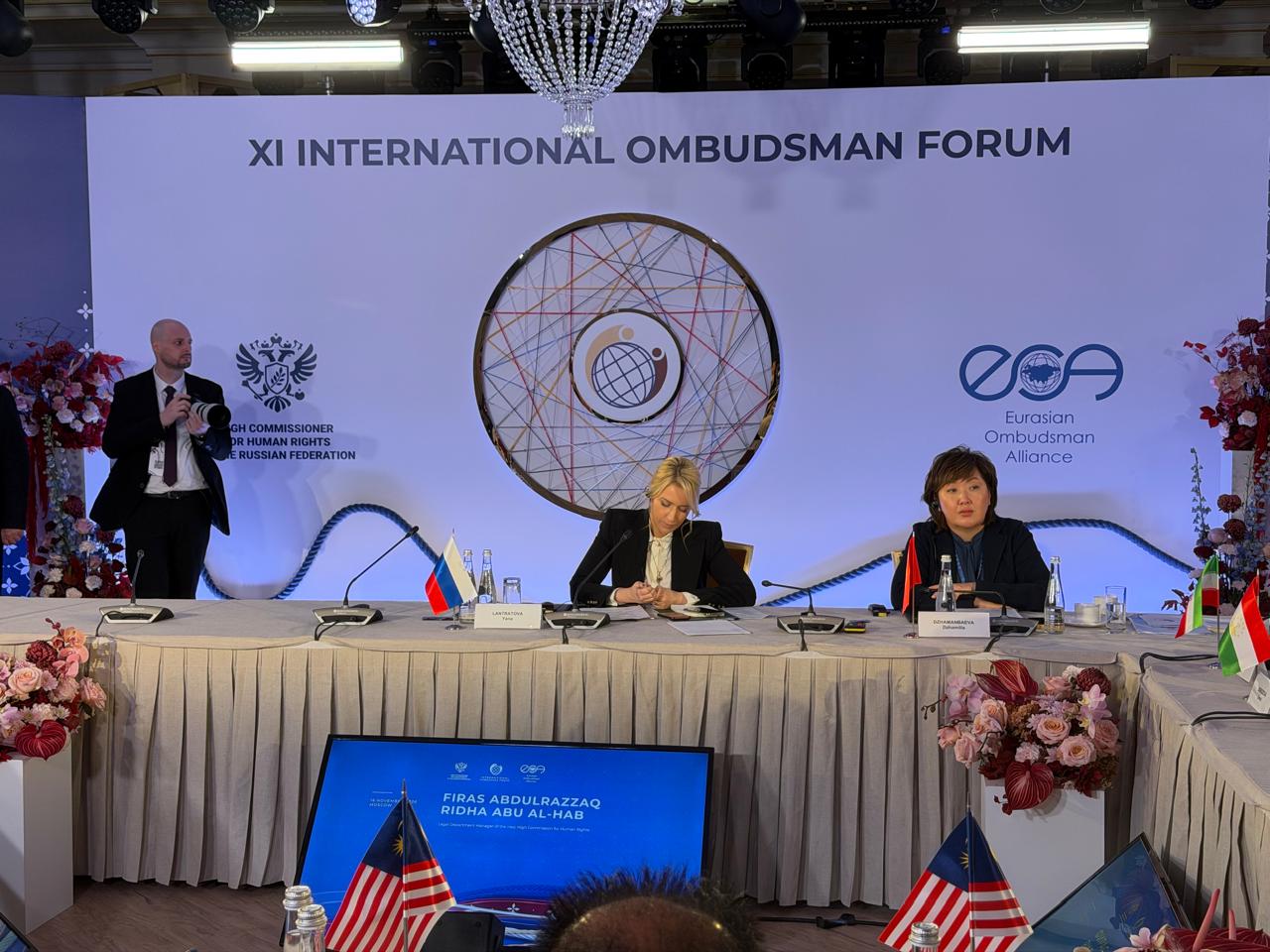
A delegation from the National Human Rights Commission, including the Committee for the Prevention of Torture (NHRC-CPT), is visiting the Russian capital, Moscow, to participate in the International Ombudsman Forum, held from 16 to 18 November 2026 under the auspices and at the invitation of Ms. Yana Lantratova, Commissioner for Human Rights in the Russian Federation. The delegation is headed by Dr. Fadi Gerges, President of the Commission, and includes Mr. Ali Youssef, Treasurer and Commissioner responsible for complaints.
The Commission’s participation seeks to strengthen cooperation with national human rights institutions and ombudsman bodies and facilitate the exchange of experience and expertise. The visit also provides an opportunity to present the Lebanese Commission’s experience, introduce its mandate and responsibilities, and explore cooperation with counterpart institutions in support of its work at the national level.
Protecting Children and Young People in the Digital Environment
On the first day of the visit, the delegation participated in the 11th Meeting of the Eurasian Alliance of Ombudsmen, held on 16 November. The meeting addresses efforts to combat the spread of harmful online content among young people and the role of human rights institutions in preventing associated risks and strengthening protection in the digital environment.
This issue is increasingly significant as children and young people expand their use of digital platforms, exposing them to risks including exploitation, blackmail, violence, cyberbullying and violations of privacy. Participation offers an opportunity to exchange experience on developing responses that uphold children’s rights and best interests, combining prevention and awareness with effective channels for reporting, complaints and remedies.
These discussions align with the Commission’s work to protect children’s rights in the digital environment, including research and recommendations on strengthening relevant legislation and public policies. Priorities include promoting digital literacy, raising awareness among children, parents and education professionals, and clarifying the responsibilities of digital platforms and competent public authorities in preventing and responding to violations.
Effective protection requires clear and proportionate measures that safeguard the safety and privacy of children and young people while respecting freedom of expression and the rights to access information and participate. It also requires involving children and young people in developing policies that affect their digital lives and providing accessible protection mechanisms responsive to the needs of those most at risk.
Sharing Best Practices and Strengthening Institutional Cooperation
On 17 November, the delegation is scheduled to participate in the International Scientific and Practical Conference, “Problems of Human Rights Protection: Exchange of Best Practices of Ombudsmen.” The conference provides a forum for participating institutions to discuss their experience in handling complaints, monitoring violations, engaging with public authorities, following up on recommendations and improving access to remedies.
Through its participation, the Commission aims to learn from these experiences, present the challenges facing national human rights institutions, and explore ways to advance cooperation, knowledge sharing and capacity building. This includes strengthening institutions’ ability to respond to the needs of rights holders, improve their working methods, and consolidate their independence and effectiveness in accordance with the Paris Principles.
Broad Participation by Human Rights Institutions and Ombudsman Bodies
The forum brings together representatives from more than 60 countries, including national human rights institutions, ombudsman and equality bodies, academic and youth organizations, and institutions engaged in international cooperation. Participants include the Office of the Commissioner for Human Rights in the Russian Federation; the Ombudsman Institution of Türkiye; the Office of the Commissioner for Human Rights in Kazakhstan; the National Human Rights Centre of Uzbekistan; the Office of the Authorized Person of the Oliy Majlis of the Republic of Uzbekistan for Human Rights (Ombudsman); the Office of the Ombudsman of Kyrgyzstan; the Office of the Commissioner for Human Rights in Tajikistan; the National Institution for Human Rights of the Kingdom of Bahrain; the Human Rights Commission of Malaysia (SUHAKAM); the South African Human Rights Commission; the Zimbabwe Human Rights Commission; the Human Rights Commission of Sri Lanka; the National Human Rights Commission of Mongolia; the National Human Rights Commission of Nepal; the National Human Rights Commission of The Gambia; Kenya’s National Gender and Equality Commission; the Office of the Ombudsman of Bolivia; the Office of the Ombudsman of Peru; and the General Inspection Organization of Iran. Representatives of institutions concerned with human rights in Oman, Venezuela, Mexico, Pakistan and other countries are also participating.
This diverse participation offers an opportunity to learn about different institutional approaches and legal experiences, exchange expertise on shared issues, and establish channels of communication that support practical cooperation between institutions, taking into account their differing mandates and legal frameworks.
The Lebanese delegation’s participation reflects the Commission’s engagement with the experiences of counterpart institutions, its efforts to strengthen its presence in international human rights dialogue, and its commitment to drawing on exchanges of expertise to support the fulfilment of its independent mandate in Lebanon. Respect for the universality and indivisibility of human rights, together with the independence of national institutions in accordance with the Paris Principles, forms the foundation of this cooperation and of efforts to develop more effective mechanisms for protecting and promoting rights.
هذه المقالة متاحة أيضًا بـ:
 العربية (Arabic)
 Français (French)

