
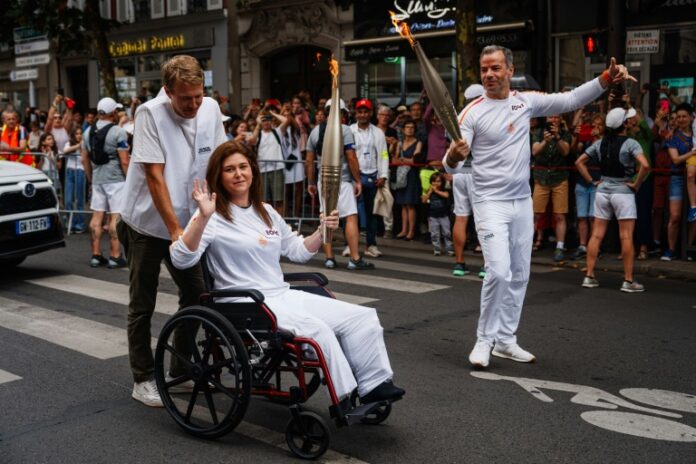
Photojournalist and photo editor at Agence France-Presse (AFP), Christina Assi, published an opinion piece in EUobserver on 13 October 2026, marking the third anniversary of the Israeli attack on a group of journalists in Alma al-Shaab, southern Lebanon. The attack killed Reuters journalist Issam Abdallah and severely injured Assi, resulting in the amputation of her right leg. The article’s title captures the central demand of survivors and victims’ families: “Who ordered the strike that killed my friend and maimed me? The EU must demand answers from Israel.”
Writing as a surviving journalist and a direct witness to the attack, Assi recalls how seven journalists stood in an exposed location, wearing clearly marked press vests, beside a vehicle marked “TV.” She recounts how the first strike hit the group, followed by a second strike as others attempted to provide her with first aid.
Alongside her testimony, the author draws on investigations conducted by AFP, Reuters, Amnesty International, Human Rights Watch and UNIFIL. According to her account in the article, these investigations found no indications of combatants or military activity at the journalists’ location. Assi calls for the identification of those who ordered, authorised and carried out the attack, urging the European Union to use its political, diplomatic and legal tools to advance accountability.
This testimony is particularly significant for documenting potential violations of international humanitarian law because it connects a survivor’s firsthand account with the findings of independent investigations and revisits the relationship between establishing the facts and determining responsibility. Collecting, preserving and comparing evidence makes it possible to build a case file that can be scrutinised, while accountability requires an investigation that uncovers the chain of orders and decisions connected to the attack.
This demand aligns with the approach discussed by Lebanon’s National Human Rights Commission, including the Committee for the Prevention of Torture (NHRC-CPT), in its publications on documenting violations and preserving evidence and activating international justice and accountability mechanisms in Lebanon, as well as the importance of developing professional methodologies for collecting and analysing information to support national and international judicial investigations. The Commission has stressed that monitoring and documentation fall within its human rights protection mandate and that the independence of this work must be safeguarded.
Three years after the attack, Christina Assi’s testimony underscores the right of victims and survivors to truth and access to justice, and the importance of continuing to document violations and preserve evidence so that the facts remain available for investigation and accountability.
هذه المقالة متاحة أيضًا بـ:

