
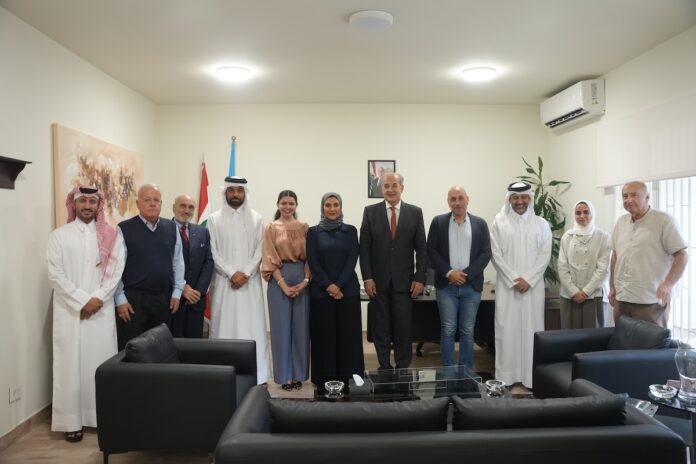
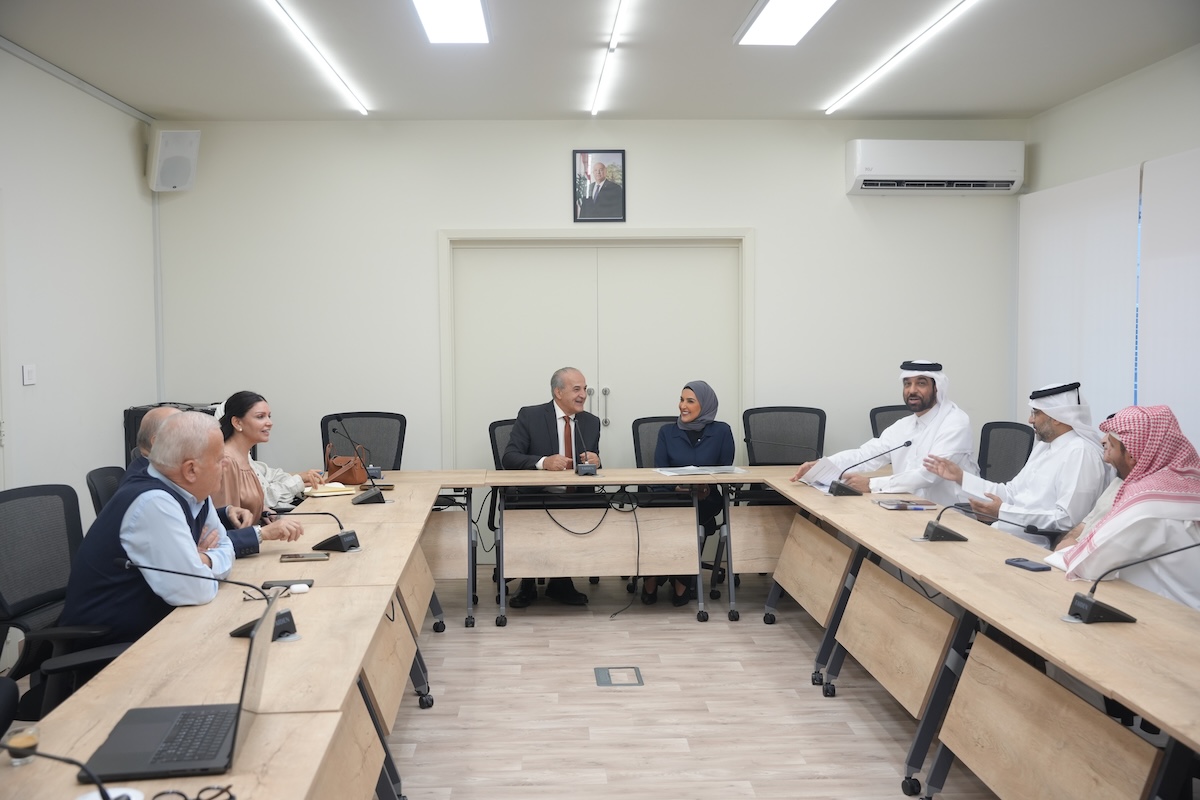
The National Human Rights Commission of Lebanon, including the Committee for the Prevention of Torture (NHRC-CPT), held a meeting at its headquarters in Beirut with a delegation from Qatar’s National Human Rights Committee and the Arab Network of National Human Rights Institutions. The meeting focused on strengthening cooperation, exchanging expertise, supporting the Lebanese Commission’s preparations for international accreditation, and developing the capacities of its members and staff.
The delegation comprised Her Excellency Maryam bint Abdullah Al Attiyah, Chairperson of Qatar’s National Human Rights Committee; His Excellency Sultan bin Hassan Al Jamali, Secretary-General of the Arab Network; Ms. Amira Al Hadhfa, Director of the International Cooperation Department at Qatar’s National Human Rights Committee; Mr. Mubarak Al Safran, Director of the Chairperson’s Office; and Mr. Saif Al Yafei, Director of the Committee’s Secretary-General’s Office.
Representing the Lebanese Commission were Dr. Fadi Gerges, President; Dr. Rana Al Jamal, lawyer and Secretary; Mr. Ali Youssef, Treasurer and Commissioner for Complaints; Mr. Bassam Al Kantar, Commissioner for International Relations and Commissioner for Media and Information Technology; Professor Fadl Daher, Commissioner for Studies and Monitoring and Commissioner for Education and Development; and Mr. Raymond Medlej, lawyer and member of the Committee for the Prevention of Torture.
Independence and Effectiveness at the Heart of International Accreditation
The meeting addressed international accreditation requirements for national human rights institutions, emphasizing that the assessment considers both the legal framework and the institution’s actual practices, including its independence and effectiveness in fulfilling its mandate, its relationships with civil society organizations, its reports and activities, and its engagement at the national and international levels.
Participants highlighted the importance of the annual report as a key document reflecting the Commission’s work, priorities, and exercise of its powers. They also stressed the need to follow up on reports and observations concerning its performance, prepare to clarify or address them, and strengthen cooperation with civil society while respecting mutual independence.
Cooperation on Training and Project Development
Participants discussed developing a capacity-building programme for the Commission’s members and staff, based on an assessment of their actual training needs. The programme would include specialized training, exchanges of expertise and practices, and training-of-trainers programmes to build sustainable internal capacity and facilitate knowledge transfer.
The Commission also presented several projects and initiatives. Both sides discussed opportunities for cooperation and support, as well as the further development of proposals into programmes with clearly defined objectives, activities, and needs. The Qatari delegation expressed its willingness to support the Commission’s increased participation in regional and international human rights meetings, conferences, and events.
Violations of International Humanitarian Law and Engagement with UN Mechanisms
The meeting also addressed issues relating to violations of international humanitarian law in Lebanon and engagement with the relevant United Nations mechanisms. Follow-up priorities included continuing preparations for accreditation, identifying training needs and outlining a capacity-building programme, strengthening relations with civil society and regional and international participation, and identifying priority projects for potential cooperation and support.
The Arab Network of National Human Rights Institutions also encouraged the NHRC-CPT to participate as an observer in the 15th International Conference of National Human Rights Institutions, scheduled to take place in Jordan on 2–3 December 2026.
هذه المقالة متاحة أيضًا بـ:

