

In Lebanon, prisons remain among the least visible institutions of the state. Hidden behind walls and security checkpoints, they hold thousands of detainees whose living conditions are rarely documented in detail. A comprehensive needs assessment of several major detention facilities has offered a rare glimpse into this closed world, revealing a prison system struggling under the weight of overcrowding, economic collapse, and limited institutional resources.
The study, conducted by ARCS Arci Culture Solidali, an Italian international non-governmental organization active in Lebanon since the 1980s, examines conditions in three key detention facilities: Roumieh Central Prison, Tripoli Prison, and Barbar El Khazen Women’s Prison in Beirut. Through institutional data, interviews with prison authorities, and consultations with organizations working inside prisons, the assessment provides an in-depth portrait of daily life behind bars and the structural pressures affecting Lebanon’s detention system.
A System Largely Hidden From Public View
Gathering reliable information about prisons in Lebanon is not easy. External visits are tightly controlled, and researchers often cannot speak directly with detainees. To overcome these constraints, the study relied on multiple sources of information, including official statistics, consultations with ministries, and discussions with civil society organizations providing services in prisons.
The result is one of the most detailed snapshots available of detention conditions in Lebanon during a period of profound national crisis.
Roumieh: The Heart of Lebanon’s Prison System
At the center of the analysis stands Roumieh Central Prison, the country’s largest detention facility and the focal point of Lebanon’s prison system.
Originally built to hold far fewer inmates, Roumieh now houses several thousand detainees. The scale of this population has transformed the prison into a symbol of the broader challenges facing Lebanon’s justice system.
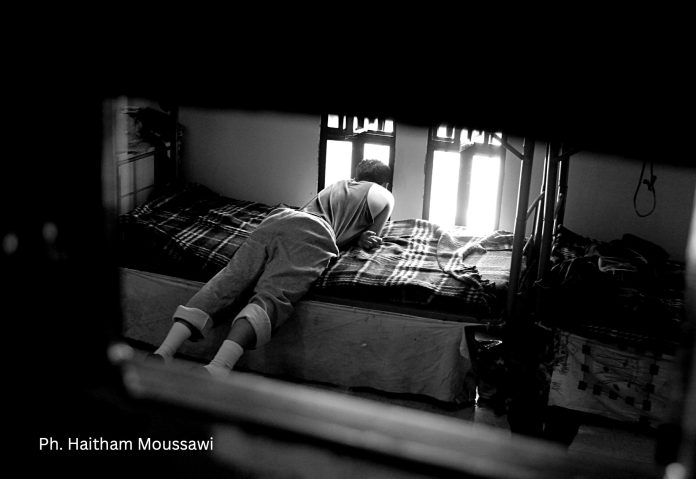
Overcrowding has become a defining feature of daily life. Cells intended for small groups of prisoners frequently accommodate many more, while large dormitory-style spaces may house more than one hundred inmates at a time. This density places enormous pressure on infrastructure, services, and staff.
The Human Impact of Overcrowding
Overcrowded detention environments affect nearly every aspect of life in prison.
Poor ventilation, high humidity, and limited access to sunlight contribute to the spread of respiratory illnesses and skin diseases. Basic bedding is often insufficient, leaving detainees to sleep on thin mattresses or improvised materials. Sheets and blankets are sometimes scarce or poorly maintained, further complicating hygiene.
Even clothing can be inadequate, highlighting how basic needs often go unmet within the prison system.
Hygiene and Sanitation Challenges
Maintaining sanitation in such crowded environments is an ongoing challenge. Prisons face shortages of cleaning supplies, detergents, and disinfectants. Rising costs and limited public funding mean that essential items such as soap are not always distributed consistently.
Bathroom facilities are frequently overstretched. Showers and toilets serve far more inmates than originally planned, and in some facilities infrastructure is aging or poorly maintained. As a result, detainees often struggle to maintain personal hygiene and a basic sense of dignity.
Water and Food Under Pressure
Lebanon’s economic crisis has also affected the provision of food and water in detention facilities.
Clean drinking water is not always easily accessible, particularly when infrastructure such as filtration systems requires maintenance. Some detainees lack the financial means to purchase bottled water, making them dependent on the prison’s water supply.
Food services have also been affected by rising costs and shrinking public budgets. Meals can be repetitive and limited in nutritional diversity, with reduced quantities of meat and fresh produce. In some cases, fruit portions are so small that they must be shared among inmates.
Meals are typically prepared in prison kitchens and distributed in large containers, often by inmates themselves, which can lead to uneven distribution of portions.
Healthcare Gaps
Healthcare services represent another major challenge within the prison system.
Facilities frequently lack sufficient medical staff, including general practitioners, nurses, and specialists such as psychiatrists and dentists. Medical consultations may occur infrequently, and detainees requiring specialized treatment can face administrative delays.
In some cases, prisons rely on donations from humanitarian organizations to cover shortages of medicines and medical supplies. These gaps raise concerns about the ability of detention facilities to respond adequately to chronic illnesses and mental health needs.
Different Realities Across Facilities
Conditions vary between prisons. While large men’s prisons face severe overcrowding and infrastructure pressure, some smaller facilities, particularly women’s prisons, are reported to be better maintained and less crowded.
Even in these environments, however, detainees still report shortages of essential personal items, including hygiene products specifically needed by women.
Identifying Urgent Needs
The assessment highlights a wide range of practical needs that could significantly improve detention conditions. These include providing mattresses and clothing, strengthening sanitation systems, upgrading water infrastructure, improving kitchen equipment, and expanding healthcare staffing.
Addressing these needs would not only improve daily living conditions for detainees but also contribute to public health and prison stability.
More Than a Prison Issue
The conditions described in the assessment reflect broader challenges affecting Lebanon’s institutions. Overcrowded prisons are often linked to slow judicial processes, excessive reliance on pretrial detention, and limited investment in prison infrastructure.
Improving prison conditions therefore requires more than humanitarian assistance. It also demands reforms across the justice system, including faster judicial procedures, alternatives to detention, and stronger oversight of detention facilities.
A Question of Human Dignity
Behind the statistics and infrastructure challenges are thousands of individuals living in difficult conditions while awaiting trial or serving sentences.
The study ultimately reminds readers that prison conditions are not only an administrative matter. They are a reflection of a society’s commitment to human dignity, justice, and the rule of law.
Bringing greater visibility to these realities is a first step toward ensuring that the treatment of detainees remains consistent with fundamental human rights principles.
هذه المقالة متاحة أيضًا بـ:
 العربية (Arabic)
  Français (French)

