
Lebanon was among the countries examined during the 138th session of the United Nations Working Group on Enforced or Involuntary Disappearances (WGEID), held from 26 to 30 January 2026. During the session, UN experts reviewed hundreds of disappearance cases from around the world and assessed ongoing concerns related to the implementation of international standards on enforced disappearance.
The Working Group examined 410 cases of enforced disappearance transmitted under its urgent action procedure between September 2025 and January 2026, including cases relating to Lebanon and several other countries. In addition, the experts reviewed 422 other cases submitted under the standard procedure, including newly reported cases and updated information on previously transmitted files.
Legacy of Lebanon’s civil war
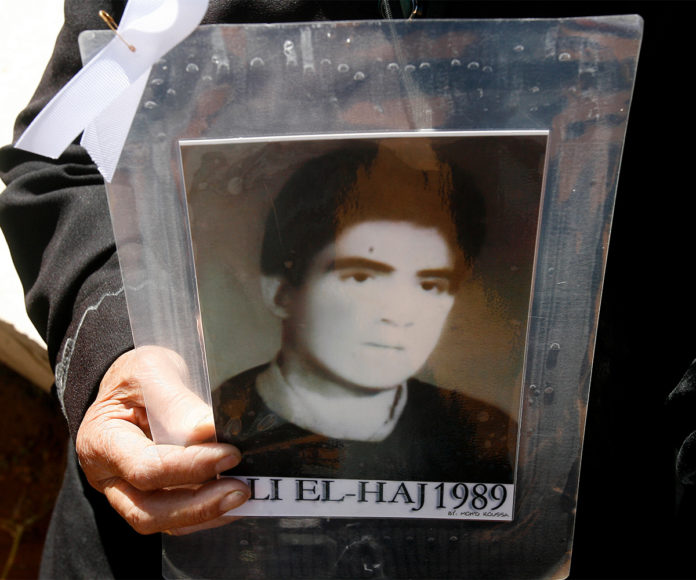
Information reviewed by the Working Group highlights that enforced disappearances in Lebanon remain closely linked to the legacy of the 1975–1990 civil war, during which abductions and disappearances were widespread. Civilians were frequently abducted at checkpoints, on the streets, or from their homes by militias and armed actors operating during the conflict.
Today, approximately 17,000 people remain missing as a result of the civil war, and the fate and whereabouts of many of them remain unknown decades later.
Law on the Missing and the Forcibly Disappeared
In November 2018, Lebanon adopted Law No. 105 on Missing and Forcibly Disappeared Persons, establishing a legal framework recognizing the rights of missing persons and their families in line with international human rights standards.
The law also created the National Commission for Missing and Forcibly Disappeared Persons, an independent body with legal personality and administrative and financial autonomy. Its mandate includes receiving complaints, collecting testimonies, establishing an information database, verifying burial sites, and identifying and exhuming mass graves.
However, according to information received by the UN Working Group, significant challenges remain in fully operationalizing the Commission, including limited resources and obstacles affecting its ability to function effectively and independently.
Recent disappearance concerns
The Working Group also received information regarding 12 complaints of enforced disappearance relating to the period 2023–2024 currently under investigation in Lebanon under Law 105/2018, involving cases linked to different security institutions.
In addition, concerns were raised about forced returns of Syrian refugees and migrants from Lebanon to Syria, which may expose individuals to risks of arbitrary detention, torture, or enforced disappearance. Reports indicate that such deportations have at times occurred without sufficient procedural safeguards or individual protection assessments.
Efforts to clarify the fate of the disappeared
According to the information reviewed, Lebanon and Syria established two joint committees in September 2025 to help clarify the fate of Syrian detainees in Lebanon and Lebanese nationals who disappeared in Syria. The initiative aims to strengthen cooperation, facilitate information sharing, and provide support to affected families.
Continued international attention
The UN Working Group on Enforced or Involuntary Disappearances, established in 1980, assists families in determining the fate and whereabouts of disappeared relatives and works to ensure that cases are investigated by the relevant authorities.
The Working Group’s next session, the 139th session, is scheduled to take place in Abidjan, Côte d’Ivoire, from 4 to 8 May 2026.
The continued review of Lebanon by UN experts underscores the enduring importance of addressing the issue of the missing and forcibly disappeared, a longstanding humanitarian and justice concern that continues to affect thousands of families across the country.
هذه المقالة متاحة أيضًا بـ:

