
National Human Rights Commission and Arab NGO Network for Development Bring Together 32 Participants from Four Arab Countries as Part of the “Let’s Connect for Rights” Series
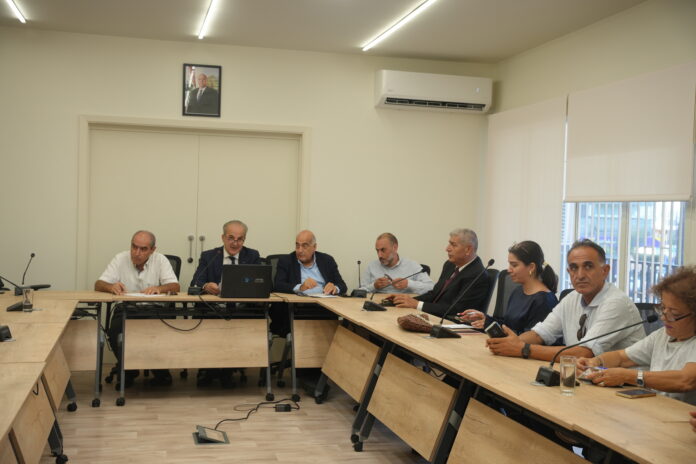
Protecting those most affected by climate change, ensuring participation in decision-making, and promoting transparency in climate finance were central themes of the fifth meeting in the “Let’s Connect for Rights” series. Organized by the National Human Rights Commission, including the Committee for the Prevention of Torture, in cooperation with the Arab NGO Network for Development, the meeting brought together 32 participants from Lebanon, Palestine, Egypt, and Tunisia, both in person and online.
Entitled “Climate Change and Human Rights: The Emerging Role of National Human Rights Institutions,” the meeting took place on Thursday, 8 October 2026, from 4:00 to 5:30 p.m., at the Commission’s headquarters in the Serhal Building on Sami El Solh Boulevard in Beirut. It explored the role of national human rights institutions and civil society in integrating human rights into climate change mitigation and adaptation policies and ensuring a just transition to a carbon-free economy.
Gerges: Protecting Rights as a Benchmark for Assessing Environmental and Climate Policies
The Commission’s President, Dr. Fadi Gerges, opened the meeting, stressing that “the choice of this topic reflects our conviction that the climate crisis strikes at the heart of human rights.” He noted its impact on life, health, water, food, housing, and work, and the questions it raises about the distribution of harm and the capacity to adapt. He explained that the Commission is closely following the issue and believes that environmental and climate policies should be assessed according to their impact on people’s health, rights, and resources. He praised the partnership with the Arab NGO Network for Development, describing cooperation with civil society as a cornerstone of the Commission’s work. He also outlined institutional progress during 2026, particularly the completion of the regulatory framework and the submission of the Commission’s accreditation application to the Global Alliance of National Human Rights Institutions (GANHRI).
Al Kantar: Turning Climate Commitments from Promises into Rights
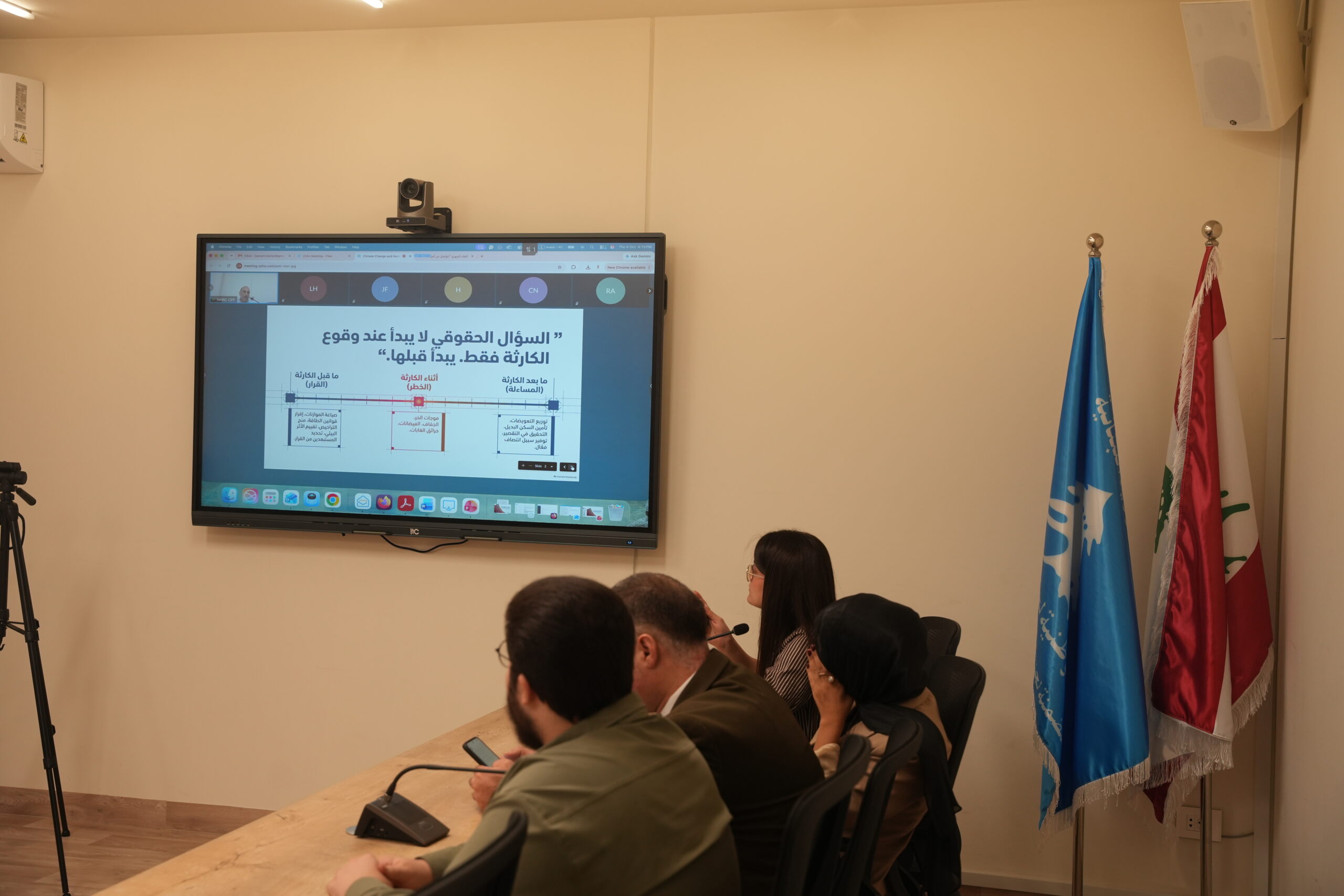
Bassam Al Kantar, the Commission’s Commissioner for International Relations, delivered a presentation on the emerging role of national human rights institutions in climate action. He stressed that climate change compounds existing risks and that scrutiny from a human rights perspective begins before a disaster strikes: when budgets are drafted, legislation is adopted, permits are granted, and decisions are made about who bears the costs of the transition. It continues afterward through the distribution of aid and compensation, the provision of services, and access to remedies.
He described national human rights institutions as “bridge institutions,” connecting international law with national policy, affected communities with decision-makers, and prevention with remedies. He emphasized their role in providing advice, monitoring the impacts of policies, receiving complaints, protecting environmental human rights defenders, and following up on the implementation of recommendations.
He proposed a practical programme that includes establishing a national baseline on the human rights impacts of climate risks, conducting consultations in affected communities, reviewing legislation and adaptation and emergency plans, establishing a clear complaints procedure within the Commission’s legal mandate, and strengthening cooperation with the judiciary, Parliament, universities, and experts.
“There can be no green transition without a just transition, no meaningful adaptation without participation, and no legitimate climate finance without transparency,” he said. He added that an institution’s impact should be measured by the changes it achieves in laws, policies, and the protection of those affected. He stressed its responsibility “to make the human being visible in every climate statistic, and to make rights measurable within every policy,” and to ensure that the voices of those most exposed to harm are the starting point for discussion.
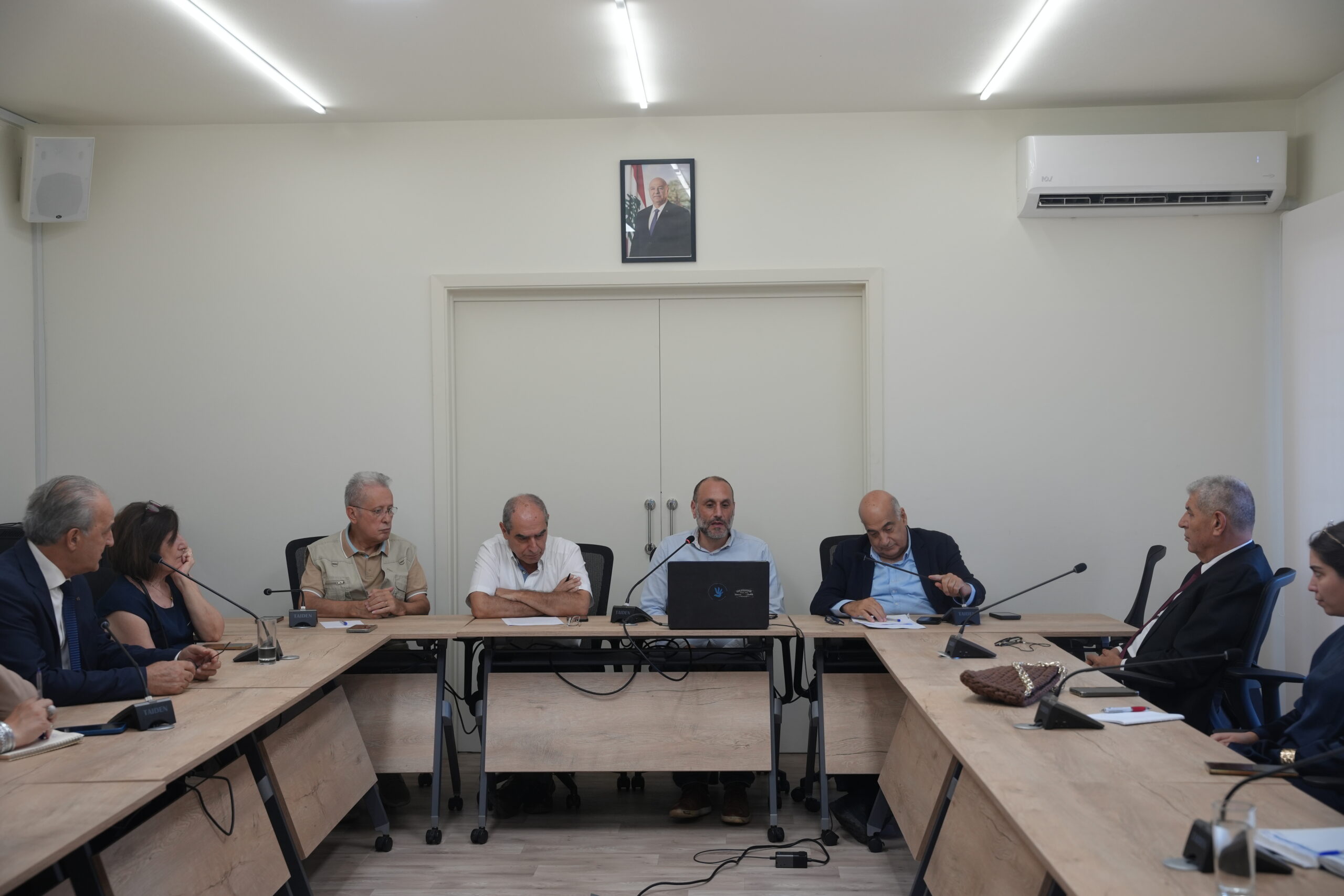
Maalouf: Climate Justice Begins with Participation and Requires Rethinking Our Relationship with Nature
Habib Maalouf stressed that the climate crisis has become a test of the human rights framework, and that responding to it requires asking who bears the costs, who decides, who receives protection, and who is held accountable. He explained that climate justice encompasses the fair distribution of harms and benefits, participation in decision-making, recognition of the differing needs of communities and regions, and intergenerational equity.
He warned that a climate policy may succeed in reducing emissions yet remain unjust if it places burdens on people living in poverty beyond their means or excludes those affected from decision-making. He emphasized the need to make information available about the sources of climate finance, its conditions, its beneficiaries, and the outcomes of the projects it funds. “Transparency is part of climate justice,” he said, explaining that meaningful participation means enabling those affected to influence choices before decisions are made.
In the context of preparations for the thirty-first Conference of the Parties (COP31), he called for assessing outcomes according to their ability to protect rights, channel funding to those most affected, and protect people living in poverty and workers during the energy transition. He also stressed the need to address the impacts of wars on the environment, resources, livelihoods, and Lebanon’s capacity to adapt, while distinguishing climate finance from mechanisms for establishing responsibility and securing compensation for war-related damage.
Maalouf added that addressing the climate crisis cannot be limited to solutions centred solely on human beings, whose patterns of production and consumption, and relationship with nature, have contributed to the crisis. He proposed principles of environmental ethics that take into account other living beings and the wider natural world alongside humanity, while calling on people to reconsider their behaviour and place in the world.
Foremost among these principles is humility: “humility in our knowledge, given the extent of what we still do not know, and humility towards other individuals and groups within humanity,” grounded in the understanding that all share “a common life and destiny.” He called for redefining humanity’s relationship with other living beings within the “ecological sphere”—the ecological space necessary for human survival and the continuation of our species—in a way that offers “a new meaning for both environmental protection and the human role.”
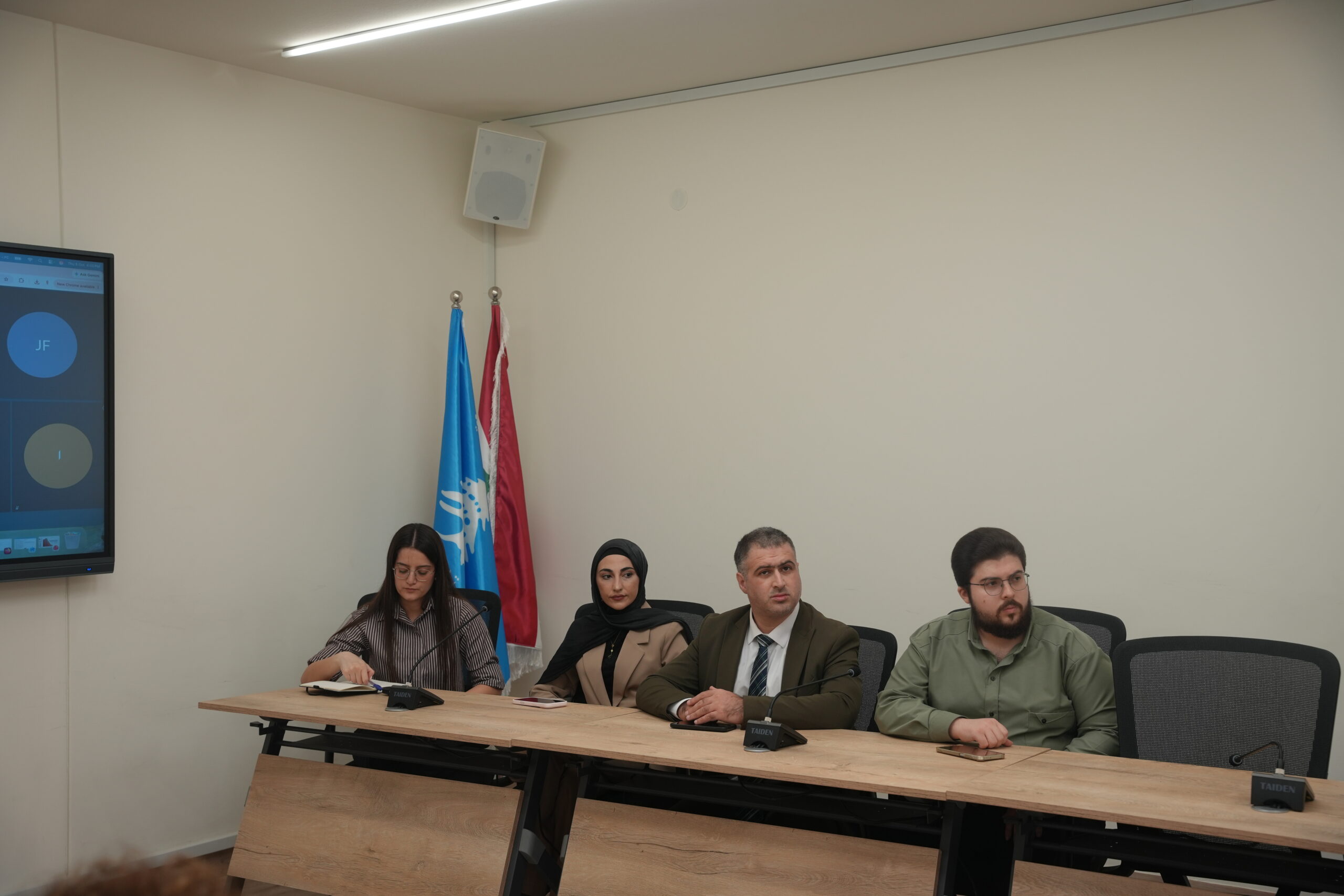
Abdel Samad: Climate at the Heart of Development and Governance
Ziad Abdel Samad, Executive Director of the Arab NGO Network for Development, addressed the relationship between climate and the right to development. He stressed that development cannot be reduced to economic growth: it places people and their ability to participate in and benefit from its outcomes at its centre, while protecting the rights of future generations and ensuring the sustainability of resources.
He explained that climate action is linked to how water, energy, agriculture, transport, and investment are managed, and how the costs and benefits of the transition are distributed. “Transparency, access to information, participation, accountability, and oversight are not additions to climate policy; they are among the conditions for its success,” he said.
He outlined the Network’s work on a regional survey of people’s perceptions and priorities concerning climate and climate justice, with particular attention to young people, women, and those most vulnerable to climate impacts, alongside training journalists and strengthening specialized media coverage. He emphasized the value of the Commission’s proactive role in examining policy impacts before they cause harm. He also stressed the importance of linking civil society’s monitoring of environmental projects to climate risks, communities’ adaptive capacity, and their rights, and of turning people’s voices into evidence that supports advocacy and policymaking.
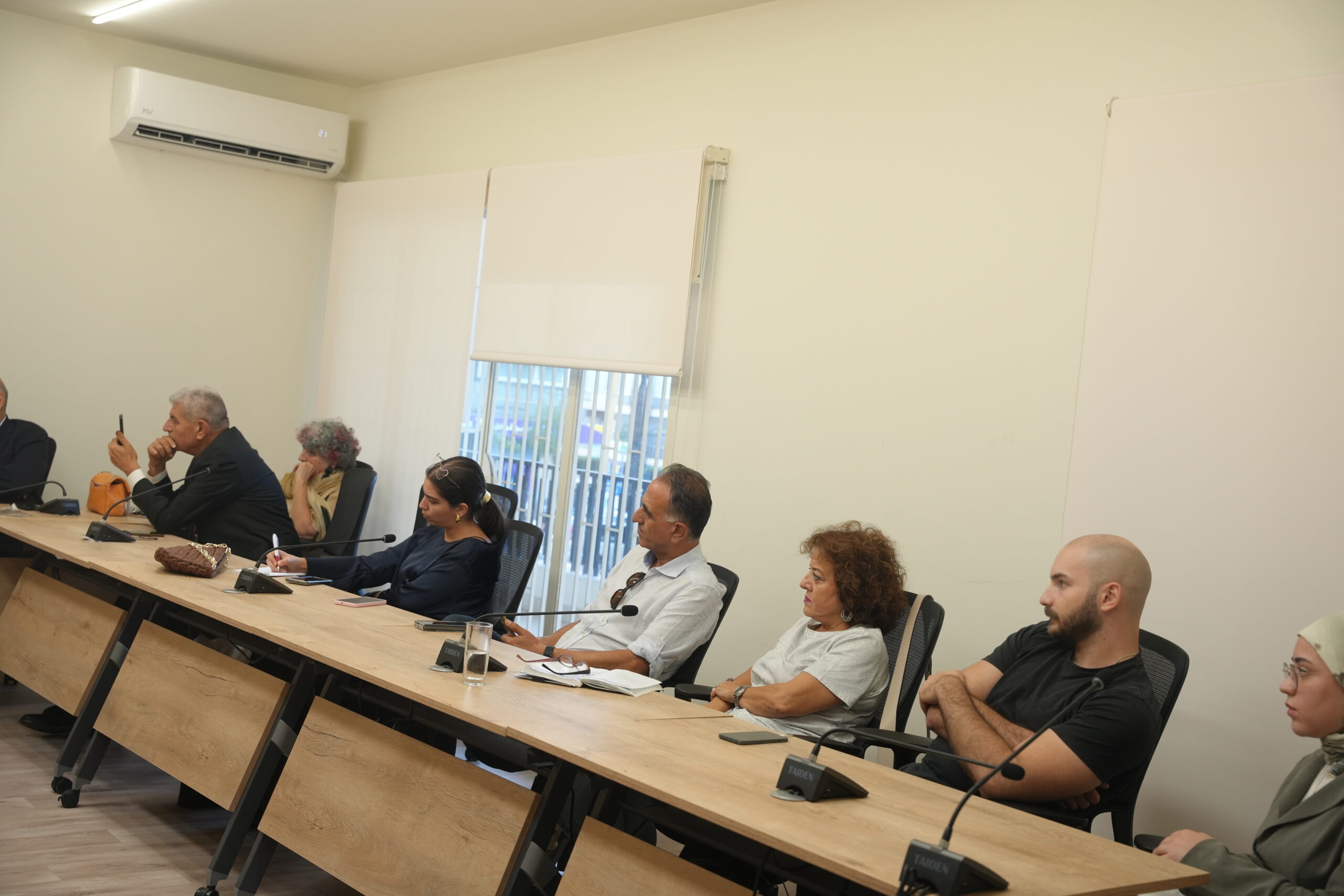
Ghandour: The Green Transition Must Not Push More People into Poverty
Engineer Malek Ghandour, President of the Lebanese Environment Forum and Chair of the Committee on Environment, Climate and Sustainable Development at the Economic, Social and Environmental Council, stressed that the transition to a green economy must not push more people into poverty. Instead, it should protect workers and provide opportunities and affordable energy. He emphasized participation, transparency, accountability, and the protection of resources and nature reserves, stating that “climate justice is not a by-product of climate action, but a condition for its success.”
Protecting Those Most Affected and Exploring Opportunities for Cooperation
The meeting included an open discussion on public participation, transparency, accountability, and access to remedies; ensuring the inclusion of women and girls, older persons, persons with disabilities, and local communities in climate decisions; and the fair distribution of the costs and benefits of the transition. Participants highlighted the importance of cooperation between the Commission, civil society, and experts in translating knowledge and human rights demands into policies whose implementation can be monitored and followed up.
The Commission’s President announced that the next meeting in the “Let’s Connect for Rights” series will take place on Thursday, 12 November 2026, under the title “Economic and Social Rights in Lebanon and the Impact of Overlapping Crises on Their Protection and Promotion.”
هذه المقالة متاحة أيضًا بـ:

