
Monitoring the Human Rights Violations in the Response to the Beirut Blast
NHRC-CPT Team: Fadi Gerges, Ali Youssef, Bassam AlKantar.
Research Team: Reina Sfeir, Sama Elroumi, Coralie Ziade.
Photographer: Abbas Salman
Proof Reader: Ghaleb Hashem
Publisher: The National Human Rights Commission including the committee for the Prevention of Torture – (NHRC-CPT)
Terms and Abbreviations
BBA: The Beirut Bar Association
CEDAW: Convention of the Elimination of all Forms of Discrimination Against Women
CRC: Convention on the Rights of the Child
DRM: Disaster Risk Management
FER: Forward Emergency Room
GBV: Gender-Based Violence
ICCPR: International Covenant on Civil and Political Rights
ICESCR: International Covenant on Economic, Social and Cultural Rights
ISF: Internal Security Forces
ILO: International Labour Organization
LAF: Lebanese Army Forces
LGBTQ+ or LGTQIA+: Lesbian, Gay, Bisexual Transsexual, Queer, Intersex and Asexual
LRC: Lebanese Red Cross
LUPD: Lebanese Union for People with Disability
MEHE: Ministry of Education and Higher Education
MHPSS : Mental Health and Psycho-social Support
MoH: Ministry of Health
MOSA: Ministry of Social Affairs
MSNA: Multi-Sectoral Needs Assessment
NGOs: Non-Governmental Organisations
NHRC : National Human Rights Commission
NRDP: National Disaster Response Plan
PPE: Personal Protective Equipment
UDHR Universal Declaration of Human Rights
UN: United Nations
UNDP: United Nations Development Program
UNFPA: United Nations Population Fund
UNHCR: the United Nations High Commission for Refugees
UNICEF: United Nations International Children Emergency Fund
- Executive summary
On 4 August 2020, a large amount of ammonium nitrate stored at the port of the city of Beirut, the capital of Lebanon, exploded, causing at least 218 deaths, 6,500 injuries, and damages in the Port area and its surroundings estimated between US$3.8 and US$4.6 billion, in addition to US$2.9 to US$3.5 billion in economic losses according to the World Bank Beirut Rapid Damage Assessment[1]. International and local actors responded with immediate humanitarian assistance. Lebanon’s health care system was overwhelmed, and there were insufficient resources to support those injured and inability to provide basic necessities for their families because of loss of homes and livelihoods.
The Lebanese Government’s response to the Port explosion was criticized. While a national plan to respond to disasters exist it was not activated in the aftermath of the blast leaving the responsibility on a 30-year-old Higher Relief Council established during the Lebanese war to help Lebanese citizens and communities hit by natural and man-made disasters before the Government declares a state of emergency giving the army significant power and allowing it to step into the response leadership vacuum.
Local and international Non-Governmental Organisations (NGOs) were swift in their relief efforts, however the absence of coordination among NGOs and service providers coupled with other challenges including funding, bureaucracy and access to information hindered the effectiveness of the aid and support to victims.
In addition to the poor management and coordination, the devastation caused by the August 4th blast exacerbated vulnerabilities and translated into human rights violations in several of the affected neighborhoods. Indeed, several human rights were breached or exacerbated as a result of the blast including the right to life, the right to protection, the right to security, the right to health and medical assistance, the right to a proper accommodation and environmental rights. Furthermore, the blast added another layer to the challenges faced by vulnerable women, children, Persons with Disabilities, LGBTQ+, elderly, domestic workers, migrant workers, and refugees.
The National Human Rights Commission (NHRC) aimed at monitoring the post-blast interventions of national stakeholders and meeting with the victims to address their concerns. As a result, in this report NHRC points out systemic or wide-spread issues leading to human rights violations, identifies actions to be implemented to mitigate the risk of violations and recommends measures to improve the response to disasters and to safeguard the rights of survivors of the blast, including vulnerable groups.
- Methodology
The NHRC met with individuals and organizations involved in the Beirut Response to the 4 August 2020 blast to gather relevant information. A list of 65 Lebanese and foreign individuals from different backgrounds including governmental institutions, Lebanese Army Forces, civil society activists and lawyers (Annex. 1 – list of contributors) were interviewed.
Over 40 meetings were also held with victims from the explosion, some of whom lost members of the family, some suffered physical damages while other suffered material damages, most of those met suffered concurrently moral, physical and material damages. Their names will remain confidential as per their request. A list of questions was prepared as a guideline to collect the information required for the report. (Annex. 2 – list of questions). The information was used to document and catalogue the gaps in the emergency response and to shed light on the human rights that were violated as a consequence to the blast.
A survey was also conducted on 43 victims to evaluate their knowledge in human rights and to understand if they knew what their rights are, and which ones were violated as a consequence of the Beirut blast.
News articles, local and international reports related to the explosion and its subsequent humanitarian response were used to highlight certain aspects and statistics that were difficult to obtain otherwise. Documents relating to international and domestic human rights laws were reviewed as well to support the final recommendations and to point out recognized standards and guidelines.
The research was bound by several limitations. First, the total lockdown imposed by the Government due to COVID-19 pandemic impeded the conduct of all the interviews that were scheduled to take place. Second, the economic and political crisis in the country created a polarization that makes it difficult for each pole to be objective. The anger of the victims towards the Government and what it represents obstructed at times their objectivity, understandably, and therefore, it was not always easy to get the full picture from them when it came to questions related to Governmental support. The Governmental institutions and the LAF lack self-criticism. They convey the impression that all what they did in response to the blast was effective, efficient and necessary when it is clear that it was not the case. The civil society organisations, despite the big gap they filled and the great work they did, do not want to admit that a better coordination with the Government would have been more efficient and effective. It was up to the drafters of this report to fill the gaps and corroborate the information gathered here and there. The literature review, although thorough, did not cover all the aspects of the violations that occurred post-blast.
C- The Beirut Blast – Overview
On 4 August 2020, a large amount of ammonium nitrate stored at the port of the city of Beirut, the capital of Lebanon, exploded, causing at least 218 deaths, 6,500 injuries, and damages in the Port area and its surroundings estimated between US$3.8 and US$4.6 billion, in addition to US$2.9 to US$3.5 billion in economic losses according to the World Bank Beirut Rapid Damage Assessment[2].
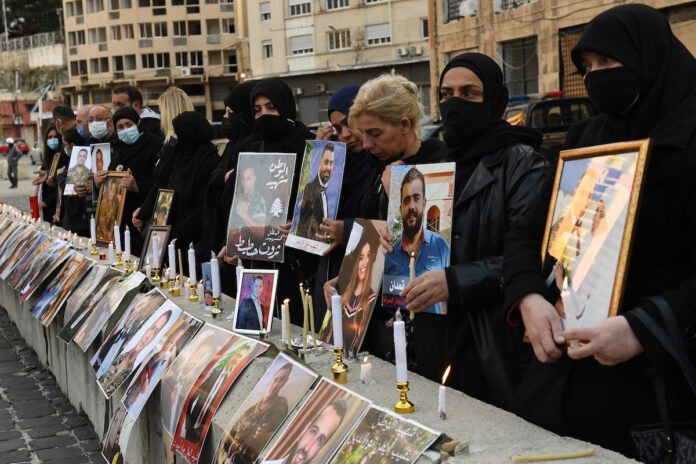
On 5 August, the Council of Ministers declared by decree 6792 a state of emergency giving full control to the Lebanese Army Forces (LAF). On 8 August, demonstrations against the Government were organized in Beirut spontaneously as a reaction to the blast.
Beyond the material damage, the devastation caused by the blast exacerbated vulnerabilities and led to human rights violations in several of the affected neighbourhoods.
Beirut has an estimated population of over two million people, almost a third of the total population of Lebanon (6.8 million) .
The blast affected, at different levels, all areas of Greater Beirut. These areas are a mix of poor, disadvantaged and densely populated neighbourhoods (e.g., Karantina, Karm el Zeitoun), rich modern areas (i.e.Saifi, Downtown) as well as residential and commercial hubs with restaurants, cafes, art galleries, etc. (i.e. Mar Mkhayel, Gemmayzeh). The affected areas include people from all socioeconomic, political and religious backgrounds. On the economic level, everybody was affected in the same way – loss of property, loss of business and loss of income in many cases. Many also lost loved ones. On the psychological level, the blast traumatised the entire population to differing degrees and left everyone in need of mental health support.
The impact of the explosion caused severe damage in the radius of 6 kilometers from the blast, moderate damage in the radius of 10 kilometers and light damage up to 20 kilometers from the blast.
Up to 300,000 people have lost their homes. According to United Nations (UN) and Government sources, more than 50,000 houses were partially or entirely destroyed[3]. Over 15,000 units of small and medium businesses in wholesale, retail, hospitality, tourism and lodging have been heavily affected which had a direct impact on the lives and livelihoods of the owners and the employees in these sectors.
People living in the disadvantaged areas are the most affected as they have lost their homes and their businesses. The impact of this disaster is exacerbated by the multiple crisis the country is facing including the refugee crisis, the economic situation, the COVID-19 pandemic, the political deadlock and the security incidents that it is generating.
The Beirut blast has caused serious breaches of human rights including, non-derogatory rights such as the right to life and the right to protection, the right to security, the right to health and medical assistance, the right to proper accommodation, environmental rights as well as the rights of vulnerable groups such as the elderly, women, children, Persons with Disabilities, domestic workers and refugees. It also caused the loss of jobs as a result of the destruction of the place of work and the loss of homes due to partial or complete destruction.
Section 1 – The Beirut Blasts’ Disaster Response Management
- Declaration of State of Emergency
On 5 August 2020, in response to the blast, the Council of Ministers declared by decree 6792 a state of emergency giving full control to the LAF. The state of emergency was limited to the Governorate of Beirut from 5 August 2020 until 18 August 2020. It was extended until 18 September 2020 and extended again one last time until 31 December 2020. This Decree was not published on the same date of declaration, and the text of the decree created confusion and legal debate about the mandate and jurisdiction.
Declaring a State of Emergency is allowed in Lebanon under Legislative Decree No. 52/ 1967 “Declaring a State of Emergency or a Military Zone” . It grants the Government the power to declare a State of Emergency in “all or part of the Lebanese territory when the country is exposed to an imminent danger resulting from a foreign war, armed revolution, actions or turmoil threatening public order and security, or in the event of incidents characterized as a disaster.”
In other words, the legislative decree allows the military authority to requisition persons, animals, things, and property; search homes during the day or at night; impose fines, deport suspects, define “defensive regions” and “regions on guard” where residency is subject to a certain system; place people whose activities threaten security under house arrest and take the necessary measures to secure their livelihood and the livelihood of their families; prohibit gatherings that disrupt security; order cinemas, theatres, cafes, and all the various places of congregation to close temporarily; impose a curfew on people and vehicles in places and timeframes specified by a decision; and ban publications that disrupt security and censor newspapers, printed materials, publications, radio stations, television, films, and plays.
Under normal circumstances, outside a State of emergency, these actions would amount to serious violations of human rights. Therefore, it is important to take into consideration when a State of emergency is declared, the principles of necessity and proportionality and to properly notify the UN Secretary General of such declaration.
According to the international law, a State of Emergency can only be proclaimed when the situation amounts to a public emergency which threatens the life of the nation[4]. The Paris Minimum Standards of Human Rights Norms in a State of Emergency define a public emergency as “an exceptional situation of crisis or public danger, actual or imminent, which affects the whole population or the whole population of the area to which the declaration applies, and constitutes a threat to the organized life of the community of which the state is composed.” Legislative Decree No. 52 mentions “incidents characterized as a disaster” which makes this category slightly broader than in international law, where the incident must threaten the life of the nation.
The broad powers given to the military under Decree 6792 and the specific references to use military weapons and equipment constitutes a high risk of excessive use of force. And indeed, the security forces , including the Lebanese Armed Forces used its power excessively on 8 August when they fired “live ammunition, metal pellets, and kinetic impact projectiles such as rubber balls at the protesters including at health workers, in response to protests that broke out across Beirut”[5]. This gathering was organized by the people as a reaction to the 4 August blast. The use of force in this event was a violation of human rights and did not meet the test of necessity and proportionality. Various human rights violations were attributed to the LAF, the Internal Security Forces (ISF), and the Parliamentary Police including violations of the right against arbitrary deprivation of life and against torture, which cannot be derogated from under any circumstances. As it appeared, the increased involvement of the LAF due to the State of Emergency and their use of heavy weaponry contributed to the high levels of violence and human rights violations committed during the protest.
Moreover, the power given to the military to prohibit or restrict certain publications under Legislative Decree No. 52 and as applied in Decree 6792 violates the right to freedom of expression required under international law. The Code of Conduct for the LAF in Law Enforcement is silent on the matter of military restrictions on freedom of expression.
In recent years, UN experts and agencies have increasingly stressed the necessity to resort to State of Emergency only on an exceptional basis and to subject it to checks and balances and oversight from the civilian authorities. This concern was raised after witnessing the deterioration of human rights in countries in which states of emergency have been used to justify government control and oppression.
In 2009, the Lebanese Government and the United Nations Development Program (UNDP) launched their joint “Disaster Risk Management” Project. This project aimed to strengthen the coordination and management capacities of the Lebanese government in Disaster Risk Reduction including disaster response and to develop corresponding risk reduction strategies[6].
Disaster Risk Management (DRM) is based at the Prime Minister Office. Although without a proper legal framework, the DRM is composed of two Committees constituted by decisions issued by the Prime Minister. They are both headed by the Secretary General of the High Council of Defense. One Committee is responsible for planning and the second for coordinating the response to an emergency situation.
According to the “National progress report on the implementation of the Hyogo Framework for Action (2013-2015)”[7] a National Disaster Response Plan (NRDP) was developed by the Committee responsible for emergency plans composed of representatives from the Ministry of National Defense, the General Directorate of Internal Security Forces, the Ministry of Interior and Municipalities, the General Customs Directorate, the General Directorate of Public Security, the General Directorate of State Security, the General Directorate of Civil Defense and the Beirut Fire Brigade. The NRDP defines the roles and responsibilities of the main disaster response agencies in preparedness, response, and recovery.
However, based on anecdotal evidence, DRM did not provide any strategic direction to security actors, including the ISF, in the aftermath of the Beirut explosion. A Colonel at the LAF reported that the National Coordination Committee was actually “in shock after the blast and was not ready to operate promptly”.
- The Response: Coordination and Challenges
- Coordination
The management of these crises was always insufficient and uncoordinated which adds even more distress on the victims and their families.
In the aftermath of the blast, most donors expressed their distrust in state civil institutions and turned instead to the United Nations, the World Bank and the European Union to disburse international donations. Local NGOs and the LAF were also relied upon to provide services and humanitarian aid.
The Civil Defense volunteers were the first responders to arrive on the site of the blast right after the explosion. They were in charge of the search and rescue operation. They transported nearly 310 wounded to hospitals. extinguished 30 fires, carried out 145 search and rescue missions and surveyed around 173 sites to search for casualties[8].
The volunteers of the Civil Defense risked their own lives to save others despite lacking rights for not being considered as staff within the organisation in addition to severely lacking resources and equipment[9].
The LAF in the first days following the blast was also busy preserving the crime scene and protecting the city in addition to assisting in the search and rescue operations and evacuating the injured.
The local response following the blast was immediate and spontaneous – it involved public and private actors, associated initiatives, NGOs, and young people coming from all over the country to provide support particularly to remove the rubble, to clean, to assess the damage and to provide temporary shelter, accommodation and food. Several NGOs also started reconstruction work.
When the Lebanese authorities declared the rescue phase over on 9 August, the Army requested a more important role on the ground. The LAF then established a Forward Emergency Room (FER) to coordinate the humanitarian response on the ground. The mandate of the FER included mapping needs and support, coordinating efforts, and supporting NGOs and volunteers. Effectively, the LAF was coordinating the humanitarian response in addition to safeguarding the city and its inhabitants. This was beyond what was outlined in the State of Emergency Decree issued on 7 August 2020 and beyond the powers conferred on the army in Legislative Decree No. 52/67 regulating States of Emergency. The humanitarian aspect of the mandate was not clearly mentioned in the texts.
The FER worked closely with the Lebanese Red Cross and representatives from several ministries, governorates and municipalities in addition to a team of consultants and volunteers to plan, organize and communicate with the different NGOs and the victims. It collaborated and coordinated with over 60 NGOs[10]. The NGOs willing to work on the ground had to ask a “permission” to do so. According to Caritas and the Lebanese Red Cross this collaboration and coordination were important and effective. Some NGOs saw however this measure as an interference in their work.
The role of the FER was mostly to coordinate food distribution (a total of 343,168 food parcels[11]), to distribute the medical aid to the specific institutions and hospitals and to conduct house damage assessments. In coordination with the Ministry of Public Health and the Ministry of Defense, army units distributed 50% of the humanitarian aid that reached Lebanon, while the embassies of donor countries, a number of non-governmental organizations and the High Relief Commission distributed the rest.
The Governmental institutions including the Ministry of Health, the Ministry of Social Affairs, the Ministry of Defense, the higher Council for Relief and the Beirut Municipality responded sporadically to the needs which included food distribution, medical aid, children focused activities, restauration of the disabled people homes etc.
Professional Networks:
Over 300.000 people were affected by the blast. The Beirut Bar Association has set up seven makeshift centres in blast-hit districts in the aftermath of the explosion to assist the victims in filing complaints. Over 400 lawyers, 250 legal aid assistants and over 450 real estate consultants were part of this campaign.
The Response in the aftermath of the blast involved several stakeholders:
| Lebanese Army and Internal Security Forces | Mapping damage and needs
Humanitarian coordination – Forward Emergency Room Protection |
| Governmental institutions
Ministries, HRC, Municipality |
Mapping damage and needs
Sporadic responses by various institutions |
| International Community /Donors
UN Agencies, World Bank, EU, INGOs |
Mapping damage and needs
Funding Strategic planning |
| NGOs and citizens’ initiatives | Mapping damage and needs
Private resources and volunteers Humanitarian support |
| Professional Networks – lawyers, engineers | Mapping damage and needs
Legal assistance |
The lack of a strategic planning made the response chaotic and at times inefficient. Clearly, the lack of experience in a humanitarian crisis made the FER change its modus operandi several times to adapt to the situation. For example, at first, the food ratios were stored in tents in the affected areas for the people to come and pick it up. When very few showed up (probably because they did not want to appear to be begging for food on top of their distress), the FER started sending volunteers door to door to distribute the food.
In the initial days after the blast, the Higher Council for Relief was in charge of assessing the damage, the landlords and the tenants had to provide several documents (registration, deeds, ID’s) in order to claim compensation. These documents were costly and needed a notary intervention. When the FER took over the housing assessment, these documents were no longer requested.
Additionally, several stakeholders were evaluating the damage and assessing the needs. This duplication added distress on the survivors – many were not comfortable opening their homes and sharing information with all those who were involved in the response. Some felt that the right to their privacy was violated. Moreover, emergency aid was delivered several times to the same persons or to persons not in real need.
In addition, the lack of information or contradicting information added to the frustration with and the general mistrust of governmental sources. The rapid spreading of false, dubious and misleading information was overwhelming.
The lack of coordination between all state institutions has gravely affected the efficiency in delivering the aid. For instance, the response would have been way more efficient with a better reach for all persons. Likewise, the Ministry of Health and Ministry of Social Affairs did not set a joint strategy or any action plan to answer to the needs post-disaster.[12] This has revealed a dire need for a body that coordinates the government’s work and the urgent need for digitalization of government to facilitate the access to information and data sharing. The absence of a disaster mitigation plan rendered the response on the ground disunified and left so many affected persons without shelter assistance and protection services.
Generally, according to victims, the aid response seemed uncoordinated and poorly targeted.
It is certain that such disasters inevitably create chaos. However, the response from the several stakeholders involved demonstrated a lack of preparedness. It stressed even more strongly how crucial it is for Lebanon to establish or empower an institution that would be the national focal point and lead the efforts related to disaster risk reduction and disaster management.
The High Relief Council and the National Coordination Committee lack the institutional foundation and therefore are unable to perform the numerous tasks required on a regular basis. In the absence of a strong institution established by laws and regulations and armed with appropriate human, physical and financial resources, other institutions (LAF, DRM, HRC, NGOs, Professional networks etc.) are spontaneously filling the gap and overlapping with each other even when the expertise was missing. Clearly, each of these institutions have a specific role to perform in emergency situations, and it was obvious in the response to the Beirut blast that each had an added value. What was lacking was a strong coordinating institution to lead a strategic response.
Usually, such institutions in other countries are mandated to draft policies, monitor their implementation, conduct strategic planning, develop national response plans and technical guidelines, provide coordination, conduct training and raise awareness.
Disasters are typically recurring events with four phases: Mitigation, Preparedness, Response, and Recovery.
Phase 1: Mitigation: Prevent future emergencies and take steps to minimize their effects. This phase occurs before a disaster takes place. Its goal is to reduce the risks and consequences from a given disaster situation.
Phase 2: Preparedness: Take actions ahead of time to be ready for an emergency. This phase also occurs before the disaster takes place. It involves planning, coordination, assessment of resources and training for first responders.
Phase 3: Response: Protect people and property in the aftermath of a disaster, addressing immediate threat to people, to their properties and their businesses. As the immediate response period progresses, focus shifts towards rebuilding.
Phase 4: Recovery: Rebuilding after a disaster in an effort to return back to normal. This phase takes place after a disaster. It focuses on repairing, restoring, and achieving some degree of physical, environmental, economic and social stability.
With the Beirut Blast emergency, Lebanon found itself in phase 3 immediately. The planning and preparedness phase were occurring in parallel when they were supposed to have been in place before the disaster. This explains the shortcoming of the response as stated above.
Surprisingly, Lebanon was not behind in terms of disaster management and preparedness. It had adhered to the Hyogo Framework for Action and was in the process of implementing it since 2005[13]. The Hyogo Framework for Action is the blueprint for implementing disaster risk reduction, adopted by the United Nations. It aimed at building resilience of nations and communities to disasters, by substantively reducing the losses in lives, and in the social, economic, and environmental assets of communities and countries. It is centred on strategic goals and five priorities which are: 1) Making disaster risk reduction (DRR) a priority 2) Knowing the risks and taking action, 3) Building understanding and awareness 4) Reducing the risk 5) Being prepared and ready to act.
According to the Lebanese National Progress report on the implementation of the Hyogo Framework for Action (2013 – 2015): Disaster Risk Reduction was considered a priority at the national, sectoral, and local level. A National Response Plan for all types of disasters was developed; it includes the roles and responsibilities of major agencies in preparedness, response, and recovery to major disasters and it established a National Operations Room. At the sectoral level, several Ministries and key agencies integrated disaster risk considerations into sustainable development including the Ministry of Education, Ministry of Social Affairs, Ministry of Agriculture and the airports. The Lebanese Army Command at the Ministry of Defense has also integrated DRR.
At the institutional level, through decision 41/2013 in February 2013, the Prime Minister established the National Coordination Committee under the leadership of the Secretary of the Supreme Council for Defense, and the membership of the major relief commission departments and General Directors of concerned relevant ministries – including the DRM Unit.
And yet, when the disaster occurred, the National Response Plan was put aside, a new FER was established and the Disaster Management Unit was not activated. The state of Emergency was declared and the Army took the lead. The Army who had already been trained in disaster management applied in its response to the Beirut blast the Hyogo Framework which is focused on a proactive approach as opposed to the “people centred approach” elaborated in the Sendai Framework that replaced the Hyogo framework in 2015. Indeed, instead of focusing on the actual peoples’ needs the army established general criteria to distribute aids and applied them to all without taking into consideration gender, age and disabilities.
The Sendai Framework on Disaster Risk Reduction (2015-2030) is an ambitious agreement that pursues the following goal: “Prevent new and reduce existing disaster risk through the implementation of integrated and inclusive economic, structural, legal, social, health, cultural, educational, environmental, technological, political and institutional measures that prevent and reduce hazard exposure and vulnerability to disaster, increase preparedness for response and recovery, and thus strengthen resilience.”[14]
The Framework acknowledges that the strong commitment and involvement of the Government in every country is fundamental. In addition to natural threats covered by the Hyogo Framework for Action, the Sendai Framework covers technological threats as well. These include chemical/industrial hazards further to radiological, nuclear, biological, and others.
Lebanon would benefit from reviewing its current National Response Plan and adapting it to the Sendai Framework.
- Challenges
- Funding
Lebanon ranked in 2020, 149 out of 180 countries on Transparency international Corruption perception Index.[15] The country’s systemic and institutionalized corruption coupled with the lack of trust in the government prevented the humanitarian aid to be given to the governmental institutions, it was direct instead to the NGOs working on the ground in order to avoid corruption in the management of the funds.
The NGOs who were interviewed addressed some challenges they encountered with the donors.
The needs were not always properly addressed, and NGOs were not allowed to shift the use of the funds to the areas they deemed most in need of support. Additionally, some donors were reluctant in letting the NGOs provide direct financial assistance to the beneficiaries who had to go through the banks to receive the cash which was not easy to do given the economic crisis and the extra measures the banks had imposed on the withdrawal of cash. Moreover, some donors expressly denied assistance to refugees and foreigners and limited their aid to the Lebanese nationals. Lastly, some donors funded NGOs that were created right after the blast to benefit from the situation and the aid, in return they did a little or nothing at all to name a few: Quick Aid, Stuff Nurse, Karp n’ tree, Sconstruction, Sendyourlove.
- Bank Regulations
Amidst the financial crisis the banks constituted a major challenge in accessing the funds as they had set a limited amount a depositor can withdraw per week or per month.
The LRC for instance was not able to respond swiftly on the ground as they had limitations on cash withdrawals. Additionally, when COVID-19 spread further after the blast the LRC needed more Personal Protective Equipment (PPE) as they were the sole transporters on the soil for suspected or confirmed cases, they faced challenges in paying their suppliers who did not accept payments in Lebanese Lira. Luckily, the LRC was receiving fresh money from various international donors which assisted them in carrying out their activities, providing cash assistance and purchasing PPE.
- Taxes and tariffs
Based on the data gathered there were challenges in the clearance of supplies provided by donors, especially that NGOs had to pay a very high demurrage fee in order for the aids to be released from the port. The aids ranged from hygiene kits, to first aid kits and masks which were very much needed and urgent, and sometimes the aid received was food or medication and spoiled before they got the clearance. There wasn’t a clear and transparent process according to NGOs and information was not accessible, each time they were asked to procure more papers. This situation has directly hindered the effectiveness of the response on the ground and delayed the aid from reaching the most in need. Making NGOs pay for humanitarian aid received to answer to a disaster is not justified; it wasn’t until 7 September 2020 that the Ministry of Finance issued a decision No 419/1[16] exempting all foreign donations and aid provided to Lebanon to overcome the damages resulting from the explosion of the port of Beirut from all fees and value-added tax.
Moreover, on 16 October 2020 the parliament legislated law No 194[17] that aims at protecting the areas affected In the Beirut port explosion and supports its reconstruction. This law in its article 6 covered the exemptions from taxes however, these exemptions should have been imposed on the first day of the response, with a clear procedure in order for NGOS to be able to access the aid and provide timely humanitarian relief.
The response of the Lebanese Red Cross (LRC) was also obstructed as customs took time to check the received aid and to clear it out.
In 2007, a decree No.647 [18] had exempted the LRC from all customs duties and value-added tax. However, according to the LRC the government stopped implementing the decree when other NGOs requested to be exempted too. Therefore, the LRC pays taxes, tariffs and demurrage for the donations they receive, even in non-crisis periods. Given the humanitarian mandate of the LRC and their role as a national society, the decree No.647 has to be fully applied.
It is worth mentioning that the International Federation of the Red Cross and the Red Crescent has a Model Act[19] for the Facilitation and Regulation of International Disaster Relief and Initial Recovery Assistance that should be adopted by the Government in order to facilitate humanitarian relief and first aid work of the LRC.
- Access to the affected areas
It was reported by the NGOs interviewed , that the access to certain areas was restricted they had not registered with the FER. Indeed, the Governor of Beirut released a communiqué on 14 August 2020 requesting from the NGOs that were delivering humanitarian aid to register with the FER and to get a special permit in order to access certain areas affected by the blast. Those who would not be holding such a permit would be prohibited from accessing the streets and neighborhoods hit by the blast. This decision clearly suspended the freedom of movement in the area and created an obstruction to the relief work, especially that the information pertaining to the registration procedure was not easily accessible to the NGOs.
- Burden of bureaucracy
The supplies were being held at the port for long periods before they were cleared for distribution, which caused a delay in the urgent aid and health care assistance. The mandatory paperwork required by the Higher Relief Committee and the Ministry of Health hindered the swift humanitarian response and the clearance took way longer than expected. The lack of transparency of the procedure and the access to information again proved to paralyze the effective disaster response.
- Access to information
Lebanon under the Office of the Minister of State Administration Reform adopted in 2018 a digital transformation strategy[20] to facilitate and support governmental entities in changing policies, processes, procedures, and organizational culture to realize a successful digital transformation into e-governance. The strategy has yet to be implemented and on 4 august there was a dismal need for well-functioning digital platforms to inform NGOs on the procedures requested in order to carry out their field work. Providing automated procedures without having to resort to time consuming unclear procedures, sometimes involving bribery, could have helped the effectiveness and speed of answering to humanitarian crisis. Moreover, there were a lot of challenges in accessing information which in its turn obstructed the effective response to the strategy. Lebanon’s law No 28 2017 on access to information has not been implemented ever since its entry to force; the Ministry of Justice has recently issued the Decree No. 6940, relating to the implementing provisions of the access to information law and still there is no clear implementation strategy taking place.[21]
- Recommendations
To the Lebanese Government
- Resort to the State of Emergency only on a very exceptional basis as stated under international law and properly notify the United Nations when such declaration is imminent.
- Empower the National Coordination Committee to be a national focal point mandated to draft policies, monitor their implementation, conduct strategic planning, develop national response plans and technical guidelines, provide coordination, conduct training and raise awareness.
- Enhance the Disaster Risk Management so that it becomes a transparent, efficient and trustworthy coordination response platform that engages all actors and maximizes their resources, capacities and efforts.
- Review and update the National Response Framework and establish a framework for Disaster Risk Reduction based on the Sendai Framework and focusing on a people centred approach.
- Monitor and limit Banque Du Liban Basic Circulars and other forms of capital controls, that should be introduced for a limited period of time and as part of a broader program for financial stabilization and economic recovery.
- Empower the Civil Defence with equipment, human and financial resources to be able to accomplish its task.
- In the event that a State of Emergency is declared, ensure that the relevant Decrees state that: 1) special powers, especially those relating to the use of force, must be used only in line with the principles of legality, necessity, proportionality, and non-discrimination, and must also be limited by the principles of precaution and accountability and in conformity with international law, 2) the right to freedom of expression must be protected and any restrictions on the media should be in line with international law and the principles of necessity, proportionality and non-discrimination.
- Implement the National digital governance strategy.
- Implement the Access to information law
To the Lebanese Parliament
- Pass legislation to establish a national focal point institution for disaster response management.
- Review the Civil Defence legislation and adapt it to the human rights principles and to the needs of the community.
- Amend the Legislative Decree No. 52 in accordance with the ICCPR and Paris Principles so States of Emergency be declared only during emergencies that threaten the life of the nation, specify what derogations are being made to specific rights, make it in line with the principles of necessity, proportionality, and non- discrimination and make sure that crimes committed during the State of Emergency by citizens are tried under civilian courts.
- Amend article 24 of the Code of Military Justice of 1968 to remove civilians and all children from the jurisdiction of the military courts.
- Replace the informal capital controls with formal capital controls to guarantee fair, transparent, and regulated flows of capital. And to guarantee a fair, depositors’ access to their bank deposits.
To the Security Forces
- Review the Code of Conduct for the LAF in Law Enforcement adopted in 2019 to include the principles of necessity, proportionality and non-discrimination on all powers given to the military especially on those relating to arrests and the use of force.
- Respect the Guidelines on the Use of Force During Public Order Events that is being currently developed by the ISF is consistent with the one of the LAF and includes the principles of necessity, proportionality and non-discrimination and is in conformity with International law.
- Organise training for all ISF and LAF members on the content of the Code of Conduct and the Guidelines on the Use of Force During Public Order Events
- Develop specific guidelines and training on State of Emergency situations, emphasizing the principles of necessity and proportionality and the specific human rights that might be at risk during this period.
- Investigate the human rights violations and the breaches of their respective Codes of Conduct and Guidelines, hold accountable the perpetrators and release information on the outcome.
To the Judiciary
- Conduct investigations into the disproportionate use of force, as well as other human rights violations by security forces during public demonstrations and ensure they are conducted professionally, transparently, and impartially.
- Apply international human rights law and the Lebanese Constitution when adjudicating on cases relating to the State of Emergency, excess use of force and other violations committed by the Security Forces and ensure the proceedings are conducted transparently and impartially.
To the Non-Governmental Organisations
- Continue advocating for all cases involving civilians and members of the military who have committed violations against civilians to be tried in civilian courts.
- Advocate for law reforms including independence of judiciary and the abolition of the Military Court
To the International Donors
- Continue supporting the DRM so it takes the lead on disaster management.
- Support policies and strategic planning for disaster reduction and disaster management.
- Organize training on the Code of Conduct for all those who come into contact with victims (first responders, hospital staff, civil defence, lawyers etc.).
- Support amendments to the Legislative Decree 52 in accordance with the ICCPR and Paris Principles which would stipulate that States of Emergency are to be declared only during emergencies that threaten the life of the nation; specify what derogations are being made to specific rights; ensure they are in line with the principles of necessity, proportionality, and non-discrimination; and ensure that crimes committed during the state of emergency by citizens are tried in civilian courts.
- Support amendments to the Code of Conduct for the LAF in Law Enforcement.
- Offer and support training to all Lebanese Security forces on State of Emergency situations, emphasizing the principles of necessity and proportionality and the specific human rights that might be at risk during this period including the rights to freedom of assembly, association, expression, movement, liberty and due process.
- Offer and support training to the judiciary on international law in relation to the State of Emergency
- Ensure that the humanitarian operational coordination, necessary for an efficient response, is transparent, neutral and impartial.
Section 2- Impact of the explosion and the subsequent response on Human rights
The Beirut blast has caused serious breaches to human rights including, the right to life, the right to protection, the right to security, the right to health and medical assistance, the right to a proper accommodation, environmental rights as well as the right of vulnerable groups such as women, children, LGBTQ+ persons, Persons with Disabilities, domestic workers.
It also caused the loss of jobs as a result of the destruction of the place of work and the loss of
houses due to partial or complete destruction. The tenants are finding themselves in a peculiar
position when the owners of the houses – who are mostly indigent – are not repairing the
apartments.
1-Right to Life
The right to life is enshrined in Article 3 of the Universal Declaration of Human Rights, in Article 6 of the International Covenant on Civil and Political Rights, in the Convention on the Rights of the Child under Article 6 and in the Convention on the Rights of Persons with Disabilities under Article 10.
On 30 October 2018, the Human Rights Committee adopted General comment No. 36 (2018) on Article 6 of the ICCPR, on the right to life. This comment stresses that “the right to life is the supreme right from which no derogation is permitted even in situations of armed conflict and other public emergencies which threatens the life of the nation. The right to life has crucial importance both for individuals and for society as a whole. It is most precious for its own sake as a right that inheres in every human being, but it also constitutes a fundamental right whose effective protection is the prerequisite for the enjoyment of all other human rights and whose content can be informed by other human rights”. General Comment No. 36 is an important normative development for both civil and political rights, as well as for economic, social and cultural rights.
The Lebanese Constitution in its preamble stipulates “Lebanon is also a founding and active member of the United Nations Organization and abides by its covenants and by the Universal Declaration of Human Rights. The Government shall embody these principles in all fields and areas without exception”.
The right to life means that the Government should take appropriate measures to safeguard life by promulgating laws to protect its citizen and, in some circumstances, by taking steps and decisions to protect them if their lives are at risk.
The Government of Lebanon has breached its duty of care and the right of life of its citizen when it let a dangerous material sit in the Port of Beirut, in the middle of the Capital for over 6 years. It did not take the appropriate measure to mitigate the risk and it did not take the right decisions to protect its citizen. As a result over 210 persons including children lost their right to life and were killed.
A local investigation is currently ongoing. Seven months later, there are no real information on what happened and the way the investigation is conducted leads to think that it is not transparent, impartial and neutral. Some of the victims consider that if there won’t be an international investigation or at least a UN facts finding mission to assist the local investigation, they will never know the truth. Never knowing the truth is another breach to the victims’ rights. In a study conducted in 2006[22], the Office of the UN High Commissioner for Human Rights concluded that the right to the truth about gross human rights violations and serious violations of human rights law is an inalienable and autonomous right, linked to the duty and obligation of the State to conduct effective investigations and to guarantee effective remedy and reparations.
Meanwhile, the Higher Relief Commission, compensated the families of victims killed in the blast with a cheque of 30 million lira each. The families of the victims refused to consider this amount as a compensation for their loss, they made it clear to the authorities that this is just an additional aid from the Government.
2-Right to adequate housing
Adequate housing is recognized in the Universal Declaration of Human Rights(UDHR) of 1948 and in the 1966 International Covenant on Economic, Social and Cultural Rights (ICESCR).
Lebanon in its preamble abides by the UDHR and has ratified the ICESCR in 1972.
The United Nations Committee on Economic, Social and Cultural Rights emphasized that the right to adequate housing should not be interpreted narrowly[23]. Rather, it should be considered as the right to live somewhere in security, peace and dignity.
While, the right of adequate housing does not imply that the Government should provide accommodation to the entire population, it certainly means that the Government should refrain from certain practices or actions and take several measures necessary to guarantee and protect the right to adequate housing.
The Government of Lebanon, did not take any action or necessary measures to remove the nitrate ammonium from the port of Beirut and therefore did not protect the right to adequate housing. When the explosion occurred, over 80.000 units were totally or partially destroyed and over 300.000 people lost their housing.
The storage of this dangerous chemicals and the explosion it caused over 6 years later cannot be considered as a natural disaster. The Government knew that this material was stored in the Port of Beirut and it did nothing to remove it. The act of the different Governments that succeeded since 2013 is qualified at best as negligence and the Governments failed to their duty of care and obligations to protect the population.
We stresses the need to trace the route of the nitrate shipment since its departure from the exporting country until its arrival at port of Beirut, given the possibility of the involvement of criminal organized groups in the commission of a transnational crime that is covered by international conventions, particularly the United Nations Convention against Transnational Organized Crime (Palermo), to which Lebanon is party. The provisions of the Palermo Convention, adopted by Law No. 318/2001 and amended by Law 44/2015, provide that passage of time, banking secrecy, and immunities are not taken into account when committing similar crimes.
Approximately 500,000 people live in Beirut including around 36,000 vulnerable Lebanese, 36,000 Syrian refugees and 5,770 Palestinian refugees[24] .
Up to 300.000 lost their houses. The majority of displaced found shelters with families, friends, and fellow citizens, the elderly, migrant workers and refugees needed more targeted support. Schools, hotels, and other public buildings were converted also to shelters[25].
In the aftermath of the blast, the Municipality of Beirut requested that the Order of Engineers carries out a few days after the explosion, with the assistance of over 350 volunteer engineers and architects, an assessment of the damage that had occurred in an area of two km² around the port. Thus, the experts visited the districts of Medawar, Quarantaine, Gemmayzé and Saïfi. They also inspected the damage in the sectors of Badaoui, Mar Mikhaël, Rmeil, Jeïtaoui, Sagesse and Sursock. They inspected 2,509 buildings and found that over 300 buildings were at risk of total or partial collapse and over 550 buildings examined show cracks, without risk of collapse[26].
The army assessed 85,744 affected units of which 60,818 housing units, 19,115 businesses, 1,137 heritage units, 962 restaurants, 82 schools and 12 hospitals. The army recorded 140,000 square meters of glass facades broken[27].
The blast affected, at different levels, all the areas in Beirut. These areas are a mix of poor disadvantaged and densely populated neighbourhoods (e.g., Karantina, Karm el Zeitoun), other rich modern areas (e.g., Saifi, Down Town) in addition to residential and commercial hubs with restaurants, cafes, art galleries etc. (e.g., Mar Mkhayel, Gemmayzeh). The affected areas includes people from all socioeconomic, political and religious backgrounds.
Without a government well-coordinated and clearly communicated relief and response plan, many people across the country, from different backgrounds – Lebanese and non-Lebanese – and several NGOs acted upon their own initiative and decided to quickly support the affected people in Beirut. Thousands of volunteers supported relief efforts, cleaned-up the streets, donated blood, offered shelter, distributed food and care packages.
According to the LAF, the army was able to assess 85,744 units in 15 days while this work would have needed at least nine months.
1300 military personnel participated in the process of removing rubble from residential neighborhoods to facilitate the return of families. 1000 officers and 500 civil engineers volunteered to conduct the survey in the damaged areas.
President Michel Aoun, requested the allocation of 150 billion pounds from the budget reserve allocated to the presidency to be disbursed to compensate the victims for the damage caused to their houses. The compensation started to be distributed on 26 October and is still ongoing at the time this report is being drafted.
The houses were classified according to categories:
- Heritage Buildings
- Super Deluxe Buildings
- Deluxe Buildings
- Normal apartments
- Poorly maintained apartment
According to the LAF, all those falling into to (e) category were compensated if they personally live in the apartment regardless if they were the owners or the tenants. Some of the D category were also compensated so far.
The LAF has repeatedly mentioned that the assessment they conducted in 15 days needed initially 9 months to be completed. The compensation however based on the assessment they concluded to was not quite fair and just as the LAF did not take into consideration the specificities and the needs of each family based on number of persons, gender, age and disabilities. They rather based their assessment of the compensation to give on general criteria.
According to a recent UN assessment, over 15,000 damaged apartments were not restored yet, neither the UN, the NGOs nor their owners have enough funding to rebuild them.
3-Cultural heritage
The blast has destroyed the old part of the city that hosts some of the most beautiful houses, museums and palaces in Lebanon. The Order of Engineers was mandated by the Municipality of Beirut to look at the listed buildings and traditional houses. It found that 360 listed buildings, built in the 19th century or in the 1930s were damaged during the port disaster. Among these buildings, more than 100 structures were at risk of collapsing. As for the traditional houses spread over 810 properties located in the vicinity of the port. 51 of them were rated as “high risk” for collapse, while 41 of them were rated as “medium risk”. The Order of Engineers recommended the immediate evacuation of 180 Beirut buildings and called for strengthening the foundations of 389 of them.
The lack of a clear and comprehensive cultural policy for the country that can regulate, preserve, protect and financially support the maintenance of these houses has led to the reliance on personal initiatives and on the goodwill of NGOs (Beirut heritage for instance) and international organisations (UNESCO, ICOM, ALIPH, Blue Shield) to rebuild some of these institutions i.e. a 5 group of trained students in Museum Studies and Cultural Heritage Management from the University of Balamand assisted some of the most affected museums. Outdated Lebanese laws on culture need to be revised to be more coherent especially in the distribution of responsibilities and management.
4-Environmental Rights
Human rights and the environment are intertwined. Human rights cannot be enjoyed without a safe, clean and healthy environment and sustainable environmental governance cannot exist without the respect of human rights.
Everyone in Lebanon has the right to information about the health and environmental risks posed by stockpiles of dangerous substances. Such information must be available, accessible and functional, in a manner consistent with the principle of non-discrimination.
According to a number of reports, pollutants released by the explosion are leading to severe air and other environmental contamination across Beirut. All people also have the right to know the risks of toxic exposure to the nitrous oxide and other pollutants released to the air over the city on their health. Special attention needs to be paid to older persons, persons with disabilities, and others who may be in particularly vulnerable situations and who are disproportionately affected during emergencies.
Under international environmental and human rights law, States and businesses have a duty to take action to confront the risks posed by hazardous substances. In the face of such risk, governments cannot simply sit back. They must act rapidly and comprehensively to prevent the loss of lives and disastrous health and environmental consequences.
The destruction of the Port of Beirut resulted in the creation of 800,000 tons of construction and demolition waste that contains most likely dangerous chemicals[28]. Additionally, the chemical contamination of particles disseminated by the explosion could pose a public health threat. The victims are still busy today repairing their houses and recovering from the trauma caused by the explosion, the environment issues although very important and might cause serious threats in the near future, are not a top priority today. This said, awareness campaigns should be organized to shed light on this imminent problem and take the issues to Court. Some NGOs such as Greenpeace, Khaddit Beirut and the American University of Beirut are drafting reports on this issue. Lebanon has an environmental Prosecution Court and an Environmental Law that has been promulgated in 2002, its application though is rather limited.
5-Access to justice
The Beirut Bar Association (BBA) is providing legal pro bono services as part of an accountability drive launched after the blast. The BBA has set up seven makeshift Centres in blast-hit districts in the aftermath of the explosion to assist the victims in filling complaints. Around 400 volunteer lawyers have volunteered their services, in addition to 250 legal aids and over 450 real estate appraisers who have helped measure the cost of material damages were part of this campaign. More than 80% of those filing complaints against the government are those with extensive material losses. Others consist of those who sustained serious injuries; and the fewest of complaints are by those who are grieving lost loved ones. So far the BBA has received more than 1400 complaints, they submitted till now around 680 criminal law suits on behalf of the victims and their families before the Judicial Council and the General prosecutor.
6- Victims’ awareness of their rights in the aftermath of the blast
A survey (Annex) was conducted on 43 victims to evaluate their knowledge in human rights and to understand if they knew what their rights are, and which ones were violated as a consequence of the Beirut blast.
The vast majority replied that they have a fair amount of information on human rights. When asked if they know which rights were violated as a consequence to the blast, the vast majority replied their right to security.
The replies often were either “all our rights are violated” or “we do not have any rights in Lebanon”, few however were able to identify which rights exactly were indeed infringed upon.
The response to the blast has indeed created confusion in the mind of the population especially when the information was not communicated properly and efficiently. Many did not understand where they should file their requests for compensation, was it at the notary? The Higher Council for Relief? Or the FER? Which documents were requested? Who should file for compensation, the tenant or the owner?
Many mentioned that their right to mental health was breached and not enough post-blast services were offered.
No one from the interviewee mentioned that their rights to a healthy environment was breached by this explosion, leaving them at high risks for chronic disease in the future.
It was also noticed that many filed a complaint with the Beirut Bar Association, however few understood what it entails.
The Beirut Bar Association is trying to palliate to this need, an online page “Know your Rights” was created, volunteer lawyers have been dedicating their time to reply on-site at the Bar or online through the platform to the populations’ questions and concerns.
- Recommendations
To the Lebanese Government
- Stress on the countries that may have relevant information in relation to the blast to provide them without further delays
- Request a fact-finding mission to assist Lebanon in the Port explosion
- Establish an online platform, through a website and/or through social media that would promote victim rights and activities in support of victims
- Taking measures to prevent exposure to asbestos during asbestos removal from the affected areas. Only asbestos abatement professionals should handle, remove and dispose of asbestos.
- Promulgate the application decree of the Environmental law
To the Lebanese Parliament
- Promulgate the law on the cultural heritage
- Establish a legal framework for victims’ rights by amending or drafting new legislation to include reference to such rights
To the Judiciary
- Ensure the independence of the investigation and of the trial in relation to the blast
- Initiate investigations in cases in relation to the breaches to the environmental law in relation to the blast
- Access to information mainly on the investigation process
To the Non Governmental Organisations and Bar Associations
- Conduct campaign to promote accountability, legal procedures and victims’ rights
- Conduct awareness campaigns, workshops and lectures on accountability for the students and the general public
- Promote the victims’ right to know – transparency of the investigation
- Advocate for the promulgation of the laws on cultural heritage
- Establish an online platform, through a website and/or through social media that would promote victim rights and activities in support of victims
- Raise awareness on cultural heritage
- Raise awareness on environmental rights and the risks the population is facing as a consequence to the Beirut blast
- File cases before the environmental court for cases in relation to the Beirut blast
- Provide legal assistance in the following matters :
- Obtaining lost documentation
- Loss of jobs (unemployment)
- Loss of accommodation and rent issues
- Insurance claims
- Environmental rights
- Civil litigation compensation
- GBV, trafficking and sexual violations and child labour
- Vulnerable groups old and poor people affected by the blast
- Conduct capacity building for lawyers on legal aid and skills including victims’ interviews
- Monitor of the investigation and the trials
To the International Donors
- Support the Lebanese government in its request from the countries that may have relevant information in relation to the blast to provide them without further delays
- Support the fact-finding mission request to investigate the Port explosion
- Provide expertise in cultural heritage
- Support the reconstruction of the traditional buildings and houses
Section 3- Impact of the Blast on Vulnerable Groups
The visits conducted by the LAF in the aftermath of the blast to assess the damages was limited to the material damages caused by the explosion. They did not take into consideration vulnerable groups needs such as GBV victims, children, Persons with Disabilities, elderly, refuges, migrant workers and LGBTQ+ therefore there were no data gathered on the specific needs of each group and there was no special attention to the needs of the vulnerable groups, this is where the NGOs played a crucial role.
This section will tackle each of the vulnerable groups assess and discuss the access and safety issues encountered during the relief period. Moreover, it will delve into the protection framework in place for each of the groups, before shedding light on the international human rights standards and practices.
- Impact on Women
“In a flash of an eye my world changed, my husband died from the explosion and my kids were stripped away from me by the State right after.” A Woman survivor of the blast.
In certain parts affected by the blast in poorer urban settings like Karantina, Bourj Hammaoud, and Karm el Zeitoun, women are more food insecure, have less access to social protection services, suffer from high unemployed rate and most of them are a survivor of Gender-based Violence (GBV) and to have an illegal status as migrant or refugee. Subsequently, women affected by the blast do not have adequate access to shelter and do not enjoy adequate standards of living.
Increase in Gender-based Violence
According to the CEDAW’s commission General Recommendations N 19 and N 35, any violence that is directed against a woman because she is a woman or that affects women disproportionately is considered gender-based violence. [29] This includes acts that inflict physical, mental or sexual harm or suffering, threats of such acts, coercion and other deprivations of liberty.
In the aftermath of the Beirut explosion, those risks significantly increased further impacting the lives and safety of women and girls, decreasing the means of protection, and obstructing recovery and the rebuilding efforts. These risks of GBV were already on the rise before the explosion due in large part to the COVID-19 pandemic and restrictions on the freedom of movement that consequently contributed to the rise of reported GBV incidence, notably domestic violence as shown in a recent survey conducted by UNFPA[30]. 54 percent of women and girls interviewed across the country observed an increase in harassment, violence, or abuse, with 44 percent reporting feeling less safe in their homes and 57 percent less safe in their communities since the start of the pandemic. Moreover, based on the Rapid Gender Assessment conducted by UN women and other NGOs in the aftermath of the blast GBV has further increased.[31] 15 out of 20 [32] women interviewed identified violent behavioral changes in their families, most of them were hesitant to leave their houses as they cannot afford to survive by themselves. Indeed, as a result to the explosion and COVID-19 restrictions Women and Girls’ safe spaces have been rendered either inoperative or difficult to access. These necessary facilities were important as they assist women and girls in accessing lifesaving GBV response services and constitute an entry point for other types of support, such as sexual and reproductive health services and mental health and psycho-social support.
In the aftermath of the blast, the work on GBV was mostly covered by the NGOs such as KAFA, RDFL, and ABAAD , they continued operating as Support Centers for GBV survivors, provided 24/7 hotlines by which they offered guidance and answer legal and practical questions related to GBV.
While the blast exacerbated GBV, the existing texts and the existing practices did not help in mitigating the risks. The current law No. 293 of 2014 [33] on the Protection of Women and Other Family Members from Domestic Violence includes a restrictive definition of domestic violence and does not criminalize marital rape and sexual harassment. The law stipulates also for the establishment of a National Fund to help the victims of violence. A fund that still has to be created.
Adding to this, the lack of official statistics on violence against women, the limited legal assistance provided by some NGOs, the lack of awareness and the low number of investigation and prosecution of such cases does not encourage women to report it.
This underlines the importance of addressing GBV and its related risks as an urgency as the State responds to the triple crisis (economic, health and the blast). GBV is among the greatest protection challenges within any humanitarian crisis, disproportionately affecting women and girls and impacting families and communities at large.
The Right to Work
Article 11 of CEDAW[34] covers the right to work and stipulates that States shall take all appropriate measures to ensure equal employment opportunities and provide unemployment financial support.
While the blast destroyed businesses and therefore had a great impact on the right to work in general, women in particular do face additional obstacles when it comes to work. Many of the women survivors we interviewed confirmed losing their jobs due to the blast or the pandemic. In the absence of governmental strategies to mitigate these risks and overcome obstacles, women resorted to NGOs for financial support to pay rents and other basic livelihood needs.
The Joint Multi-Sectoral Needs Assessment by Lebanese Red Cross found that 1746 of the 4149 women interviewed were head of households and working at the same time. Additional protection and support should be offered to these women as they face legal, social, cultural and economic obstacles whilst taking care of all the family members.
Loss of custody and religious laws
As a result of the blast, some of the women have lost their husbands. Under the Personal Status Sectarian Laws, mothers lose custody over their children when the father passes away. Indeed, a blast survivor reported losing her children after her husband’s death in the explosion due to religious court’s decisions. The fact that the children were taken away from their mother has alarming repercussions on the mental health of both the mother and the child and the best interest for the child. Another case that represents the situation for so many women is the loss of social security for her children with their father’s death. Her children now cannot receive medical care and their mother is not allowed to cover them.
Women continue in particular to be negatively affected by the plurality of personal status rules and by the absence of a civil personal status law notably in relation to matters of marriage, divorce, child custody, property and inheritance rights. Women systematically encounter obstacles when asserting their rights, stemming both from the current personal status laws and their application by the religious courts. Religious courts have a high level of discretion, there is little judicial oversight over their proceedings and judgements, and women face difficulties accessing legal and financial support. The personal status law violates CEDAW in the its article 1 banning all discriminatory practices, article 2 in the lack of policy measures in place to protect women, article 15 on the absence of a unified legal system that answers to civil law, and article 16 covering the appropriate measures to eliminate discrimination in marriage and family life. [35]
Recommendations
To the Government
- Institutionalize legal aid accessible, sustainable and responsive to the needs of women and ensure that such services are provided in a timely, continuous and effective manner at all stages of judicial or quasi-judicial proceedings, including alternative dispute resolution mechanisms.
- Repeal all discriminatory provisions against women in its legislation and consider adopting a unified personal status act that would apply to all persons, regardless of religious affiliation, and guarantee equality between men and women and respect for freedom of thought, conscience and religion. It should also provide for the option of civil marriage and for the legal recognition of such marriages.
- Institutionalize and strengthen the system of gender focal points in line ministries and other public institutions in order to achieve effective gender mainstreaming strategy throughout policies and programmes.
- Lift reservations on all articles in CEDAW and ensure an implementation strategy.
- Ensure that law enforcement officers, the judiciary and other relevant stakeholders receive appropriate training in how to detect and deal properly with cases of violence against women.
- Gather disaggregated data on the number of reports, investigations, prosecutions and convictions in cases of violence against women, including sexual harassment, domestic violence, assault and rape, including by security forces.
- Critical GBV services should be considered essential when planning for preparedness and response.
To the Lebanese Parliament
- Amend the Law 293/2004 to exclude all discriminatory provisions and criminalize all types of domestic violence including marital rape and sexual harassment and establish a National Fund for helping the victims of family violence as stipulated in the law. Close the gender pay gap and enforce the principle of equal pay for work of equal value, in line with the Equal Remuneration Convention, 1951 (No. 100), of the International Labour Organization (ILO).
To the Judiciary
- Ensure that all cases of violence against women are promptly and thoroughly investigated, that perpetrators are prosecuted and, if convicted, punished with appropriate sanctions and that victims have access to protection and to effective remedies.
- Take immediate steps, including capacity-building and training programmes for justice system personnel on the Convention and women’s rights, to ensure that religious courts harmonize their norms, procedures and practices with the human rights standards enshrined in the Convention and other international human rights instruments.
- Impact on LGBTQIA+ Persons
A trans woman in Karantina: “ After the explosion I lost my job, I lost my very modest house that I built with my hard earned money. All the walls crumbled down and it was really dangerous to stay there. However, my options were limited as the alternative was becoming homeless.”
LGBTQIA+ people are prone to violence and discrimination on the basis of their sexual orientation or gender identity in times of peace. The additional pressure felt by society in times of disasters act to amplify homophobia, which can lead to serious and acute instances of violence against LGBTQIA+ people and their being denied assistance. Prior to the blast they had suffered violations on all levels social, economic, cultural and political and when the explosion took place, the LGBTQIA+ community lost their safe havens. It was in Mar Mikhael and in Gemmayzeh that they have previously found refuge and in Karantina and Bourj Hammoud that a high percentage of the community lived due to the affordable rents in the area. The COVID-19 and the economic crises created new emergency needs, which were exponentially exacerbated by the blast.
There is limited baseline information in general about LGBTQIA+ people who are often invisible from statistics and data, making it very hard to measure impact on them. However, according to the data gathered form NGOs[36] and from survivors it appears that there was a spike in the number of people requesting humanitarian aid. For instance Lebanese people registering with MOSAIC increased between 300 and 400 % in comparison with the pre-blast beneficiaries who were mostly Syrians, Iraqis or Palestinian.[37] The same applies for Helem whereby they were providing services to more than 1200 households benefiting 4000 persons.[38]
While queer individuals should benefit from the same treatment provided to all, in the aftermath of the blast they were sent for relief to NGOs that focus on gender identity.
Discrimination was reported by these MOSAIC and HELEM in all aspects of the humanitarian response. None of the survivors who were interviewed for instance benefitted from the aid distributed by the Lebanese Armed Forces. They had to hold the line to receive the international aids which made them more vulnerable to instances of discrimination like bullying, sarcasm, verbal and physical abuse. It was also reported that some of the NGOs providing humanitarian aid, were homophobic in dealing with the LGBTQ+ beneficiaries.
Indeed, the people that looked heteronormative had higher chances of accessing aid than gender non-conforming individuals. For instance, a straight looking man could get access the aid but a woman early in her transition had really hard time receiving aid. MOSAIC and HELEM only referred to NGOs they trust and that had already completed training on gender sensitivity. However, at the distribution centers for food where members go to collect aid, there were individuals present who hadn’t received any training and tended to bully and discriminate.
International Human Rights Law requires States to ensure non-discrimination and equality (de jure and de facto) on the basis of gender, sexual orientation and gender identity. [39]
Under the obligations to the International Covenant on Economic, Social and Cultural Rights, the government should ensure that a person’s sexual orientation is not a barrier to realizing Covenant rights like their right to housing. In addition, gender identity is recognized as among the prohibited grounds of discrimination in the Covenant[40].
In Lebanon, in the absence of legal protection and in criminalizing gender identities and the declaration of State of Emergency right after the blast, the lGBTQIA+ community feared from arbitrary arrests as LGBTQIA+ people are constantly targeted and criminalized under the law 534 of the Lebanese Penal Code that criminalize same sex relations and nonconforming gender identity and expression. Consequently, a lot of members of the community wanted to leave Karantina according to the data gathered because they felt unsafe.
On the other hand, the explosion rendered a lot of people from the community homeless which made them more vulnerable to physical and emotional exploitations
Indeed, it is prohibited to open LGBTQIA+ shelters which contributed to a high percentage of homelessness. Most of the people interviewed had to choose between becoming homeless or staying in a totally destroyed place risking their lives as the buildings could collapse at any moment. It was registered that women shelters do not accept lesbian women nor trans women, which is a direct violation on gender identity. Women shelters only took people from the community, if they were referred by NGOs working with LGBTQIA+. Hence, a high number of persons accepted personal initiatives coming from citizens offering their vacant rooms and houses as temporary shelters.
Several abuse incidents were reported including physical, mental and sexual abuse in these rooms and houses in addition for them to being overcrowded which is dangerous in times of pandemic. Following the reporting of these incidents,
Helem and Mosaic started conducting house visits to ensure the dignity, safety and access of services.
Mental health support
The LGBTQIA+ community has been suffering with alarming increases in anxiety, depression, suicidal thinking and suicidal attempts according to our interviews with the NGOs.[41] During the pandemic there was a 30% increase in reported suicide attempts, after the explosion there was an increase of 85% .[42] It was also reported that sometimes even the people giving out mental health support were not trained enough to support LGBTQAI+ persons and conducted conversion therapy instead of providing support .The protection of right to health for LGBTQIA+ is mandatory under international human rights law and under article 9 of the International Covenant on Economic Social and Cultural Rights and requires that States decriminalize same-sex consensual conduct, as well as repeal laws that discriminate in respect of sexual orientation and gender identity, in order to meet core obligations of the right to health and create an environment enabling full enjoyment of the right[43].
Recommendations
To the Government
- Ensure that all existing humanitarian or economic aid efforts are LGBTQIA+
inclusive and do not discriminate or curtail people’s right to access food and medicine.
- Ensure all government funded or subsidized services, including shelters, are not
limited to a binary understanding of gender and are able to serve transgender
individuals without fear of repercussion or harm.
- Explicitly prohibit discrimination on the basis of sexual orientation and gender identity and ensure that LGBTIQIA+ individuals are afforded both in law and in practice adequate and effective protection against all forms of discrimination.
- Refrain from the arbitrary arrest and detention of trans and gender non-conforming individuals, especially refugees, migrant workers, and other further marginalized groups.
- Base relief and reconstruction efforts on the respect and promotion of all human rights, regardless of sexual orientation and gender identity.
- Ensure that LGBTQIA organizations are consulted when planning responses to future disasters and during the course of responding to a disaster.
- Work with police, military, and security forces to ensure that LGBT people are not stigmatized in the course of responding to a disaster.
- Consult with NGOs and put a new anti-discrimination law that protects the LGBTQIA+ community’s social, cultural, economic and political rights and explicitly acknowledges the different gender identities and sexual orientation.
- Change gender markers on IDs as to reflect the gender identities of people..
- Work on awareness raising campaign to sensitize minds on LGBTQIA+ in society
- Issue code of conduct for government security sector on of how to treat and protect LGBTQIA+ community.
To the Lebanes Parliament
- Repeal articles 534 of the Lebanese penal code that criminalize same sex relations and nonconforming gender identity and expression.
To Non-Governmental Organisations
- Base reconstruction efforts on the respect and promotion of all human rights, regardless of sexual orientation and gender identity.
- Help to build strong LGBTQIA+ movements and organizations before disaster occurs, so that they are capable of providing emergency support to their members.
- Ensure that relief and development assistance does not result in or contribute to human rights violations and that there are effective mechanisms for the meaningful participation of all affected communities, including the most marginalized, in the relief and development assistance efforts.
- Include LGBTQIA+ organizers and community leaders and in courses and training on disaster management to enable them to function effectively in crisis situations.
- Create a safe space for LGBTQIA+ people to meet and organize as a key security consideration given the prevalence of gender-based violence in situations of crisis.
To the International Donors
- Issue relief and emergency guidelines that:
Ensure that LGBT organizations are at the table when planning responses to future disasters and during the course of responding to a disaster.
Ensure an inclusive approach to gender-based violence that recognizes that lesbians, gay men, bisexuals, and transgender individuals are often targeted for sexual violence and have specific counseling and medical needs.
Ensure that relief and development assistance does not result in or contribute
to human rights violations and that there are effective mechanisms for the meaningful participation of all affected communities, including the most marginalized, in the relief and development assistance efforts.
Include LGBT organizers and community leaders and in courses and training
on disaster management to enable them to function effectively in crisis situations.
- Impact on Elders
A 70 year old woman in Karantina: “I spent the first week sleeping on my couch near the front door to protect my house, I did not have a door. For a whole week I couldn’t sleep in my bed, I was worried for the security of my home.”
Principles of access, safety and dignity should always be upheld in distributing the humanitarian relief.
Based on interviews conducted in the affected areas the elderly reported difficulties in accessing humanitarian relief as they couldn’t leave their houses, and did not receive the needed medical care. Indeed, six persons reported waiting for days before someone came check on them after the explosion. Some of them received food supplies and water the first month but then the services were discontinued due to lockdown which obliged them to survive on non-nutritious food or sometimes to skip meals. Some complained about how the aid was distributed as it proved to be humiliating for some. They reported that the army and the NGOs were shouting out their names in front of the neighbors to come forth and receive the humanitarian aid for instance.
According to the United Nations Principles of Older Persons adopted by the General Assembly resolution 46/91 on 16 December 1991[44], older persons should have access to adequate food, water, shelter, clothing and health care through the provision of income, family and community support and self-help. Moreover, older persons should have access to health care to help them maintain or regain the optimum level of physical, mental and emotional well-being and to prevent or delay the onset of illness. These principles were clearly violated as the elderly affected by the blast do not have access to adequate shelter, food, water, health care and minimum stand for a dignified living.
The elders were not provided special care by the LAF nor the NGOs.
Amongst the elderly persons interviewed in Karantina, Karm el Zeitoun and Burj Hammoud a high percentage noted that the LAF assessed the material damages however they did not yet get any compensation. None of the people interviewed were offered temporary shelters, while with many of them were sleeping in dangerous places and unsafe circumstances.
Some NGOs visited them, conducted numerous assessments and interviews, very few however returned back with assistance.
One elderly person reported that she suffers from chronic illness but she was not provided by any medical support and that even before the explosion she has had a very hard time accessing medication. Moreover, a lot of mental health problems were reported due to the trauma and the shock they went through of losing their homes at the end of their lives.
IDRAAC an NGO specialized in mental health support focused on the elderly in the after math of the blast and provided such support.
Article 25 (1) of the Universal Declaration of Human Rights stipulates that “everyone has the right to a standard of living adequate for the health and well-being of himself and of his family, including food, clothing, housing and medical care and necessary social services, and the right to security in the event of unemployment, sickness, disability, widowhood, old age or other lack of livelihood in circumstances beyond his control.”[45]
In the absence of social security for all elders and pension plan, a very high percentage of the society’s elders remain unprotected. Lebanon does not have a uniform old-age/retirement pension plan. Indeed, the plan is largely dependent on the type of employment. For instance, government employees and those in the military service are covered by pension plans and health insurance, the employees in the private sector are covered by the National Social Security Fund, according to which upon retirement, when needed the most, the beneficiary lose the benefits . As for those who were never employed, the majority being women, are not eligible for any type of pension plan or health care coverage.
The right to social security is enshrined in ICESCR Article 9[46] and UDHR Article 22[47], with related provisions in ICESCR Article 11[48]; these encompass the right to access and maintain benefits for loss of work-related income, insufficiency of funds for health care access, and insufficient family support for dependent adults. CESCR’s General Comment No.19 provides non-binding guidance and focuses on the right to social security[49]. It underlined that States should take all the appropriate measures to provide benefits to older people including non-contributory pension schemes as the access to social security as it is clear in international human rights law. Moreover, the right to health is ensured in the Convention on the Elimination of All Forms of Discrimination Against Women as the article 11[50] guarantees the right to health without any age discrimination.
Recommendations
To the Government
- Enact a gender sensitive pension plan that covers all the elderly with their various needs
- Gather disaggregated official data on the elderly in Lebanon
- Establish strategies whereby elderly are protected during disasters and explicitly mentioned among the direct beneficiaries to receive adequate housing, food, water, medications, cash assistance and basic means of living.
To the Lebanese Parliament
- Ratification of law protecting the elderly and ensuring pension plans and health care as a basic right
To Non-Governmental Organisations
- Gather disaggregated official data on the elderly in Lebanon
- Allocate funds for programmes providing shelters and adequate housing, food, water and basic means of living for the elderly affected by the blast.
- Impact on Children
Ali from karantina “My four year old doesn’t sleep alone anymore and whenever she hears an airplane she hides in panic.”
The Convention of the Rights of the Child in its article 24 (1) specifies that “States Parties recognize the right of the child to the enjoyment of the highest attainable standard of health and to facilities for the treatment of illness and rehabilitation of health. States Parties shall strive to ensure that no child is deprived of his or her right of access to such health care services”.[51] Moreover, article 12 of the International Covenant on Economic, Social and Cultural Rights stipulates that “States Parties to the present Covenant recognize the right of everyone to the enjoyment of the highest attainable standard of physical and mental health”.[52]
According to United Nations International Children Emergency Fund (UNICEF), around 1,000 children were injured and 100,000 saw their homes either completely or partially destroyed[53]. From the data gathered in interviews with parents, the findings showed that while some of them had relatively access to food and water, a lot of them lacked nutritional food that is essential for children. Moreover, many women reported the need for milk formula and diapers for their new-born. It was also noted that cash assistance was needed to sustain their children amidst the economic and health crises.
According to the UNICEF assessment more than 87% of children said they need psychosocial support and 41% asked for immediate psychological help.[54] All of the parents interviewed reported that their children had some signs of distress and identified changes in their children’s behaviors. 24 out of 30 parents[55] thought their children are showing a variety of behaviors, and emotional changes causing them psychological distress. The most commonly reported signs are fear, crying, screaming and shouting, lack of concentration and interaction during while studying and even playing. Also 22 of the 30 parents reported their children having nightmares and insomnia with incidents of bedwetting. Moreover, there is a high percentage of children experiencing Post Traumatic Stress Disorder, whenever they hear loud noises, hear airplanes they run to hide and have panic attacks that trigger flashbacks. During our interviews with 30 parents from different affected areas, we asked them if their children have received mental health service; 12 of them reported receiving visits from mental health specialists from various NGOs, nonetheless, due to the COVID-19 lockdown the visits got discontinued. All of these symptoms and reactions point to the urgent need of having continuous mental health services for all children survivors of the blast.
Moreover, there was an increase in incidents of physical and mental violence towards children despite the fact that Lebanon passed a domestic violence law 293/ 2014[56], which criminalized some forms of child abuse. Physical abuse is still taking place because some provisions in the Lebanese law continued to excuse some forms of corporal punishment, including “non-harmful disciplinary beating” within “what is culturally acceptable”. For instance, article 186 of the Lebanese Penal Code also states: “the law permits the types of discipline inflicted on children by their parents and teachers as sanctioned by general custom”.[57] The Convention of the Rights of the Child in its articles 12 through 16 explicitly criminalize any sort of violence towards children. [58]
Children are vital to the Lebanese nation’s present and its future; the State is obligated to provide health care for children and allocate all the resources to meet children’s health needs.
It is to be noted that due to Covid-19 pandemic, the education has shifted online and despite the destruction of 82 schools, the academic year went on as scheduled. However, the economic crisis prevented access to learning and education support to around 70,000 children and youth.[59]
Recommendations
To the Government
- Prioritize the needs of children in all stages of disaster prevention, relief, and recovery, and ensure their safety and security;
- Incorporate adequate and culturally appropriate psycho-social support services and long-standing counselling programmes for children and adolescents into school curricula
- Coordinate activities of all ministries working on children’s issues to prevent competition, duplication of efforts, and waste of resources.
- Conduct quantitative research to measure the psychosocial wellbeing of children and identify the most vulnerable families, in particular in highly affected areas, for MOSA to provide them with basic need support including: shelter, cash/livelihoods, food and protection.
- Strengthen the outreach strategies to disseminate information on the availability of mental health and Psychosocial Support services, in order to reach the most vulnerable persons and ensure the access to safe sites while safeguarding the dignity and privacy.
- Put in place referral systems for the protection of children and train the training frontline workers on mental health and psychosocial issues.
To the Lebanese Parliament
- Amend the law 293/2014 in accordance with the international convention of the rights of child.
- Repeal article 186 from the Lebanese Penal Code that allows and justifies physical violence perpetrated against children.
To Non-Governmental Organisations
- Identify the most vulnerable families, in particular in highly affected areas, and provide them with basic need support including: shelter, cash/livelihoods, food and protection.
- Prioritize the needs of children in the humanitarian response and in the aftermath of the blast and provide them with formal or informal educational activities
- Conduct quantitative research to measure the psychosocial wellbeing of children
- Put in place referral systems for the protection of children and train the training frontline workers on mental health and psychosocial issues.
- Impact on Migrant Workers
“I used to love working in Lebanon because I used to make good money, provide for my family back home to keep us out of poverty. Today, I find myself in the worst economic situation ever, and I want to go back home but cannot afford it. So I wait!” Ethiopian migrant worker
A lot of migrant workers were living in the areas affected by the blast, they lost their homes and their livelihoods, according to the International Organisation for Migration (IOM) 24,600 migrants were affected by the blast.[60] Prior the explosion most of them were suffering from the economic crises and an increase in unemployment with no protection under the labor law. None of the migrant workers interviewed were offered compensation by the State for their destroyed houses, they are still living in dire and unsafe situations. Some of the women migrant workers experienced sexual harassment and violence as they found themselves in unsecure and precarious living situations. With virtually no legal protection migrant workers are facing violations in their right to work, their right to housing and the right to live in a safe environment.
Lebanon in its Constitution uphold the the Universal Declaration of Human Rights[61] in which article 1 states that all human beings are “equal in dignity and rights”. The second article declares that “everyone is entitled to all the rights” of the declaration, and that no discrimination is permitted.
When it comes to the humanitarian aid offered, migrant workers suffered discrimination in access; based on the interviews conducted, women migrant workers did not access hygiene kits, also pregnant migrant workers lacked nutritious food for themselves and their new-born. Furthermore, it was registered that many individuals did not have access to the services and aids due to language barriers. None of the information provided whether online or circulated on WhatsApp or any other form was in a language that they could read and understand. Therefore, so many of them missed out on the humanitarian relief being provided. In the interviews conducted, it showed that in the absence of State protection, many of the migrant workers were afraid to sign up for government due to the excessive presence of security forces on the ground and their illegal status as a result of the kafala system. Caritas Lebanon has opened its shelters to welcome migrant workers. Moreover, other women’s rights NGOs are offering legal and financial support to migrant workers. Despite minimal aid they are receiving, the protection of these individuals remains a state obligation.
On the right to health so many of the interviewees did not receive the medical help they needed, even though they were offered first aid in the days following the blast. Some of them still needed continuous medical attention as a result of the injuries caused by blast and cannot afford it. This also applies for mental health services, this group of people did not receive any mental health support, let alone support with a specialist speaking their mother tongue. Despite nationality or the location everyone should be able to access health services, especially in the event of a disaster.
Findings clearly indicate that voluntary return is a top priority for many migrants as an IOM rapid assessment conducted after the blast showed 74% of assessed migrants wish to return home [62]but neither the Government nor their embassies are willing to repatriate them, and they do not have the means to do so themselves.
Some of the migrant workers want to go back to their countries Approximately 70 Kenyan domestic workers were left stranded in September, sleeping outside the Kenyan consulate and 86 Sudanese migrants have been camping outside their embassy seeking return assistance.[63]
Recommendations
To the Government
- Provide basic assistance to migrant workers inclusion compensations for their losses during the explosion.
- Ensure that the information in relation to the blast and subsequent relief response are in a language accessible to the migrant workers and provide interpreters whenever dealing with any procedure
- Offer continuous State sponsored health services for all migrant workers affected by the blast. Allocate funds specially for migrant workers at Ministry of Social Affairs, especially amidst this economic and health crises.
To the Lebanese Parliament
- Amend article 7 of the Lebanese labor code to include migrant workers. Article 7 of the Lebanese labor code, enacted in 1946, specifically excludes domestic workers, both Lebanese and migrants, denying them protections afforded other workers.
To Non-Govermental Organisations
- Conduct a needs assessment for migrant workers with disaggregated data by age, gender, ethnicity.
- Gather official data on migrant workers as no accurate data is available.
- Ensure that the information in relation to the blast and subsequent relief response are in a language accessible to migrant workers and provide interpreters whenever dealing with any procedure.
- Allocate additional special funds to offer extra protections to women migrant workers including pregnant women, and provide them with a safe living environment.
- Work in consultation with the state on amending the Lebanese Labor Code.
- Impact on Refugees
Syrian man living in Karantina “I never imagined witnessing harder times than those I lived in Damascus, this explosion has left us with nothing.”
Refugees are amongst the factions affected by the blast too.
Even before the economic and the COVID-19 crises , Syrian refugees were suffering from deprived living, economic, social and mental health conditions, which have exacerbated with the blast. At least 34 Syrian refugees were killed in the Beirut blast. Another 124 refugees have been injured of which 20 sustained severe injuries.[64] These persons are mostly located in poorer areas such as Karantina and Bourj hammoud.
Lebanon is not a party to the 1951 Convention related to the status of Refugees, nor its 1967 Protocol, and has not enacted any refugee legislation of its own. The Lebanese Constitution of 1990 uphold the Universal Declaration of Human Rights and the United Nations Covenants which all stipulate against discrimination.
Moreover, the International Convention on the Elimination of All Forms of Racial Discrimination ratified by Lebanon in 1972 stipulates in its article 1 (2) that “This Convention shall not apply to distinctions, exclusions, restrictions or preferences made by a State Party to this Convention between citizens and non-citizens.”
Under International human rights obligations Lebanon is bound to protect refugees and ensure their equal access to aid with safety and dignity. The discrimination in the Lebanese society and institutions against refugees has exacerbated with the explosion. Therefore, special protection measures should be enacted to tend to the needs of the refugees most in need.
Indeed, many Syrian refuges reported discrimination towards them in accessing humanitarian aid. They were subjected to aggression and violence from Lebanese citizens under the pretext that they had been getting aid for years now.
Some NGOs refused to provide aid to the refugees claiming that they get assistance from international NGOS, which was not the case for most of our interviewees. Fifteen cases of harassment and discrimination by NGO workers towards the Syrian refuges were documented. They refused to offer them services, which hindered their access to food, water and basic health services and PPE protection.
Many of the refugees interviewed were still living in damaged and dangerous houses in order to avoid homelessness. Some landlords kept on asking for the rent fees despite the destruction of the house.
Ten persons interviewed reported not having access to medical care and couldn’t afford it themselves. Many of the refugees interviewed identified cash assistance as their most urgent need due to high level of unemployment.
Additionally, it was reported that many refugees feared for their safety due to the high presence of security forces on the ground.
Recommendations
To the Government
- Offer refugees victims of the blast compensation
- Offered free and continuous mental health support to survivors of the blast
To the Lebanese Parliament
- Ratify the 1951 Refuge Convention
- Enact anti-discrimination law that protects all vulnerable groups namely refugees.
To Non-Governmental Organizations
- Adopt effective and clear monitoring policies to ensure full commitment to the principle of non-discrimination in all the activities and programmes.
- Conduct training to personnel on access, safety, participation and dignity principles in the delivery of all humanitarian aid.
- Conduct an assessment for the refugees affected by the blast in order to answer to the needs on the ground
- Design programmes to promote tolerance and comprehension and to combat racial discrimination in accordance with Article 2 of the CERD
To the International Donors
- Ensure better funding for the Lebanese crisis response plan
- Ensure the inclusion of refugees, within all programmes relating to the humanitarian relief
- Ensure periodic reporting from NGOs on the measures adopted to guarantee the principle of non-discrimination in the delivery of humanitarian services and aid.
- Impact on Persons with Disabilities
“I accept my fate, and I accept that this explosion took away with it my mobility, but I will not stand down for my rights. We need to be adequately compensated and taken care of by the government.” Disabled person by the blast
There is a lack in official data from the Ministry of Social Affairs (MOSA) and from the Ministry of Public Health on Persons with Disabilities, especially regarding the newly disabled persons affected by the blast. According to the data provided by the Lebanese Union for People with Disability (LUPD) 800 to 1000[65] persons have some sort of new disability after the explosion. LUPD is following up on 500 persons who were disabled and got affected, and the newly disabled persons. It was reported that while the Lebanese Army and MOSA were conducting house visits for assessments no specific data on disability was gathered. Therefore, the response strategy to the explosion did not prove to be inclusive, taking into account the needs of the most vulnerable groups.
According to the LUPD, there are almost 100 cases with new disabilities that haven’t finished their treatment and need urgent operations that are not being covered by the Ministry of Public Health. One of the cases presented to us was a divorced woman taking care of 4 children, who lost her arm in the explosion and is not receiving the proper treatment because the Ministry of Public Health did not cover the fees. Even though the Law 220/2000 [66] stipulates that Persons with Disabilities should receive full medical care, a lot of people remain in need of coverage. The consideration that all services for persons with disabilities is included in Law 220/2000 is incorrect as it is until today not fully implemented. Law No. 220, affects all sectors of health, work, education, environment, sports, and taxes. However, the Governments has not, even after 20 years, allocated sufficient budget to implement the law and institutionalize it for each of the ministries.
Moreover, there is a high percentage of unemployment amongst Persons with Disabilities. Even though there is a minimum quota of 3%, it is also still not met. MOSA provides financial assistance of 400 000 thousand Lebanese Lira a month for every person holding a disability card. Nevertheless, the persons newly disabled by the blast still until today have not received these cards, nor have they received any other compensation. Additionally, there is an accessibility problem reported by everyone interviewed, as the government does not offer transportation services to help disabled persons get to their appointments with doctors or to receive medical attention. The law has many shortcomings, the most prominent one that it only covers the employed and grants them social security benefits. Around 83% of persons with disabilities according to LUPD are unemployed, and therefore not protected under this law.
While the Government considered all martyrs of the explosion at same level of the martyrs of the Lebanese army so their families could benefit from lifelong services. The government did not grant the newly disabled people in the explosion the same status. The Lebanese parliament approved a bill proposed[67], which stipulates that the martyrs of the Beirut Port explosion are to be considered martyrs in the Lebanese army and that the disabled persons from the explosion be covered under law 220/2000. The application of law 220 does not offer appropriate remedies for the colossal damages these persons suffered as a result of the explosion. The same status that was granted to the martyrs should be granted to the newly disabled in order to receive the remedies, and the services they rightfully should enjoy.
Recommendations
To the Government
- Resubmit to the parliament the draft Law to ratify the Convention on the Rights of Persons with Disabilities (CRPD) and the Optional Protocol to the Convention on the Rights of Persons with Disabilities, which was retrieved by the government on 9 September 2019.
- Implement law 220/2000 with an action plan and a monitoring mechanism.
- Offer compensation for the newly disabled and grant them the status of disabled in the army, just like the government categorized the martyrs.
- Gather accurate data on Persons with Disabilities and disaggregated data.
- Draft a national action plan on social protection in partnership with civil society groups.
- Provide full healthcare coverage for all persons with disability with no exception.
- Give unemployment financial assistance to unemployed Persons with Disabilities.
- Provide Persons with Disabilities with transport from and to the hospitals, or ministries to receive assistance.
- Free and accessible education.
- Inclusive reconstruction to be accessible for the Persons with Disabilities.
To the Lebanese Parliament
Ratify the Convention on the Rights of Persons with Disabilities (CRPD) and the Optional Protocol to the Convention on the Rights of Persons with Disabilities.
To Non-Governmental Organizations
- Gather accurate data on Persons with Disabilities and disaggregated data.
- Design a service programme whereby social workers assist Persons with Disabilities.
- Design a programme that attends to the needs of the newly disabled and the survivors of the blast
- Design inclusive projects ensuring access to education for Persons with Disabilities.
- Design programme for the social and cultural inclusion of Persons with Disabilities.
To the International Donors
- Support programmes whereby the ministry of public health, support mental health programmes specifically for Persons with Disabilities.
- Channel more funding for civil society groups working on rights of persons with disabilities.
Annex 1
Contributors
Non-Governmental Organisations: Offre joie; Donnez sans Compter; International Refugee Council; Shield; Ana Aqra’ ; Rene Mouawad Foundation; Ahla Fawda; Mosaic; Helem; Lebanese Red Cross; Caritas Lebanon; Terre des Hommes; Kafa; Abaad; Embrace; Restart; Lebanese Union for People with Disability; IDRAAC; Centre Libanais des droits de l’Homme; Dafa Campaign; Beirut Heritage; Association des victims du 4 Aout;
Governmental Institutions Interviewed: Lebanese Armed Forces; Ministry of Social Affairs; Ministry of Health, Mayors in Beirut.
Victims of the Blast – 43 interviews
Annex 2
Questionnaire addressed to NGOs
Background
Recognizing the need for a human rights-based approach to the delivery of humanitarian assistance following the Beirut explosion of 4 August 2020, the Lebanese National Human Rights Committee and based on the Paris Principles and Law N62 is mandated to carry out human rights monitoring in post disasters.
Civil society Organisations play a vital role in delivering humanitarian assistance. They are partners in this endeavour and therefore, information sharing and cooperation are key to protecting human rights and ensuring dignity, participation, safety and access in the response to the Lebanese Disaster.
Human Rights in post-disaster situation
Work of the NGO:
- What is the role of your organization in attending to this disaster? Does it have operational guidelines relating to a human rights-based approach, in its field operations?
- Do you have a specialized mechanism to monitor human rights protection and promotion during disasters?
Challenges and obstacles:
- What are the biggest challenges that your organization is facing in post-disaster situations?
- What are the biggest challenges you notice that the Government faces in this post-disaster situation?
- Are you facing any obstacles in accessing information, in relation to the state action on the ground?
- Are you facing any restriction on the freedom of association, limiting you from organizing yourselves?
Coordination:
- Are you cooperating with other NGOs on the field? What are the challenges in the coordination? What about the duplication of efforts? Do you have common goals and strategies agreed with other civil society actors?
- Have current information campaigns been successful in spreading awareness to Lebanese citizens, refugees, and migrant workers of their rights following the blast?
Relation with the Government:
- What is the overall attitude of the authorities and the towards your organizations?
- Are there obstacles from the government blocking your work?
- Are you facing any issues in accessing the affected areas?
- Did you face any political influence or pressure in your work?
- Have you noticed any discrimination or neglect in provision of services, relief, recovery, reconstruction and rehabilitation?
- Are there protections/standards in place by the Government to ensure non-discrimination and the respect of the humanitarian principles of neutrality, independence, impartiality and humanity in the provision of services, relief, etc.
Gender based approach:
- Did you carry out a gender and diversity analysis in the areas where you are providing relief? are you ensuring the Protection of Gender inclusion in your operations? Prominence of women’s rights on the agenda?
- Do you have a Prevention and Response to Sexual Exploitation (PSEA)?
- Is the staff trained on SBGV?
Security:
- Were there any incidence, attacks or threats against your organization?
- What measures are you taking to protect your staff ?
Funding and perceptions:
- Perception of partiality of bias?
- Are the activities donor driven or based on the needs? Do u have any challenges in this regard?
Priorities :
- Please identify two priorities that must be addressed over the next three to six months to improve the situation of the survivors of the blast
- Please identify areas of need that may arise in the long-term as a result of the blast (for example: health conditions of responders and those injured, environmental damage, continued economic decline, etc.)
- Has the explosion highlighted or prioritized systemic challenges impeding development in Lebanon? If yes, please describe.
Questionnaire -Addressed to the Survivors of the Blast
Name: (Optional)
Phone number: (Optional)
Age:
Gender:
Other status: Person with disability, Elder, LGBTQIA+, SGBV survivor, Migrant, Refugee, IDP.
Questions on general guarantees for all Persons affected by the disaster:
- Did you receive any support?
- What was the type of support?
- Who was the supporting party?
- Was the relief aid provided timely?
- Any incidents of violence and crime in the aftermath of the disaster?
Right to Adequate housing
- Were you provided with temporary shelters or adequate housing?
- Were the shelters overcrowded? Acceptable housing conditions? Were toilets and bathing facilities secure (separated toilets for men and women with good access)?
- Were there adequate sanitation facilities (solid waste management, garbage disposal, drainage…)?
- Electricity in shelters and transitional housing?
- Was there adequate lighting, fencing, and other security measures at the shelters?
- Were there female law enforcement present to provide safety and security (women and girls)?
- Is your house being reconstructed? If yes, were you consulted in all plans and processes related to rehabilitation and reconstruction?
Right to Adequate water, food, and resources to access food
- Was the food distributed enough to cover nutritional standards (whether cooked meals or dry rations)?
- If they are persons with specific needs (unaccompanied children, infants, older persons, persons with disabilities, persons living with long-term or chronic illnesses, and pregnant and lactating women) did you have proper access to adequate food to meet your needs?
- Is there safe, sufficient, and accessible water provided?
Right to Adequate Healthcare
- Did you receive immediate and adequate medical care?
- Do you have any complaints related to unpaid medical bills or other healthcare related issues from the blast?
- Were there adequate precautions taken to avoid the spread of Covid-19?
- Were you provided with psychological counselling or contacted by mental health professionals?
- If the person suffers from mental disorders: have you been provided with mental health services?
- If the person is a female: were there female medical staff present to assist?
- If the person is a woman or an adolescent girl:
Did you receive dignity kits?
Do you have access to reproductive and specialized health services?
Was the principle of confidentiality respected?
- If the person has disabilities:
Did you receive specialised services for your condition?
Right to livelihood
- Did you lose your job due to the explosion?
- For business owners: Did you receive grants or loans to rebuild your business?
- Were you compensated for lost livelihood?
- Were you contacted by the authorities to provide employment opportunities?
- If you kept your job, are your working conditions safe, healthy, and fair?
Filing Complaints:
- Did you file any complaint in relation with the blast? For instance:
-
- Legal aid/compensation
- Homelessness due to the blast
- Property loss (includes business)
- Insurance claims
- Personal Identification Documents loss
- Violence against women and children
- Unpaid Medical Bills, other healthcare related issues due to injury from the blast
- Unemployment (loss of job as a result of blast)
- Please identify two priorities that must be addressed over the next three to six months to improve your situation following the explosion in the port.
Right to Information and Participation:
- Did you easily access the information-in a language you understand-on issues related to your safety and security, emergency relief provisions, and details on rehabilitation processes ?
This includes:
– Points of access for food, water, and other essential goods and services;
– Immediate relief and long-term rehabilitation and reconstruction plans and processes;
– Funds received and amount disbursed on relief, rehabilitation, and compensation;
– Procedures for allotting housing, land, property, resettlement, and for determining
Compensation
- If you were offered relocation: Were you informed of the process? Did you consent? (full, free and prior consent)
- Were you consulted in all plans and processes related to rehabilitation and reconstruction?
Questionnaire Addressed to Governmental Institutions
Post-disaster Human Rights situation assessment:
- Does your institution have a specific mechanism to deal with disasters? disaster risk management strategy? Does it have operational guidelines on a human rights-based approach in such situations? Which human rights did you most focus on in your relief work?
- Did you carry out needs assessment with disaggregated data? Did you prioritize aid and relief for the most vulnerable?
- How are you ensuring transparency and accountability in disaster responses and post-disaster recovery (including in connection with food distribution, building and infrastructure reconstruction)?
- What specific attention, if any, do you give to the needs of the following groups: children, women, elderly, persons with disabilities, minorities, non-citizens, including migrant workers and refugees?
- What protections/standards do you have in place to ensure non-discrimination in the provision of services, relief, etc.?
- Are you cooperating with UN agencies? What are the challenges? How can the cooperation improve?
- What specific measures, if any, do you apply to ensure transparency in the implementation of funds for disaster relief?
- Are you coordinating with Civil Society Organisations? How? What are the challenges? How can the cooperation improve?
- What are the main challenges you are facing in applying protection and promotion of human rights for all people living in Lebanon ? lack of resources? Personnel? Mechanisms in place?
- Were there female law enforcement present in shelters and temporary housing in order to provide security and safety for women and girls?
- If the person is displaced: Are displaced persons’ immediate needs being met? Are there adequate shelters? Is there a plan for those who have been permanently displaced?
- For migrant workers and refugees: Did the access to humanitarian aid and services in Lebanon change since the blast? What about undocumented refugees affected by the blast
- Did you take any measures to inform the Lebanese citizens, refugees, and migrant workers of their rights and the aid entitled following the blast? How? Ads? Tv? Websites? Word of mouth?
- Compensation: Has a clear plan for compensation (cash, in-kind, etc.) including fair/objective criteria and terms been developed and communicated to the affected population? Is compensation being disbursed in a timely, non-discriminatory manner?
- Do you have in place a special oversight mechanisms, based on human rights standards, to ensure timely implementation and monitoring of relief and rehabilitation work?
- Please identify the priorities that must be addressed over the next three to six months to improve your situation following the explosion in the port.
[1] https://www.worldbank.org/en/country/lebanon/publication/beirut-rapid-damage-and-needs-assessment-rdna—august-2020
[2] https://www.worldbank.org/en/country/lebanon/publication/beirut-rapid-damage-and-needs-assessment-rdna—august-2020
[3] OCHA; UNDP, Lebanese Republic Presidency of the Council of Ministers, DRM Unit
[4] UN General Assembly, International Covenant on Civil and Political Rights, 16 December 1966, United Nations, Treaty Series, vol. 999, p. 171, article 4. available at: https://www.refworld.org/docid/3ae6b3aa0.html
[5] Report of the National Human Rights Commission on the Beirut explosion (4 August)
https://docs.google.com/document/d/1cF0zfEHAeLSpw-3opF1bS3DA5o0iUAA8-z61pjdjOnM/edit?usp=sharing
Human Rights Watch, 26 August 2020: Lebanon: Lethal Force Used Against Protester And the National Human Rights Institution Report on the Demonstrations.
[6] https://www.undrr.org/publication/making-lebanon-resilient-achieving-disaster-risk-reduction-arab-states-good-practice
[7] https://www.preventionweb.net/english/hyogo/progress/reports/v.php?id=43029&pid:223
[8] Lebanese Army Website – https://www.lebarmy.gov.lb
[9] https://legal-agenda.com
[10] http://drm.pcm.gov.lb/Media/News/PM-Beirut-Port-Disaster-weekly-8-2-Nov-2020-Englis.pdf
[11] http://drm.pcm.gov.lb/Media/News/PM-Beirut-Port-Disaster-weekly-8-2-Nov-2020-Englis.pdf
[12] Based on interviews with the Ministry of Social Affairs and Ministry of Health
[13] https://www.unisdr.org/files/32374_unitednationmakinglebanonresilient.pdf
[14] https://unece.org/sendai-framework
[15] https://www.transparency.org/en/cpi/2020/index/lbn
[16] https://www.lacpa.org.lb/ar/قرار–صادر–عن–وزارة–المالية–متعلق–بإعفاء–الهبات–والمساعدات–الخارجية–التي–تقدم–الى–لبنان–لتجاوز
[17] https://www.lp.gov.lb/Resources/Files/052974b6-109d-4e72-94d9-5301690231c6.pdf
[18] http://legallaw.ul.edu.lb/Law.aspx?lawId=217489
[19] https://www.ifrc.org/PageFiles/88609/Pilot%20Model%20Act%20on%20IDRL%20(English).pdf
[20] https://www.omsar.gov.lb/getattachment/b4b8b496-d357-49dc-bd85-a6a850c088e4/Digital-Transformation-Strategy-in-Lebanon
[21] http://www.undp-aciac.org/resources/Access%20to%20Information%20Implementation%20Decree%20-%20English.pdf
[22] http://undocs.org/E/CN.4/2006/91
[23] https://www.ohchr.org/Documents/Publications/FS21_rev_1_Housing_en.pdf
[24] OCHA 21/06/2019
[25] World Vision 08/2020; UNICEF 05/08/2020, NYT 05/08/2020, UNICEF 07/08/2020.
[26] https://unhabitat.org/sites/default/files/2020/10/municipality_of_beirut_-_beirut_explosion_rapid_assessment_report.pdf
[27] https://www.lebarmy.gov.lb
[28] UN News, September 2020
[29] UN Committee on the Elimination of Discrimination Against Women (CEDAW), CEDAW General Recommendation No. 19: Violence against women, 1992, available at: https://www.refworld.org/docid/52d920c54.html ; UN Committee on the Elimination of Discrimination Against Women (CEDAW), CEDAW General Recommendation No. 35: Violence against women, 2017, available at: https://digitallibrary.un.org/record/1305057?ln=en
[30] United Nations Population Fund. (2020). Access to Justice and Gender Based. Beirut.
[31]https://reliefweb.int/sites/reliefweb.int/files/resources/Rapid%20Gender%20Analysis_August%202020%20Beirut%20Port%20Explosion_October2020.pdf
[32] Interviews conducted by the NHRC
[33] http://www.isf.gov.lb/files/293.pdf
[34] CEDAW, art 11
[35] CEDAW, 1979.
[36] Data provided by MOSAIC (18 December 2020) and HELEM (8 January 2021) during interviews
[37] Ibid
[38] Ibid
[39] UN General Assembly, Protection of human rights and fundamental freedoms while countering terrorism : note / by the Secretary-General, 3 August 2009, A/64/211, available at: https://www.refworld.org/docid/4aae4eea0.html
[40] UN General Assembly, International Covenant on Economic, Social and Cultural Rights, 16 December 1966, United Nations, Treaty Series, vol. 993, p. 3, available at: https://www.refworld.org/docid/3ae6b36c0.html ; UN Committee on Economic, Social and Cultural Rights (CESCR), General comment No. 20: Non-discrimination in economic, social and cultural rights (art. 2, para. 2, of the International Covenant on Economic, Social and Cultural Rights), 2 July 2009, E/C.12/GC/20, available at: https://www.refworld.org/docid/4a60961f2.html
[41] HELEM and MOSAIC interviews
[42] Ibid
[43] UN Human Rights Council, Report of the Special Rapporteur on the right of everyone to the enjoyment of the highest attainable standard of physical and mental health, 27 April 2010, A/HRC/14/20, available at: https://www.refworld.org/docid/4c076fb72.html
[44] UN General Assembly, United Nations Principles for Older Persons, 16 December 1991, A/46/91, available at: https://www.ohchr.org/Documents/ProfessionalInterest/olderpersons.pdf
[45] UN General Assembly, Universal Declaration of Human Rights, 10 December 1948, 217 A (III), art 25. available at: https://www.refworld.org/docid/3ae6b3712c.html
[46] UN General Assembly, International Covenant on Economic, Social and Cultural Rights, 16 December 1966, United Nations, Treaty Series, vol. 993, p. 3, art 9. available at: https://www.refworld.org/docid/3ae6b36c0.html
[47] UDHR. Art 22
[48] ICESCR. Art 11
[49] UN Committee on Economic, Social and Cultural Rights (CESCR), General Comment No. 19: The right to social security (Art. 9 of the Covenant), 4 February 2008, E/C.12/GC/19, available at: https://www.refworld.org/docid/47b17b5b39c.html
[50]UN General Assembly, Convention on the Elimination of All Forms of Discrimination Against Women, 18 December 1979, United Nations, Treaty Series, vol. 1249, p. 13, art 7, available at:https://www.refworld.org/docid/3ae6b3970.html
[51] UN General Assembly, Convention on the Rights of the Child, 20 November 1989, United Nations, Treaty Series, vol. 1577, p. 3, art 24(1) available at: https://www.refworld.org/docid/3ae6b38f0.html
[52] UN General Assembly, International Covenant on Economic, Social and Cultural Rights, 16 December 1966, United Nations, Treaty Series, vol. 993, p. 3, article 12. available at: https://www.refworld.org/docid/3ae6b36c0.html
[53] https://www.unicef.org/media/76821/file/Lebanon-SitRep-19-August-2020(1).pdf
[54] Ibidem
[55] Data from interviews gathered by the NHRC
[56] http://www.isf.gov.lb/files/293.pdf
[57] https://menarights.org/sites/default/files/2016-12/LBN_PenalCode1943_AR.pdf
[58] Convention on the Rights of the Child, articles 12- 16
[59] https://www.mehe.gov.lb/ar
[60] https://www.iom.int/sites/default/files/situation_reports/file/iom_external_sitrep_sept_ro_150ct.pdf
[61] UN General Assembly, Universal Declaration of Human Rights, 10 December 1948, 217 A (III), available at:
https://www.refworld.org/docid/3ae6b3712c.html
[62] Ibidem
[63] https://www.iom.int/sites/default/files/situation_reports/file/iom_external_sitrep_sept_ro_150ct.pdf
[64] Beirut blast death toll includes dozens of refugees, emergency response ramps up https://www.unhcr.org/news/briefing/2020/8/5f32469f4/beirut-blast-death-toll-includes-dozens-refugees-emergency-response-ramps.html
[65] Data provided by Lebanese Union for People with Disability
[66] http://www.legallaw.ul.edu.lb/Law.aspx?lawId=230533
[67] http://nna-leb.gov.lb/ar/show-news/516084/nna-leb.gov.lb/ar
هذه المقالة متاحة أيضًا بـ:

