spot_img
spot_img

Other publications

Launch of a Draft Resolution before the Human Rights Council and a Legal Report on Lebanese Prisoners, Detainees, Victims of Enforced Disappearance, and Missing Persons Held by Israel

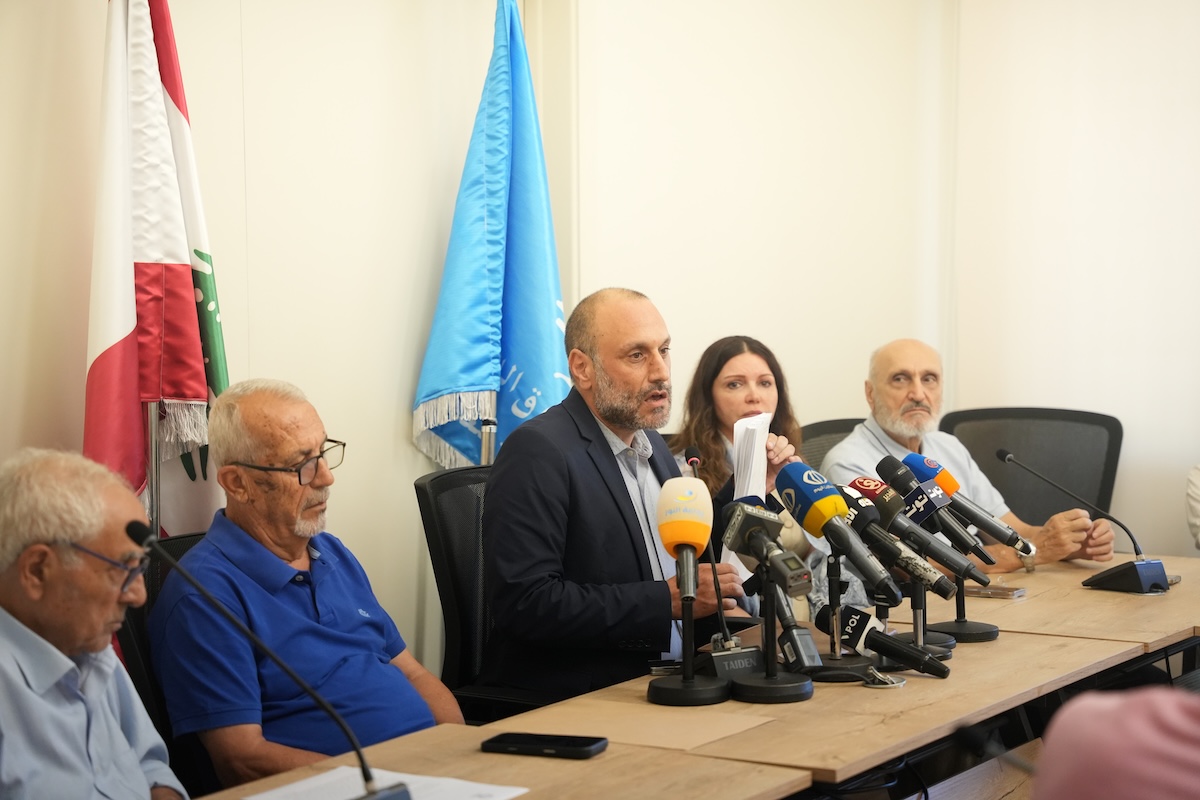
A press conference was held at the headquarters of the National Human Rights Commission, including the Committee for the Prevention of Torture, on Sami El Solh Boulevard in Beirut, to launch a draft resolution entitled “The Human Rights Situation of Lebanese Detainees and Victims of Enforced Disappearance in Israel”, as well as a report entitled “The Legal Status of Lebanese Prisoners, Detainees, Victims of Enforced Disappearance and Missing Persons Held by Israel”, in preparation for their submission to the United Nations Human Rights Council in Geneva.

The press conference was organized by the Khiam Rehabilitation Center for Victims of Torture and the Qana Human Rights Observatory. It was attended by Kinga Jánik, representative of the Regional Office for the Middle East and North Africa of the Office of the United Nations High Commissioner for Human Rights, as well as representatives of The Legal Agenda, the Lebanese Center for Human Rights, the National Commission for the Missing and Forcibly Disappeared, the National Human Rights Commission, including the Committee for the Prevention of Torture, and the Lebanese Association of Prisoners and Liberated Prisoners. Representatives of several human rights and humanitarian organizations, political parties, families of prisoners, detainees, victims of enforced disappearance and missing persons, and members of the media also attended.

Speakers at the press conference included Dr Mohammad Tay, Director-General of the Qana Human Rights Observatory; Mohammad Safa, President of the Khiam Rehabilitation Center for Victims of Torture; and Bassam Al Kantar, Commissioner for International Relations and Media at the National Human Rights Commission.

A draft resolution grounded in human rights, not political alignment
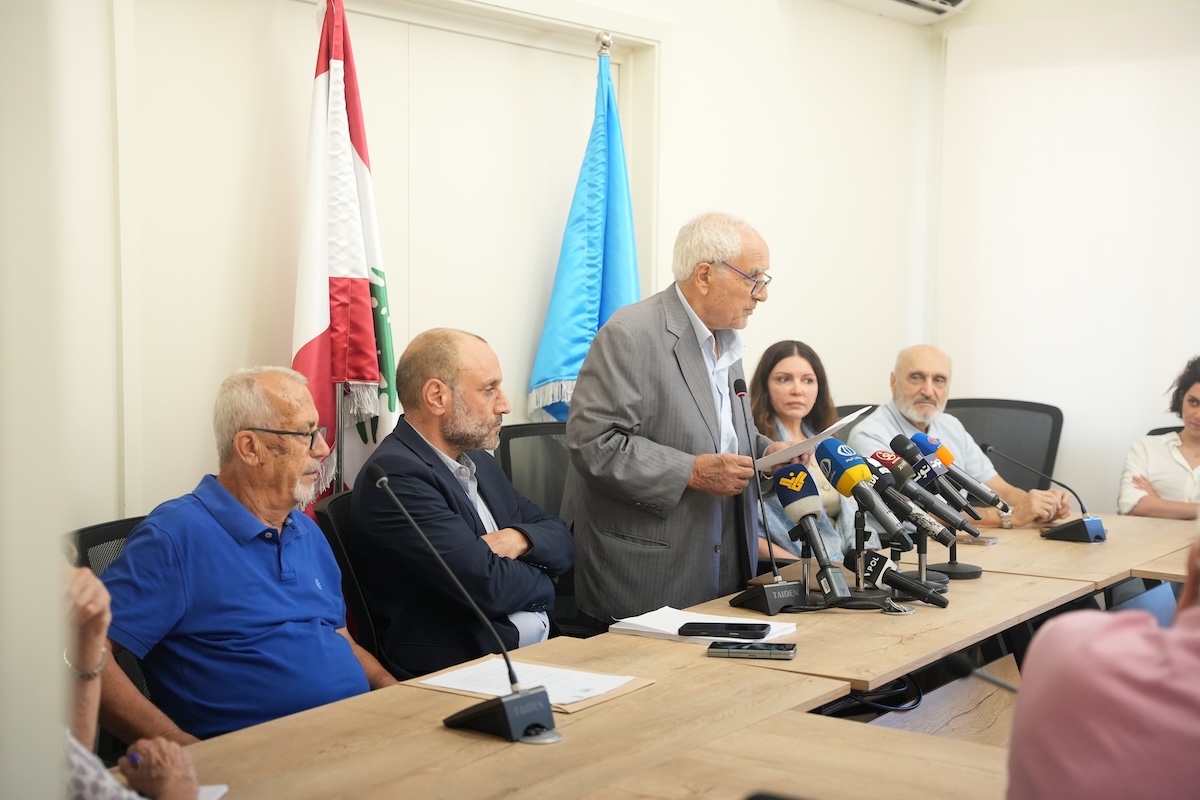
Dr Mohammad Tay stressed that the draft resolution is not based on a political position and does not seek to instrumentalize a humanitarian issue in any political dispute. Rather, it is grounded in the human rights to liberty, dignity and life; the right of families to know the fate of their loved ones; and the international community’s duty to ensure that no person remains missing, without information about their whereabouts, legal status or health.

He noted that Lebanese nationals had been captured, detained or gone missing during Israeli attacks, while complete information about their number, fate, whereabouts and conditions of detention remains unavailable. He emphasized that behind every name is a family waiting and demanding the truth, and that this issue must be addressed in accordance with international human rights law and international humanitarian law.

He explained that the draft resolution is based on the Universal Declaration of Human Rights; the International Covenants on Civil and Political Rights and on Economic, Social and Cultural Rights; the Geneva Conventions; the Convention against Torture; and international standards concerning enforced disappearance and the treatment of persons deprived of their liberty.

He added that the draft calls for the release of civilians subjected to arbitrary detention; the release and repatriation of prisoners of war once the lawful grounds for their continued captivity have ceased; humane treatment for all detainees; protection from torture and other ill-treatment; access to medical care; and respect for their rights and judicial guarantees.

The draft also stresses the need to grant the International Committee of the Red Cross immediate, regular and unhindered access to all Lebanese detainees and to verify their whereabouts, health and legal status, and conditions of detention, in accordance with its humanitarian mandate.

Tay noted that the issue of Lebanese detainees had previously received direct attention within the United Nations system, particularly through Commission on Human Rights Resolution 2003/8. The current initiative, he said, seeks to restore the issue to its proper place within the international human rights system in light of new facts and developments.

He explained that the draft resolution goes beyond calling for the fate of detainees and disappeared persons to be disclosed by proposing the establishment of an effective and sustained international follow-up process. It calls on the Working Group on Enforced or Involuntary Disappearances to give particular attention to the Lebanese cases and urges the relevant United Nations mechanisms on arbitrary detention and torture to follow up on information relating to the issue.

The draft requests the United Nations High Commissioner for Human Rights to monitor the issue, document relevant information, engage with the parties concerned and submit a written report to the Human Rights Council, followed by an interactive dialogue. This would ensure that the process does not end with the adoption of a resolution, only for the issue to be subsequently set aside.

Tay emphasized that enforced disappearance affects not only the disappeared person but also their entire family, leaving relatives in a prolonged state of waiting marked by hope, fear and uncertainty. He underscored three interconnected and non-negotiable rights: the right to truth, the right to justice and the right to reparation.

He concluded: “This is not a matter of numbers, nor one of negotiating over people, nor a file that should remain unresolved pending political settlements. Every detainee is a human being with rights, every disappeared person has a name and a family, and every family has the right to know.”

Safa: We Want to Bring the Issue from the National Level to the Highest International Forums
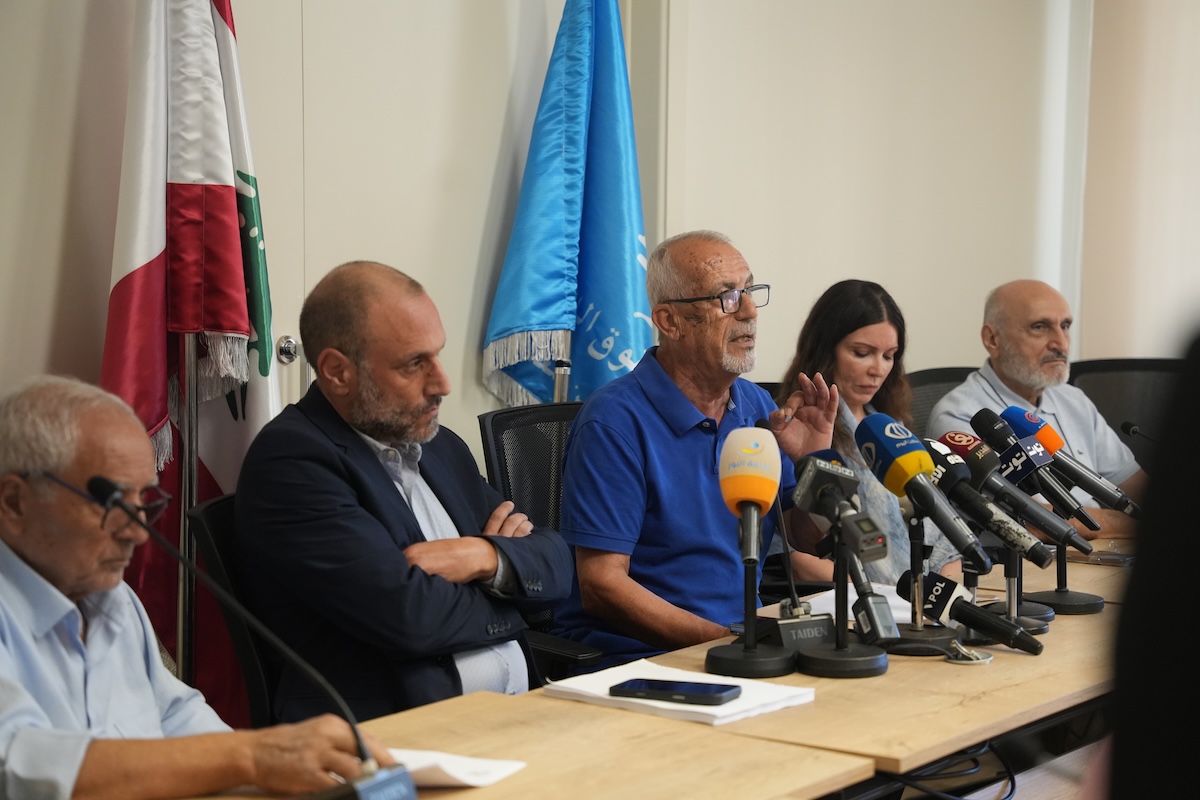
For his part, Mohammad Safa thanked the National Human Rights Commission for hosting the press conference and supporting the cause. He explained that the launch of the draft resolution was prompted by four main reasons.

The first is the failure of the Lebanese authorities to act. Successive governments have not addressed the issue of Lebanese detainees and missing persons held by Israel with the seriousness it deserves, nor have they undertaken sufficient diplomatic, political and legal efforts to keep it continuously before international forums.

The second is the international community’s failure to confront Israel’s obstruction, particularly its refusal to allow the International Committee of the Red Cross to visit Lebanese detainees and verify their whereabouts, health and conditions of detention. He noted that this denial of access forms part of a broader policy that also affects Palestinian prisoners and detainees.

The third concerns the limited impact of domestic initiatives, despite their importance. Safa said that the sit-ins, statements and appeals organized by the Khiam Rehabilitation Center, the Lebanese Association of Prisoners and Liberated Prisoners, other relevant organizations and the detainees’ families had helped keep the issue alive. However, these initiatives must be transformed into an integrated national and international process capable of securing the detainees’ release, determining the fate of missing persons and holding those responsible for violations to account.

The fourth and most urgent reason is the genuine danger facing Lebanese detainees, similar to that experienced by Palestinian prisoners and detainees.

“We do not want to instil fear in the families of detainees; we want to sound the alarm,” Safa said. He referred to recurring reports of prison raids, enforced disappearances, torture and other ill-treatment, starvation, denial of medical care and the spread of disease, warning that Lebanese detainees held in Israeli prisons and interrogation facilities could be exposed to these violations.

He also referred to the legal and humanitarian concerns raised by Israel’s 2026 death penalty law, as well as unconfirmed reports that several Lebanese nationals had been subjected to legal proceedings or trials. He stressed that no definitive conclusions could be drawn regarding the possible application of the law to any Lebanese detainee without knowing the nature of the charges and alleged acts, when they allegedly occurred, and which court had jurisdiction. Nevertheless, the existence of these risks requires urgent action to guarantee fair trials and prevent the imposition of arbitrary or excessively harsh sentences.

Safa emphasized that the initiative seeks to bring about a qualitative shift by moving the issue from the Lebanese domestic arena to the Human Rights Council and other international forums. “This is not solely the Khiam Center’s initiative; it is the initiative of the families, all human rights and humanitarian organizations, and everyone who believes in the human right to liberty and dignity,” he said.

Safa appealed to Minister of Foreign Affairs and Emigrants Youssef Raggi to have the Ministry endorse the draft resolution and instruct Lebanon’s Permanent Mission to the United Nations in Geneva to conduct consultations with Arab, African and other foreign missions to mobilize support for its submission to the Human Rights Council.

He explained that the draft resolution had been submitted to the Ministry of Foreign Affairs and that the delegation would meet with the Lebanese Mission in Geneva. Copies would also be presented to the President of the Republic, the Speaker of Parliament, the Prime Minister, political parties and groups, and human rights and humanitarian organizations.

He emphasized that the initiative would not be limited to submitting a document or formally registering a position. It would also involve meetings, workshops and communications with the United Nations High Commissioner for Human Rights, the International Committee of the Red Cross, and the UN mechanisms addressing enforced disappearance, arbitrary detention and torture.

Safa criticized the authorities’ continued reliance on the alleged lack of information as a justification for inaction. He said that the names, lists and facts were available to human rights organizations and the detainees’ families, and that addressing any remaining gaps was the responsibility of the state, which could instruct ministries, municipalities, mukhtars, security agencies and other competent authorities to collect, verify and consolidate the relevant information.

“The problem is not the absence of information, but the absence of seriousness and political will, as well as negligence and indifference,” he added. He emphasized that the delegation would travel to Geneva carrying the cause of the prisoners and missing persons and the voices of their families, continuing a long struggle that began with the Ansar Detainees’ Association and the Follow-up Committee in Support of the Detainees’ Cause and subsequently continued through the Khiam Rehabilitation Center for Victims of Torture.

Al Kantar: The Cases Must Not Be Reduced to a Single Classification

Bassam Al Kantar began his intervention by emphasizing the need to use precise legal terminology when addressing the issue. He explained that it is no longer acceptable to place all cases under a single designation, as the report covers distinct categories: prisoners of war whose status is governed by international humanitarian law; civilian detainees; victims of enforced disappearance; and missing persons for whom no reliable information is available regarding their fate or whereabouts.

He said that each category has its own legal characterization, rights, safeguards and follow-up mechanisms, and that disregarding these distinctions could be detrimental to victims and weaken the legal avenues available for their protection.

Al Kantar noted that the National Human Rights Commission is an independent national institution established pursuant to Law No. 62 of 2016. It has legal personality and administrative and financial independence, as well as powers to receive complaints, investigate human rights violations and follow up on them. He explained that its members were appointed by decree of the Council of Ministers after being nominated by various judicial, professional, academic and civil society bodies, thereby strengthening the Commission’s independence and pluralistic composition.

He stressed that the Commission is proud to be the first official institution in the Lebanese Republic to issue comprehensive legal documentation on Lebanese prisoners of war, detainees, victims of enforced disappearance and missing persons held by Israel. At the same time, however, he considered this achievement indicative of the extent of the authorities’ delay in documenting serious violations of international humanitarian law, including the capture of combatants, detention of civilians, abduction of citizens and failure to disclose the fate of missing persons.

A 205-Page Report Drawing on 620 Sources and References

Al Kantar revealed that the report comprises approximately 205 pages and draws on nearly 620 sources and references, including official and unofficial Lebanese and Israeli documents, human rights and media reports, statements issued by security and military bodies, witness accounts and field documentation.

He explained that publishing the sources in detail is intended to end the practice of circulating conflicting figures devoid of names and supporting evidence. “We are not talking about numbers, but about people who have names, families and rights; people who remain in cells, waiting for us to determine their status accurately and select the appropriate legal avenue through which to seek their protection and release and clarify their fate,” he said.

Al Kantar extended special thanks to the Lebanese Association of Prisoners and Liberated Prisoners and to The Legal Agenda, which carried out important and meticulous documentation of the cases. He confirmed that the report had benefited from information and documents collected by several organizations.

Five Principal Legal Categories

Al Kantar explained that the report classifies the cases into five principal legal categories.

The first category comprises 14 Lebanese prisoners to whom, based on the documented facts, the provisions of the Geneva Conventions governing prisoners of war apply. They are combatants who were parties to the armed conflict and fell into the hands of Israeli forces after laying down their arms, being wounded or surrendering under conditions of siege or threat.

The second category comprises two medical workers who were present in the field when they were detained. Al Kantar emphasized that international humanitarian law grants medical personnel special protection and requires that they be respected and protected and not targeted or arbitrarily detained for performing their medical and humanitarian duties.

The third category comprises Lebanese civilians detained in various circumstances while carrying out their work or ordinary activities. They include shepherds, fishers and people who were hiking in nature or inspecting water wells in their towns.

Al Kantar noted that the risk of detention remains present, citing the detention of the head of a municipal union in the region shortly before the press conference. This, he said, demonstrates that anyone could be detained and transferred into custody on the basis of broadly framed security suspicions.

The fourth and fifth categories cover victims of enforced disappearance and missing persons, while observing the legal distinction between the two situations, respecting the wishes of families and refraining from publishing names or details without their free, prior, informed and explicit consent.

Historical Cases and 42 Missing Persons Whose Names Have Not Been Disclosed

Al Kantar explained that the report covers historical cases whose families continue to demand clarification of their fate. These include a person who belonged to a fedayeen group in 1978, another who was detained during the 1982 Israeli invasion, and a Lebanese fisher who went missing at sea during the 1990s.

It also covers the case of a person who went missing during the 2024 Israeli invasion—the only person in this group whose family authorized the documenting organizations to disclose his name publicly.

He stressed that this does not mean that he is the only missing person. The database on which the report relied indicates that another 42 missing persons have been registered, but their families have not granted the organizations documenting the cases informed consent to disclose their names, for reasons that must be respected.

He added that other lists of cases remain under documentation, in addition to six cases of missing persons for whom all relevant information has not yet been collected.

Accordingly, Al Kantar cautioned against reducing the issue to the figures currently being circulated—whether 25, 36 or 38 people. He explained that, when the five categories are combined with cases still under verification, the total number could approach 100.

No Lebanese Evidence of a Minor and Discrepancies in Israeli Data

Al Kantar addressed reports that a minor might be among the detainees. He stressed that the available Lebanese documentation does not contain any confirmed case of a Lebanese national who was under 18 at the time of arrest. The youngest known Lebanese detainee had turned 18 approximately three months before his arrest.

By contrast, the Israeli Prison Service report for the final quarter of 2025 lists, under the category of security prisoners classified as affiliated with “Hezbollah”, one minor aged between 16 and 18, together with 20 people classified as “unlawful combatants” in security detention and six classified as sentenced security prisoners.

Al Kantar noted that comparing the Israeli data with Lebanese documentation for the same reference period reveals a numerical discrepancy of up to 17 people. He emphasized, however, that this discrepancy does not establish that all of these individuals are Lebanese or were arrested in Lebanon, because the “organizational affiliation” category does not indicate nationality, place of residence or place of arrest.

He pointed out that previous Israeli reports had listed under the category of affiliation with “Hezbollah” people of several nationalities and from various territories, including Israelis, Syrians and Palestinians from the territories occupied in 1948, the West Bank and the Gaza Strip.

He explained that the discrepancy could relate to detainees of other nationalities who were arrested in Lebanon, southern Syria, the Golan Heights or elsewhere and subsequently classified by the Israeli Prison Service according to an alleged organizational or ideological affiliation with “Hezbollah”.

He stressed that the Israeli Prison Service data constitute an indicator requiring investigation but are not, on their own, sufficient to establish the number or identities of Lebanese detainees. This discrepancy further underscores the need to disclose detainees’ names, nationalities and places of detention and to enable the International Committee of the Red Cross to conduct an independent verification.

Documentation of Recorded Confessions and Degrading Treatment

Al Kantar explained that, within the limits of the available information, the report establishes an individual file for each known person, covering the circumstances of their arrest, legal classification, evidence indicating whether they remain alive or have died, and available information concerning their place of detention and treatment.

The report also documents videos published by the Israeli military spokesperson containing purported confessions by two prisoners, recorded under circumstances that raise serious concerns that they may have been extracted under duress and in violation of international law. It further documents degrading footage recorded during arrests in Aita al-Shaab and other areas, showing practices that violate human dignity.

Copies to the Constitutional and Judicial Authorities

Al Kantar announced that the report and draft resolution would be submitted to the President of the Republic to inform him of the findings and enable him to raise the issue before the Council of Ministers. They would also be submitted to the Prime Minister, who had previously received three requests from the Commission urging action on the issue before the Human Rights Council in Geneva.

Copies will also be sent to the General Secretariat of the Council of Ministers, the Speaker of Parliament, the President of the Supreme Judicial Council and the National Commission for the Missing and Forcibly Disappeared.

Al Kantar called on the Lebanese judiciary to open systematic investigations and document violations, including killings, injuries, unlawful detention and enforced disappearance. He said it was unacceptable for thousands of people to be killed, wounded or reported missing without official reports being filed, inspections and judicial investigations conducted, and forensic medical reports prepared.

He stressed that documentation, preservation of evidence and determination of responsibility are not solely the tasks of human rights organizations and civil society; they also lie at the heart of the responsibilities of the judiciary and judicial police. He called on the Supreme Judicial Council to take practical steps, emphasizing that the judiciary must not wait for the adoption of the draft law on international crimes before fulfilling its duties under the powers provided by existing legislation.

He pointed to precedents on which further action could build, including the official report opened into the bombardment of facilities belonging to the Litani River Authority near the Qaraoun Dam and the accompanying official documentation of the incident.

Call for a National Register and an Observatory to Document Violations

Al Kantar called on the National Commission for the Missing and Forcibly Disappeared to initiate procedures for entering the cases into the national register, documenting disappearances, tracing missing persons, protecting data, preserving the chain of custody of evidence, collecting samples and conducting DNA testing where necessary.

He stressed that Lebanon must transition towards an integrated scientific, legal and institutional process for addressing the issue of missing persons, drawing on international experiences that have developed rigorous mechanisms for locating missing persons and establishing their identities.

He also called for coordination between the International Humanitarian Law Committee of the National Human Rights Commission; the National Committee on International Humanitarian Law, chaired by the Deputy Prime Minister; the judiciary and judicial police; and the security and military agencies.

He explained that a substantial amount of relevant information is held by the Information Branch of the Internal Security Forces and the Lebanese Army’s Directorate of Intelligence. These agencies may possess additional evidence that human rights organizations have been unable to access, including surveillance footage, telecommunications data and other technical evidence.

He called for these efforts to be brought together within a unified institutional framework, ultimately leading to the establishment of a National Observatory for the Documentation of Violations of International Humanitarian Law, particularly violations involving Lebanese prisoners of war, detainees, victims of enforced disappearance and missing persons held by Israel.

A Continuing Process in Lebanon and Geneva

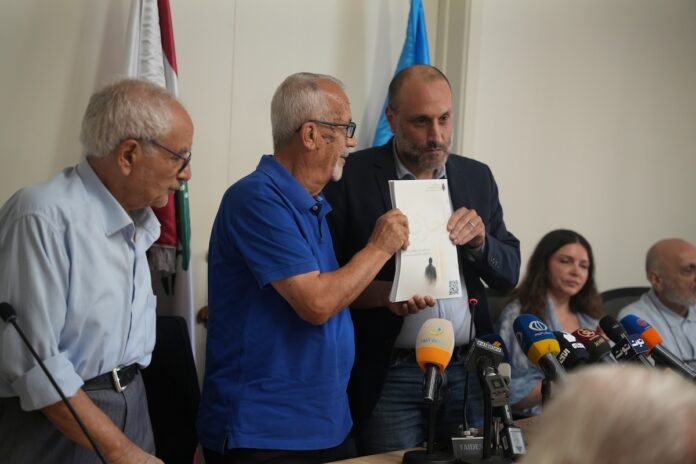
The press conference concluded with Mohammad Safa receiving a copy of the report to support the advocacy he will undertake in Geneva and his meetings with Lebanon’s Permanent Mission, diplomatic missions and relevant United Nations bodies.

Participants emphasized that the launch of the report and draft resolution did not mark the end of the work, but rather the beginning of a sustained national and international process. This will include mobilizing diplomatic support, activating United Nations mechanisms, enabling the International Committee of the Red Cross to access detainees, coordinating official and human rights efforts, and ensuring that violations are documented and evidence preserved.

The conference called on the Lebanese government to endorse the draft resolution, instruct Lebanon’s Permanent Mission in Geneva to undertake the necessary consultations in preparation for its submission to the Human Rights Council at the earliest possible session, and work simultaneously to establish a unified national database covering prisoners of war, detainees, victims of enforced disappearance and missing persons.

Participants stressed that protecting detainees and clarifying the fate of missing persons are rights that must not be subordinated to political calculations or postponed pending political settlements. Responsibility is shared among the government, judiciary, national institutions, competent agencies, human rights organizations and the international community.

They affirmed their commitment to continuing their efforts until the fate of every person is clarified, all detainees are returned to their families, and the rights of victims and their families to truth, justice, reparation and accountability are guaranteed.

هذه المقالة متاحة أيضًا بـ: العربية (Arabic) Français (French)

NHRCLB
NHRCLBhttps://nhrclb.org
مؤسسة وطنية مستقلة منشأة بموجب القانون 62/ 2016، تتضمن آلية وقائية وطنية للتعذيب (لجنة الوقاية من التعذيب) عملاً بأحكام القانون رقم 12/ 2008 (المصادقة على البروتوكول الاختياري لاتفاقية مناهضة التعذيب). An independent national institution established under Law No. 62/2016, which includes a National Preventive Mechanism against torture (the Committee for the Prevention of Torture), in accordance with the provisions of Law No. 12/2008 (ratifying the Optional Protocol to the Convention against Torture). Une institution nationale indépendante établie en vertu de la loi n° 62/2016, qui comprend un mécanisme national de prévention de la torture (le Comité pour la prévention de la torture), conformément aux dispositions de la loi n° 12/2008 (ratifiant le Protocole facultatif se rapportant à la Convention contre la torture).