

In light of the serious and unprecedented escalation in grave violations of human rights and international humanitarian law in Lebanon since 2 March 2026, accompanied by large-scale military operations, intensive airstrikes, forced evacuation warnings, and mass displacement affecting hundreds of thousands of civilians, the National Human Rights Commission affirms that these developments constitute serious indications of grave breaches of international humanitarian law and crimes under international law.
Pursuant to its legal mandate under Law No. 62/2016, and in the exercise of its responsibilities to monitor and document violations and to defend human rights, the Commission considers it necessary to present the following observations and recommendations:
First: On the General Legal Framework
The rules of international humanitarian law are binding on all parties to armed conflicts, whether or not they are parties to the relevant international treaties, given their customary and peremptory nature. These rules establish a set of fundamental principles aimed at protecting human beings during armed conflict, preserving their dignity, and limiting the effects of hostilities.
These rules are grounded in a well-established legal framework, including the 1949 Geneva Conventions and their Additional Protocols, as well as customary international law, which imposes clear obligations on parties to a conflict. Foremost among these are the obligation to respect the principle of distinction between civilians and combatants, the prohibition of targeting civilian objects, adherence to the principle of proportionality, and the duty to take all feasible precautions to spare the civilian population from the effects of hostilities.
Many of these rules also fall within the category of peremptory norms of international law (jus cogens), from which no derogation is permitted under any circumstances, including situations of armed conflict. Violations of these norms entail international responsibility, as well as individual criminal responsibility for international crimes, in particular war crimes and crimes against humanity, as defined in the Rome Statute of the International Criminal Court.
The Commission emphasizes that compliance with these rules is not optional nor merely a political commitment, but a binding legal obligation aimed at safeguarding international peace and security. Any breach thereof, especially when widespread or systematic, exposes its perpetrators to accountability before international justice.
Destruction of Civilian Infrastructure and Objects
Since 2 March 2026, airstrikes have affected densely populated residential areas across various regions of Lebanon, as well as vital and essential facilities, including water and electricity networks, roads and bridges, public service centers, shelters, and educational and healthcare institutions. This has resulted in the widespread destruction of civilian infrastructure and the disruption of basic means of livelihood for the population.
The pattern of targeting, in terms of intensity, simultaneity, and broad geographic scope, raises serious concerns regarding the use of means and methods of warfare with wide-area effects in civilian environments, thereby increasing the likelihood of indiscriminate or disproportionate damage. The destruction of such essential facilities, on which civilians depend for access to water, electricity, and basic services, further exacerbates the humanitarian situation and directly threatens fundamental rights, particularly the rights to life, health, and human dignity.
International humanitarian law affirms the principle of distinction between civilian objects and military objectives, and prohibits the targeting of civilian objects unless they are being used for military purposes. It also enshrines the principle of proportionality, which prohibits attacks expected to cause excessive harm to civilians relative to the anticipated military advantage. In addition, the principle of precautions requires that all feasible measures be taken to minimize harm to civilians and civilian infrastructure.
Accordingly, such patterns of destruction, in the absence of imperative military necessity, or where the principles of distinction, proportionality, and precautions are not respected, constitute a grave violation of international humanitarian law and may amount to a war crime under Article 8 of the Rome Statute of the International Criminal Court, particularly with regard to intentionally directing attacks against civilian objects or launching attacks with knowledge that they will cause excessive damage.
The Commission further recalls that attacks against essential infrastructure of a vital civilian character, even in the context of armed conflict, are subject to heightened restrictions due to their long-term impact on civilian populations. This underscores the need for independent investigations and effective accountability to prevent impunity.
Targeting of Healthcare and Humanitarian Personnel
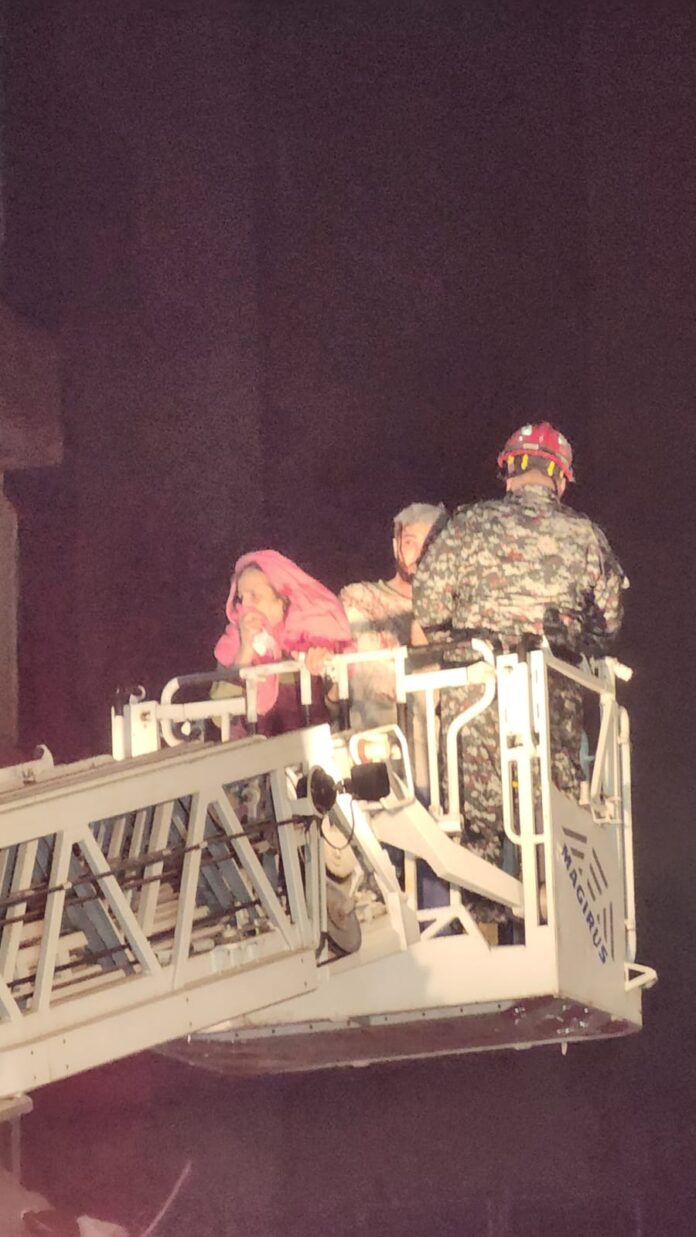
The National Human Rights Commission has documented repeated and alarming incidents of targeting ambulance crews and personnel working in the health and humanitarian sectors while carrying out their duties. These include exposure to direct or indirect attacks during evacuation and rescue operations, strikes in the vicinity of healthcare centers and humanitarian gathering points, as well as obstruction of their access to the wounded and injured in certain affected areas.
Such patterns of targeting constitute a grave violation of peremptory norms of international humanitarian law, which afford special protection to medical and humanitarian personnel as neutral actors performing exclusively life-saving functions. The 1949 Geneva Conventions and their Additional Protocols affirm the obligation to respect and protect medical personnel, medical transport, and healthcare facilities at all times, and prohibit any form of attack against or interference with their work.
Targeting these personnel or disrupting their operations not only affects the individuals concerned but also directly undermines the capacity of the healthcare system and the overall humanitarian response. It contributes to increased loss of life due to delays in the provision of urgent medical care, particularly in the context of dangerous field conditions and severe resource shortages.
The Commission notes that any deliberate attack against medical or humanitarian personnel, or against medical transport and facilities, may amount to a war crime under Article 8 of the Rome Statute of the International Criminal Court, particularly when committed as part of widespread or systematic attacks against the civilian population.
In this context, the Commission emphasizes that respect for and protection of healthcare and humanitarian personnel constitute fundamental pillars of international humanitarian law. Any violation of these protections necessitates immediate accountability and measures to ensure an end to impunity.
Targeting of Journalists and Media Professionals
Since 2 March 2026, the National Human Rights Commission has documented repeated and alarming incidents of journalists and media professionals being targeted while carrying out their professional duties in covering events. These incidents include direct or indirect strikes on their locations, as well as attacks in the vicinity of media operations, including field broadcasting areas and news coverage points. Cases have also been recorded in which journalists were exposed to danger while documenting airstrikes or covering rescue operations, reflecting an extremely hazardous working environment that undermines the vital role of the media in conveying facts.
Such patterns of targeting constitute a grave violation of international humanitarian law, which affords protection to journalists as civilians, provided they do not take a direct part in hostilities. Relevant customary rules further affirm the obligation to respect and protect journalists during armed conflict, and to refrain from subjecting them to attacks, threats, or harassment on account of their professional activities.
These violations do not affect only the individuals targeted, but also undermine the public’s right to access information, weaken freedom of expression and the media, and hinder the documentation of violations and the transmission of truth. This raises serious concerns regarding attempts to conceal evidence, influence accountability processes, and obstruct efforts toward international justice.
Moreover, targeting journalists in the context of widespread or systematic attacks against the civilian population, or intentionally directing attacks against them as civilians, may amount to a war crime under Article 8 of the Rome Statute of the International Criminal Court. It may also constitute a crime against humanity if committed as part of a widespread or systematic attack directed against a civilian population.
The Commission stresses that the protection of journalists is not only a legal obligation but also a fundamental condition for ensuring transparency and accountability. Any attack against them requires prompt and independent investigation, and the prosecution of those responsible in order to end impunity.
Destruction of Cultural and Heritage Property
Cultural, heritage, and religious properties in Lebanon, particularly in the city of Tyre, which is inscribed on the UNESCO World Heritage List, have sustained direct and indirect damage as a result of military operations during March and April 2026. These damages have affected areas in close proximity to sensitive archaeological sites, including the Al-Bass archaeological site, threatening the integrity of the historical and architectural fabric and undermining the outstanding universal value of these locations. Available data indicate that some of this damage resulted from strikes carried out in the vicinity of protected sites, raising serious concerns regarding compliance with the rules of international humanitarian law, particularly the principles of distinction and proportionality, as well as the obligation to take precautions to protect civilian objects, including cultural property.
The targeting of cultural property, or exposing it to significant damage, whether directly or indirectly, constitutes a violation of the 1954 Hague Convention for the Protection of Cultural Property in the Event of Armed Conflict and its Protocols. It may also amount to a war crime under the jurisprudence of the International Criminal Court, particularly when attacks are intentionally directed against sites of religious or historical character that do not constitute military objectives.
In this context, documenting such damage and preserving related evidence constitute essential steps toward ensuring accountability and preventing impunity. This must be accompanied by urgent measures to protect what remains of Lebanon’s cultural heritage, which represents a shared human legacy belonging not only to Lebanon but to humanity as a whole.
Use of Weapons with Indiscriminate or Excessive Effects
Available field data and reports since 2 March 2026 indicate the use of means and methods of warfare that are likely to have indiscriminate or excessive effects, particularly in densely populated areas, where their impact cannot, by nature, be confined to specific military objectives. The use of such weapons in civilian environments significantly increases the number of civilian casualties and causes extensive damage to civilian objects and vital infrastructure.
International humanitarian law prohibits the use of weapons that cannot be directed at a specific military objective, or whose effects cannot be limited in accordance with the principles of distinction and proportionality. It also prohibits means of warfare that are of a nature to cause superfluous injury or unnecessary suffering. These rules have a binding customary character applicable to all parties to a conflict, regardless of their adherence to specific treaties.
Moreover, the use of weapons or methods of warfare in circumstances where it is known in advance that they will cause excessive civilian harm or widespread damage to the civilian environment may constitute a grave violation of international humanitarian law and amount to a war crime under Article 8 of the Rome Statute of the International Criminal Court, particularly in relation to the launching of indiscriminate or disproportionate attacks.
The Commission emphasizes that the legality of the use of such weapons must be assessed in light of their technical characteristics, their area of impact, and the context in which they are used, particularly in densely populated urban settings where the risk of civilian harm is significantly heightened. It further stresses the need for independent and transparent investigations into these allegations, and for ensuring accountability for any unlawful use of means and methods of warfare, in line with international legal obligations and with a view to preventing the recurrence of such violations.
Third: On the Principle of Universal Jurisdiction
The National Human Rights Commission recalls that serious international crimes, including war crimes and crimes against humanity, are subject to the principle of universal jurisdiction (compétence universelle). This principle allows judicial authorities in a number of states to prosecute perpetrators of such crimes regardless of where they were committed or the nationality of the perpetrators or victims, given their nature as offenses against the international community as a whole.
The 1949 Geneva Conventions enshrine this principle through the obligation of states to prosecute those responsible for grave breaches. This approach has also been reinforced in national judicial practices, particularly in European countries that have adopted legislation enabling the prosecution of international crimes before their domestic courts.
In this context, the Commission refers to the civil complaint filed before the War Crimes Unit in France by the French–Lebanese artist and filmmaker Ali Cherri, in cooperation with the International Federation for Human Rights. The case concerns the airstrike that targeted a residential building in the Nweiri neighborhood of Beirut on 26 November 2024, resulting in the killing of civilians, including the claimant’s parents, under circumstances which, according to documented evidence, indicate the absence of a legitimate military objective and the lack of an effective prior warning.
This case is of particular importance as it constitutes a concrete application of the principle of universal jurisdiction, whereby a direct victim has sought justice before the national courts of a foreign state in the absence of effective accountability mechanisms at the national and international levels. It also reflects the pivotal role that victims can play in advancing justice, transforming documented violations into prosecutable legal cases.
The Commission considers that this case sets an important precedent regarding the possibility of prosecuting crimes committed in Lebanon before foreign courts, and opens the door for other victims to pursue similar avenues, thereby strengthening prospects for breaking the cycle of impunity.
Accordingly, the Commission calls for supporting this judicial pathway and for documenting crimes in accordance with the highest legal standards, to enable their use before national courts exercising universal jurisdiction, alongside efforts to activate accountability before the International Criminal Court, with a view to ensuring that those responsible for these crimes are prosecuted and that justice is delivered to victims.
هذه المقالة متاحة أيضًا بـ:
 العربية (Arabic)
  Français (French)

