
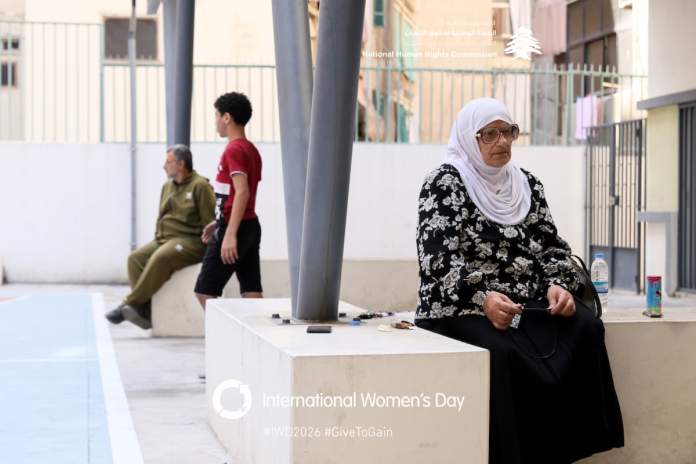
On the occasion of International Women’s Day 2026, the National Human Rights Commission of Lebanon, including the Committee for the Prevention of Torture (NHRC-CPT) joins the global community in commemorating this important day under the theme “Give To Gain.” This year’s theme highlights a powerful and transformative idea: when we give support, opportunity, protection, and solidarity to women and girls, society as a whole gains justice, resilience, and sustainable development.
This year’s commemoration takes place at a particularly difficult moment for Lebanon. The country is currently facing a serious humanitarian and security crisis resulting from the escalation of armed hostilities and widespread displacement during the ongoing Israeli war against Lebanon in 2026, which has added further pressure on an already fragile economic and social context. Escalating violence, repeated airstrikes, and the displacement of thousands of families across several regions of the country have severely disrupted access to essential services, including health care, education, protection services, and livelihoods.
As in many armed conflicts around the world, women and girls are among those most severely affected by the consequences of war and displacement. Armed conflict exacerbates pre-existing inequalities and increases the risks faced by women, including exposure to gender-based violence, economic insecurity, limited access to health care, and interruptions to education and employment opportunities. Women frequently assume primary responsibility for caring for displaced families, children, and elderly relatives while navigating the collapse of social and economic safety nets.
Periods of conflict and instability often deepen structural discrimination and reduce women’s participation in decision-making processes, even though women play a crucial role in humanitarian response, community resilience, and peacebuilding efforts. In this context, advancing women’s rights is not only a matter of justice but also a critical element of national recovery, social stability, and sustainable peace.
Against this challenging backdrop, International Women’s Day serves as both a moment of solidarity and a call to action. The theme “Give To Gain” reminds us that investing in women’s rights, protection, and leadership strengthens societies’ ability to overcome crises and build a more equitable future.
Women’s Rights as a Pillar of Human Rights
International Women’s Day, celebrated worldwide since 1911, represents more than a symbolic moment of recognition. It is a day of reflection, mobilization, and collective action dedicated to advancing gender equality and women’s rights. Over more than a century, the movement has evolved into a global platform addressing structural inequalities that continue to affect women in political participation, economic empowerment, education, access to justice, and protection from violence.
The NHRC-CPT reaffirms that gender equality is both a human rights imperative and a legal obligation, grounded in international human rights law and the commitments undertaken by Lebanon under the Convention on the Elimination of All Forms of Discrimination against Women (CEDAW) and other international human rights instruments.
International mechanisms have repeatedly emphasized the need for States to adopt institutional and legislative measures that address longstanding inequalities between women and men and place women at the centre of recovery strategies during crises and emergencies.
The realization of women’s rights is also essential for achieving Sustainable Development Goal 5, which calls for the elimination of all forms of discrimination and violence against women and girls everywhere.
Progress and Remaining Challenges
Lebanon has made certain legislative advances aimed at strengthening the protection of women’s rights. Among these developments are the amendment of Law No. 293 on the protection of women and family members from domestic violence and the adoption of Law No. 205 criminalizing sexual harassment and supporting victims, both of which represent important steps toward addressing gender-based violence.
Despite these developments, structural challenges remain significant. Women continue to face barriers in political representation, economic participation, and access to justice. Discriminatory legal provisions persist in areas such as nationality laws and personal status frameworks, limiting women’s ability to enjoy equal rights within the family and society.
International human rights bodies have also expressed concern about the underrepresentation of women in decision-making institutions and have called for the adoption of temporary special measures, including quotas, to accelerate women’s participation in political life.
“Give To Gain”: A Call for Collective Action
The “Give To Gain” campaign for International Women’s Day 2026 encourages a mindset of generosity and collaboration. Giving, in this context, does not represent a loss but rather an intentional investment in justice, equality, and collective progress.
Giving can take many forms:
• Give justice, by ensuring equal access to courts and legal protection.
• Give protection, by preventing violence against women and strengthening accountability mechanisms.
• Give opportunity, by promoting women’s leadership and participation in political and economic life.
• Give visibility, by recognizing women’s achievements and challenging harmful stereotypes.
• Give knowledge, by supporting education and mentoring initiatives.
• Give resources, by investing in programs that empower women and girls.
Every contribution strengthens the collective effort to build more inclusive societies. Gender equality cannot be achieved through legislation alone; it requires the active engagement of institutions, communities, and individuals.
The Role of the National Human Rights Commission
As Lebanon’s National Human Rights Institution, the NHRC-CPT plays an important role in promoting gender equality and protecting the rights of women and girls.
The Commission’s mandate includes:
• Monitoring and documenting human rights violations.
• Reviewing draft laws and policies to ensure compliance with international human rights standards.
• Raising awareness about human rights and gender equality.
• Investigating complaints and advocating for accountability and remedies.
Strengthening women’s access to justice remains a key priority. International human rights bodies have emphasized the importance of building the capacity of judges, prosecutors, lawyers, and law enforcement officials to address gender-based violence and discrimination effectively.
Addressing Violence Against Women
Gender-based violence remains one of the most widespread human rights violations affecting women worldwide. Domestic violence, sexual harassment, trafficking, and online abuse continue to undermine women’s safety and dignity.
Addressing this challenge requires a comprehensive approach that includes:
• Strengthening legislation and enforcement mechanisms.
• Expanding support services for survivors, including shelters and legal aid.
• Ensuring accountability for perpetrators.
• Promoting awareness and prevention programs.
International human rights mechanisms have also stressed the need to expand support services for victims and ensure that adequate shelters and protection mechanisms are available to women facing violence.
Women’s Participation and Leadership
Women’s equal participation in political and public life is essential for inclusive governance and sustainable development. However, women remain significantly underrepresented in political institutions and decision-making processes.
International human rights bodies have recommended adopting temporary measures to promote women’s participation in political life and decision-making positions across public institutions.
Promoting women’s leadership is essential not only for gender equality but also for strengthening democratic governance and effective policymaking.
Supporting Women Human Rights Defenders
Women human rights defenders play a crucial role in advancing justice, accountability, and equality. Civil society organizations and activists have been instrumental in advocating for women’s rights and supporting survivors of violence.
The NHRC-CPT emphasizes the importance of protecting civic space and ensuring that women human rights defenders can carry out their work freely and safely.
Building a Culture of Equality
The “Give To Gain” campaign reminds us that gender equality requires cultural transformation as well as institutional reform.
Individuals can contribute to this transformation by:
• Challenging discriminatory stereotypes.
• Supporting women’s leadership and achievements.
• Promoting equal opportunities in workplaces and communities.
• Encouraging girls’ education and empowerment.
• Standing against harassment and violence.
Small acts of solidarity can generate powerful ripple effects that transform societies.
A Call to Action
On this International Women’s Day 2026, the National Human Rights Commission of Lebanon calls upon:
• Government institutions to strengthen laws and policies promoting gender equality.
• Parliament to prioritize legislative reforms addressing discrimination against women.
• Civil society organizations to continue advocating for women’s rights.
• Educational institutions and media organizations to promote equality and challenge stereotypes.
• Communities and individuals to support women’s empowerment in everyday life.
The Commission also encourages institutions and individuals to join the global “Give To Gain” movement, demonstrating solidarity with women and girls through concrete actions that advance equality and justice.
International Women’s Day is both a celebration and a reminder. It celebrates the achievements of women worldwide while reminding us of the work that remains to achieve true equality.
The “Give To Gain” theme highlights a powerful truth: when societies invest in women’s rights, they invest in their own future.
Empowered women contribute to stronger communities, resilient economies, and more inclusive democratic institutions.
As we mark International Women’s Day 2026, the National Human Rights Commission of Lebanon, including the Committee for the Prevention of Torture, calls on all stakeholders to give their support, give their voice, and give their commitment to advancing gender equality.
Because when women gain rights, opportunities, and protection, society as a whole gains justice, dignity, and progress.
هذه المقالة متاحة أيضًا بـ:

