
By Bassam Al Kantar, Commissioner for International Relations at the National Human Rights Commission
Since the escalation of hostilities on 3 March 2026, Lebanon has faced a rapidly deteriorating humanitarian crisis, marked by mass displacement, widespread harm to civilians, and the progressive collapse of essential infrastructure. Drawing on the monitoring efforts of the National Human Rights Commission in Lebanon, this analysis examines the cascading effects of contemporary warfare on civilian protection, institutional resilience, and social cohesion.
A Crisis Defined by Sudden Mass Displacement
Within a matter of weeks, more than 1.2 million people have been displaced across Lebanon, marking an unprecedented shock to the country’s social and institutional fabric. According to the daily situation report issued by the Disaster Risk Management Unit at the Grand Serail on 31 March 2026, the cumulative toll has reached 1,268 people killed and 3,750 injured, with a daily count of 21 deaths and 70 injuries recorded.
In terms of displacement, a total of 669 collective shelters have been established, currently hosting 136,201 displaced individuals across 35,419 families. Many of these shelters are operating under emergency conditions, often set up in public schools and other facilities not designed for prolonged displacement.
This scale of displacement, occurring abruptly rather than gradually, has overwhelmed public systems and forced rapid adaptation across all sectors. In such contexts, the ability of institutions to respond is not merely tested, it is fundamentally redefined.
Digitalized Warfare and the Breakdown of Civilian Warnings
One of the most striking features documented in the NHRC-CPT reports is the transformation of evacuation warnings into digital instruments of warfare. Rather than relying solely on traditional warning mechanisms, evacuation orders have increasingly been disseminated through social media platforms and direct digital communication channels.
In several documented cases, warnings were issued late at night via platforms such as X (formerly Twitter), assuming that civilians in active conflict zones have access to electricity, internet connectivity, and functioning mobile devices. More concerningly, some warnings reportedly provided less than 15 minutes for civilians to evacuate before the onset of attacks.
International humanitarian law requires that advance warnings be effective, clear, and actionable. However, the reports highlight instances where these criteria were not met. A notable example includes an evacuation notice for the Amrousiyeh area in Beirut’s southern suburbs, accompanied by a map that incorrectly identified a premier, large-scale shopping, dining, and entertainment over 11 kilometers away from the intended target. Such inaccuracies create confusion, delay decision-making, and ultimately undermine the protective purpose of warnings.
In parallel, the emergence of highly personalized warnings, including direct messages sent via WhatsApp to specific individuals ordering them to evacuate their homes, reflects a new and deeply intrusive dimension of digital warfare. This fusion of mass and individualized warning systems raises critical legal and ethical questions regarding effectiveness, accountability, and the psychological impact on civilians.
Infrastructure as a Chokehold: The Destruction of Connectivity
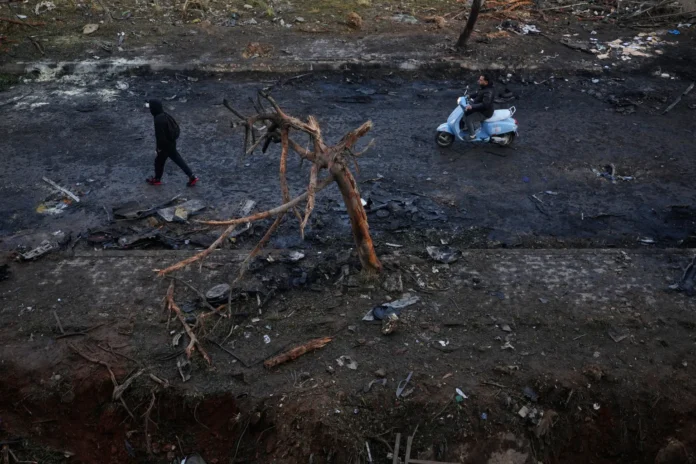
The humanitarian impact of displacement is further exacerbated by the systematic destruction of key infrastructure, particularly bridges across the Litani River. Reports document the targeting of major crossings, including Qasmieh, Zrariyeh, Khardali, and Dalafeh, effectively severing connections between southern Lebanon and the rest of the country.
The destruction of such infrastructure has consequences that extend far beyond physical damage. It disrupts humanitarian access, isolates entire communities, and constrains the movement of civilians seeking safety. While international humanitarian law permits the targeting of objects used for military purposes, it also requires strict adherence to the principles of distinction and proportionality.
Where infrastructure serves both civilian and military functions, its destruction must yield a concrete and direct military advantage that outweighs the foreseeable harm to civilians. The widespread targeting of bridges, combined with the resulting isolation of large civilian populations, raises serious concerns regarding compliance with these principles and may, in certain circumstances, amount to prohibited forced displacement.
Violations of Privacy and the Inviolability of the Home
Beyond public infrastructure, the reports document incidents involving the intrusion into private homes by military personnel. Open-source evidence reviewed by the NHRC-CPT includes footage showing soldiers inside civilian residences, handling personal belongings, and, in one case, displaying a civilian’s identification card on camera.
Such actions engage core protections under international humanitarian law, including the respect for private property, human dignity, and the inviolability of the home. The public dissemination of personal identity documents from within private spaces introduces an additional layer of harm, potentially exposing individuals to risks and constituting a form of psychological intimidation.
Resilience and the Rise of Grassroots Solidarity
Despite the scale of the crisis and the strain on formal institutions, the reports highlight a remarkable surge in grassroots initiatives and community-led responses.
More than 100 localized initiatives have emerged to address immediate needs, often with a level of agility and specificity that larger systems struggle to achieve. Community kitchens have delivered hundreds of thousands of meals, while initiatives focused on dignity-based support have provided essential items such as hygiene products and bedding.
Specialized networks have also developed to protect vulnerable groups, including women and LGBTQ+ individuals, through community-based shelter arrangements and support systems. Other efforts have extended to the rescue of animals left behind in evacuated areas, reflecting a holistic approach to humanitarian response.
These decentralized efforts demonstrate the capacity of communities to self-organize and respond effectively in the absence of fully functioning state systems. They also underscore the importance of dignity, trust, and social cohesion as essential components of humanitarian action.
The Future of Civilian Protection in a Digital War
The developments documented in Lebanon since March 2026 offer a stark illustration of how modern conflicts are reshaping the landscape of civilian protection. The increasing reliance on digital communication for evacuation warnings, the targeting of critical infrastructure, and the strain on public institutions reveal both the evolving nature of warfare and its profound human consequences.
At the same time, the crisis highlights the enduring strength of community solidarity and the capacity of civil society to fill critical gaps in times of need.
As warfare becomes more digitized and interconnected with everyday technologies, fundamental questions emerge regarding the effectiveness of protection mechanisms and the future of civilian safety. When warnings, decisions, and survival increasingly depend on digital systems, ensuring their accuracy, accessibility, and accountability becomes not only a technical challenge but a legal and moral imperative.
هذه المقالة متاحة أيضًا بـ:

