
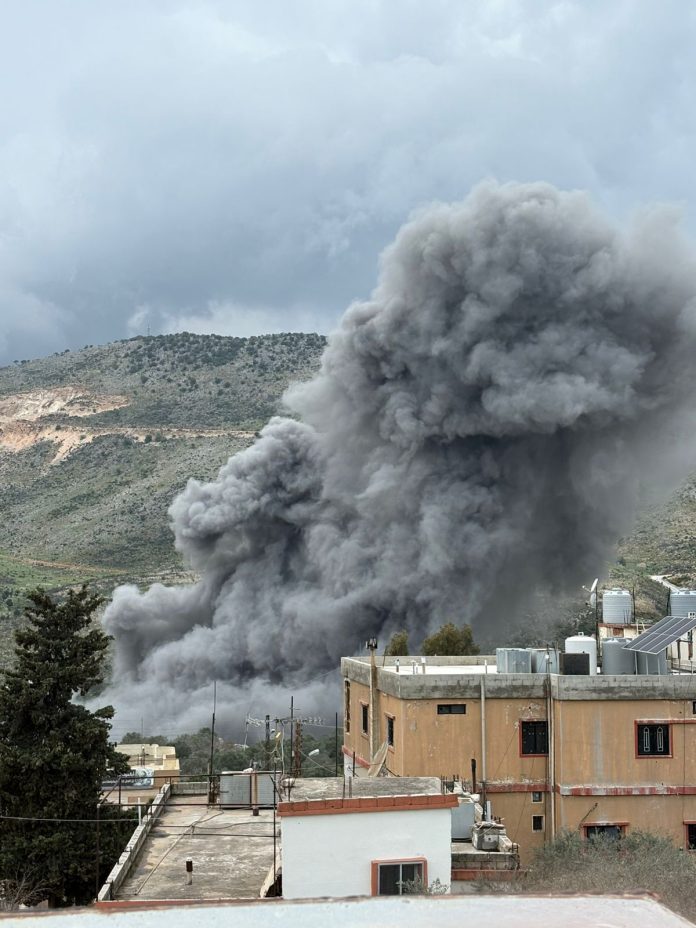
In a report published by The Legal Agenda and authored by Ali Sweidan, serious field-based findings reveal a marked escalation in Israeli military operations in southern Lebanon, characterized by the systematic targeting of bridges, crossings, and key roads linking the two banks of the Litani River. These include the Qasmiyeh, Zrariyeh, Qaqaiyat al-Jisr, Khardali, and Dallafa bridges, in addition to essential roads and culverts.
The report indicates that these attacks were accompanied by official Israeli statements calling for the destruction of infrastructure, the acceleration of home demolitions, and the prevention of residents’ return to their areas, reflecting an approach that goes beyond immediate military objectives toward the imposition of new facts on the ground.
Targeting such infrastructure constitutes a clear violation of international humanitarian law, particularly the principles of distinction and proportionality. Bridges and roads are classified as civilian objects and are protected as such, losing that protection only in exceptional cases of proven and direct military necessity. Claims that these structures are being used for military purposes do not justify their widespread destruction, especially given the severe harm inflicted on civilians and civilian infrastructure.
According to the report, the destruction of these bridges results in the isolation of vast areas south of the Litani from the north, cutting off access to essential services and humanitarian relief, thereby exacerbating civilian suffering and threatening fundamental rights. The consequences also extend to vital sectors, as the targeting of facilities linked to irrigation projects poses a direct threat to water and food security, endangers thousands of hectares of agricultural land, and undermines employment opportunities and economic stability in the region.
The report situates this escalation within a broader context of forced displacement and the prevention of residents’ return, reflecting a trend toward depopulating and isolating the area and transforming it into a military zone. This raises serious concerns about the imposition of realities that may pave the way for potential occupation or the establishment of a buffer zone, in blatant violation of Lebanon’s sovereignty and international law.
The justifications advanced by the Israeli military, including allegations that bridges are used to transport fighters or military equipment, do not alter the civilian nature of transport infrastructure. Bridges and roads remain protected civilian objects under international humanitarian law and do not lose this protection merely based on such claims, unless it is demonstrated that they provide an effective and direct military contribution and that their destruction yields a definite military advantage. Likewise, evacuation orders and population displacement do not strip civilians or civilian objects of their protection, and international humanitarian law remains fully applicable, foremost among its principles being distinction.
This assessment is reinforced by the findings of the United Nations Human Rights Council’s Commission of Inquiry on the July 2006 war, during which Israel destroyed several of the aforementioned bridges as well as others beyond southern Lebanon. The Commission concluded that attacks on civilian infrastructure, including roads and bridges, even in cases of “dual use,” cannot be justified by military necessity and are disproportionate to any alleged military advantage, constituting violations of international humanitarian law, particularly the principle of distinction.
Furthermore, the destruction of these bridges, which serve as essential arteries for movement and services, leads to the isolation of large areas south of the Litani from the north, disrupts connectivity between districts, and cuts off access to essential services, humanitarian assistance, and evacuation routes. This reflects a clear disproportionality between the expected harm to civilians and civilian infrastructure and any purported military advantage.
On this basis, the report concludes that this pattern of systematic targeting of civilian infrastructure, combined with displacement policies and official statements, may amount to the commission of war crimes. It therefore calls for urgent action to ensure the protection of civilians, halt violations, and hold those responsible accountable in accordance with international law.
هذه المقالة متاحة أيضًا بـ:

