


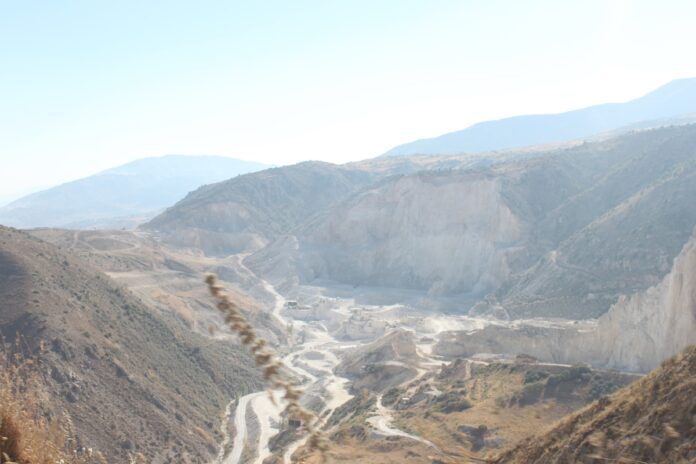
Acting under Law No. 62/2016, in particular Article 15, which empowers the National Human Rights Commission in Lebanon to issue opinions on draft laws, decisions and public policies that may affect human rights, and pursuant to its mandate to monitor violations and make recommendations to public authorities, the Commission issues this legal opinion on the Council of Ministers’ decision to grant licences for, or facilitate the operation of, quarries by cement companies. The opinion addresses the legal, administrative and constitutional issues raised by the decision and its direct implications for the right to a healthy environment, a fundamental human right recognised nationally and internationally.
Substance of Council of Ministers Decision No. 16
In Decision No. 16 of 9 April 2026, the Council of Ministers adopted measures aimed at addressing what it described as the paralysis of the cement industry. The decision stated that the companies’ quarries had ceased operations entirely since the beginning of 2025 because of legal uncertainty surrounding the application of Decree No. 8803 regulating quarries and crushers. The Council considered that this situation threatened a key sector of domestic industry and put thousands of jobs at risk. It called for immediate intervention to regulate company operations in line with the needs of the construction sector, economic recovery and preparations for reconstruction.
The Council therefore decided to proceed with amending the first paragraph of Article 2 of Decree No. 8803 of 2002, as amended. The aim was to establish an explicit legal framework, resolve conflicting interpretations and enable companies to obtain the necessary licences to operate their quarries. The proposed amendment was intended to control emissions and regulate extraction and rehabilitation under the supervision of the competent authorities. It would remove administrative obstacles that had previously prevented the National Council for Quarries from issuing licences despite judicial and advisory opinions affirming the companies’ entitlement to obtain them.
As an immediate measure, the decision instructed the National Council for Quarries to require the municipalities concerned to issue their approvals within two weeks. Those approvals would allow operations during the first year only of a ten-year operation and rehabilitation licence. Continued operation was made conditional on close regulatory oversight and strict environmental supervision by specialists appointed by the Ministry of Environment. Companies were required to submit quarterly reports to the Ministries of Environment and Industry and to the municipalities. Any established failure to follow quarry rehabilitation and restoration requirements would result in immediate revocation of the operating licence.
I. Breach of the applicable decrees
Decision No. 16/2026 entails serious breaches of the applicable regulations, chiefly Decree No. 8803/2002. It authorises quarrying in areas outside the official maps, relying on an erroneous interpretation of a 2024 ruling by the State Council. That ruling concerned the governor’s bound powers and did not address the location of the quarry. The decision undermines the authority of the regulations and creates an untenable situation in which the largest and most harmful quarries are exempted from environmental mapping restrictions that continue to apply to smaller quarries.
The decision also breaches Decree No. 2366/2009 on the National Physical Master Plan, which requires all administrative authorities to comply with land-use maps. Amendment of the plan requires a duly issued decree. The Council used an administrative decision that lacked a lawful basis for that purpose. The decision is also affected by constitutional and procedural defects. It overrides the powers of the Minister of Environment and bypasses her binding technical opinion under Article 66 of the Constitution. It also conflicts with the Council of Ministers’ September 2025 decision barring the issuance of licences until outstanding financial and environmental obligations are settled. More than USD 370 million owed to the Treasury was thereby put at risk.
Most seriously, the decision provides political cover for environmental offences that have continued since 2020. The Government should have referred the offending companies to the Public Prosecutor’s Office and applied Article 12 of Decree No. 8803, which bars the granting of new licences to offenders. Granting an operating year without limits on extraction volumes or a ban on exports legitimises impunity and sacrifices national resources in the name of reconstruction, without a clear timetable or plan for implementation.
II. Breach of the principle of legality and manifest lack of jurisdiction
Council of Ministers Decision No. 16/2026 sets a dangerous precedent for executive overreach. In effect, it amounts to a usurpation of power because the issuing authority has no jurisdiction to grant technical licences. It breaches procedural requirements, overrides existing regulatory decrees and disregards the National Physical Master Plan. These defects deprive it of the essential attributes of a lawful administrative act. It warrants absolute annulment on grounds of manifest lack of jurisdiction, a matter of public policy, and because it plainly exceeds the limits of the powers assigned by law to the competent administrative and technical bodies.
Decree No. 8803/2002 regulating quarries and crushers gives the governor exclusive authority to grant operation and rehabilitation licences, subject to binding approval from the Higher Council for Quarries, the competent technical body. By directly ordering that body to grant an operating year or bypass mandatory technical procedures, the Council of Ministers fundamentally breaches the principle of parallelism of forms and competences. It has no legal power to substitute itself for technically independent bodies or strip them of discretion conferred by specific legal provisions.
The decision also entails administrative coercion amounting to misuse of power. By imposing predetermined deadlines on the Higher Council for Quarries and bypassing the municipalities through automatic implementation, it strips their oversight of its technical substance. A decision that should rest on environmental impact studies and geological criteria becomes a formality for carrying out the political authorities’ wishes. This undermines the independence of technical decision-making and subordinates scientific and legal standards to short-term interests. In the Commission’s view, these breaches of law and administrative public policy render the decision absolutely void.
III. Circumvention of the hierarchy of legal norms
Decision No. 16/2026 undermines the hierarchy on which the Lebanese legal system rests. The Council of Ministers sought, through an administrative decision, to create a new legal situation that overrides regulatory decrees in force. Under the hierarchy of legal norms, an administrative decision cannot amend or suspend the effects of an existing regulatory decree, regardless of the rank of the issuing authority. Authorising operations outside the framework of Decree No. 8803/2002 bypasses statutory technical standards and prerequisites that the executive has no authority to suspend for reasons of immediate expediency.
The decision introduces the concept of a “first operating year”, which has no basis in Decree No. 8803/2002 or in the framework Environmental Protection Law No. 444/2002. This amounts to disguised legislation. It circumvents strict licensing requirements by creating a grace period outside technical oversight and without the mandatory environmental impact studies. In doing so, the executive encroaches on regulatory powers through an ordinary administrative decision, even though the applicable procedures and time limits are exhaustively prescribed.
This approach creates a disguised licence under a temporary designation with no lawful basis. It undermines the principle that the means employed by the administration must themselves be lawful. Replacing prescribed procedures with ad hoc decisions makes compliance with regulatory decrees effectively optional. That breach of the hierarchy of norms strikes at the rule of law and turns administrative action into a means of creating unlawful exceptions that serve narrow interests at the expense of the public interest.
IV. Undermining judicial oversight and pre-empting the mandatory opinion of the State Council
Through Decision No. 16/2026, the Council of Ministers gave practical effect to a draft amending decree that had yet to be issued or complete the required constitutional procedures. This bypasses the State Council’s role as the State’s mandatory legal adviser on regulatory matters. Implementing the substance of the amendments before seeking its opinion deprives prior review of its purpose and reduces consultation with the highest administrative court to a formality after implementation.
The decision presents the judiciary and civil society with a fait accompli. Natural resources depleted and mountain terrain destroyed during the temporary operating year cannot be restored by a subsequent annulment. Early implementation thus makes judicial remedies ineffective in practice. By the time a court can intervene, environmental offences may already have occurred and resources may already have been depleted under an administrative decision lacking a sound legal basis. This weakens the authority and effectiveness of the administrative courts.
This course of action also systematically deprives affected parties of their constitutional right of access to justice. That right enables municipalities, environmental associations and residents to challenge regulatory decrees upon issuance, before they cause irreversible harm. Early implementation under Decision No. 16/2026 creates legal uncertainty and uses regulatory power to pre-empt annulment proceedings. Cement companies gain temporary protection to carry out activities that the courts may later find unlawful. This violates legal certainty and the separation of powers.
Authorising quarrying through a Council of Ministers decision in advance of the State Council’s mandatory opinion circumvents the procedures laid down by the law governing the State Council. It allows the executive to create new legal entitlements, including operating rights, without the requisite review. It thus creates scope for misuse of power in favour of private commercial interests at the expense of the public interest protected by law.
V. Violation of local communities’ rights and erosion of administrative decentralisation
Decision No. 16/2026 directly encroaches on municipal powers. The preamble to the Lebanese Constitution establishes the principle of balanced development, and the Municipalities Law sets out the powers of municipalities as the local authorities closest to residents and best placed to represent their interests. Bypassing these elected authorities in quarrying matters undermines legal and social stability in affected towns and villages. The State imposes centralised policies that disregard each area’s environmental and geographical circumstances.
The encroachment is especially apparent in the arbitrary two-week deadline for municipalities to render an opinion on complex technical and environmental files, with silence deemed to constitute approval. This exceeds the Council’s powers. Municipal approval in quarry and crusher matters is an essential procedural requirement relating to public policy. The municipality is the only body technically and legally placed to assess whether projects are compatible with local master plans and whether already deteriorating infrastructure can bear the resulting environmental and logistical burdens.
The decision strips administrative decentralisation of the constitutional and political substance given to it by the Taif Agreement. It allows the central authorities to override local communities’ wishes, although their role is to coordinate with and complement local authorities. Taking these powers away from municipalities revives excessive centralisation and marginalises those directly affected. It also conflicts with the Municipalities Law, which confers on municipalities powers to protect public health, the environment and road safety within their jurisdictions.
Marginalising municipalities further violates the right to public participation in environmental decision-making, as protected by international agreements and United Nations guidelines. The 14-day deadline deprives municipalities of a real opportunity to object or commission independent environmental studies in response. Consultation becomes a formality through which cement companies’ interests prevail over those of residents. This weakens trust in State institutions and threatens social peace in the affected areas.
The decision undermines balanced development by turning certain villages and towns into environmental “sacrifice zones”. Their resources are depleted and their mountains destroyed while municipalities lack an effective means of raising technical objections or bringing legal challenges. This entrenches environmental and territorial injustice. Annulment is necessary to restore municipalities’ legal role as the first line of protection for residents’ right to a healthy and sustainable environment.
VI. Breach of environmental justice and entrenchment of impunity
Decision No. 16/2026 legitimises accumulated breaches and entrenches environmental impunity, making violations profitable for large companies. The facts show that these companies carried out extraction for years without lawful licences. The decision rewards those responsible with an operating year while leaving the enforcement provisions of Law No. 444/2002 unapplied. It prevents the imposition of serious penalties, including closure and confiscation, and provides political cover for major violations, stripping the polluter-pays principle of its legal and deterrent effect.
The decision also compromises the Treasury’s rights and dissipates public funds during a severe financial crisis. Outstanding amounts and environmental taxes owed by the companies have gone uncollected. Allowing extraction without prior payment of rehabilitation guarantees leaves the State and local communities with devastated mountains and polluted resources. Future rehabilitation costs may fall on the Treasury even though operators should bear them by law. Turning national assets into private profits without fair compensation to the State may amount to unjust enrichment.
The decision further entrenches inequality in the distribution of public burdens through selective enforcement. Small taxpayers and individual citizens face enforcement, while large companies and quarrying cartels receive an undeclared privilege to deplete national resources for private gain. This violates Article 7 of the Lebanese Constitution, which guarantees equality before the law, and seriously undermines distributive justice. Local communities bear the full environmental and health burden, while companies retain the financial returns under executive protection.
By treating faits accomplis as substitutes for legal compliance, this approach encourages other sectors to disregard the law in the expectation that political settlements will validate violations and set penalties aside. It damages ecosystems, undermines the rule of law and makes the administration complicit in managing and shielding serious breaches it is entrusted to prevent. Departing from the procedures in Decree No. 8803 weakens institutional oversight and leaves environmental protection vulnerable to narrow economic interests.
VII. Human rights implications under international standards and conventions
The effects of Decision No. 16/2026 extend beyond breaches of administrative rules. They seriously impair rights Lebanon has undertaken to protect under its Constitution and international commitments, particularly the right to health and the right to a healthy environment. The United Nations General Assembly recognised the right to a healthy environment in resolution 76/300. Allowing cement companies to operate quarries in populated areas such as Koura and Kfarhazir outside strict regulatory controls knowingly exposes residents to fine particulate matter and toxic emissions that increase rates of respiratory disease and cancer. The Commission considers this a breach of Lebanon’s positive obligations under Article 12 of the International Covenant on Economic, Social and Cultural Rights to protect people from environmental hazards arising from major industrial activity.
The decision directly threatens biodiversity and ecosystems that Lebanon has undertaken to protect under the Convention on Biological Diversity. Granting an operating year to quarries in ecologically sensitive areas without a prior, transparent environmental impact assessment authorises systematic destruction of local habitats and conflicts with the objectives of the Kunming–Montreal Global Biodiversity Framework. Bypassing technical standards facilitates resource depletion, causes cumulative and irreversible ecological damage and deprives future generations of access to healthy natural resources.
In environmental governance, the decision also denies the right to public participation, a principle enshrined in the Aarhus Convention, reflected in customary international law guidelines and recognised in Lebanese Law No. 444/2002. Excluding municipalities and residents through arbitrary deadlines of no more than two weeks deprives free, prior and informed consent of its substance and makes decision-making unilateral. This affects environmental rights as well as civil and political rights, including the ability of communities to shape their surroundings and participate effectively in public affairs. It deprives the decision of legitimacy in human rights and social terms.
VIII. Environmental injustice and the entrenchment of sacrifice zones
Decision No. 16/2026 entrenches inequality in rights and obligations, a condition identified in international human rights literature as giving rise to “sacrifice zones”. Populated areas such as Koura District are left environmentally exposed as cement company profits take precedence over residents’ lives and safety. Concentrating polluting activities in a small area causes toxins to accumulate in the air, soil and groundwater. The decision entirely overlooks this cumulative impact in granting an operating year, thereby authorising long-term environmental degradation that is difficult to remedy.
Persistent pollution undermines traditional livelihoods, including agriculture and olive oil production, for which Koura is historically known. Residents are pushed to leave or endure serious health risks. The same conditions foster economic dependence on the companies responsible for the pollution. The companies retain the profits while the public bears environmental and health losses. High healthcare costs, declining property values and reduced food and water security are costs that the cement sector shifts onto others with government cover.
The decision breaches distributive justice by imposing potentially lethal environmental burdens on particular groups in the name of protecting national industry. The Commission considers this discriminatory under Article 7 of the Lebanese Constitution and Article 26 of the International Covenant on Civil and Political Rights. Sacrificing individual and community rights so that major investments may continue outside the law deprives the decision of legitimacy. It violates equality and the right to live in dignity and warrants annulment in the interests of environmental justice and human dignity.
IX. Human rights violations in light of reports by United Nations special rapporteurs
Drawing on United Nations special rapporteurs’ analyses, the Commission characterises Decision No. 16/2026 as an instance of deliberate failure to protect human rights from environmental threats. Exposure to fine dust and particulate matter from cement quarries amounts, in its assessment, to systematic physical harm. By granting exceptional concessions to polluting companies and authorising emissions through administrative decisions that bypass environmental impact assessment, the State permits involuntary exposure to chemicals. In areas such as Koura, tolerating breaches of safety standards violates the right to life and the right to the highest attainable standard of physical health.
Lebanon’s failure to enforce Environmental Protection Law No. 444 and Decree No. 8803 regulating quarries and crushers, and its suspension of their effects in favour of political decisions supporting the cement sector, constitute a form of structural violence condemned in United Nations reporting. The Commission refers in particular to report A/77/284 by David R. Boyd, Special Rapporteur on human rights obligations relating to the enjoyment of a safe, clean, healthy and sustainable environment. The Commission reads the report as affirming that failure to enforce environmental laws on economic grounds violates fundamental rights and turns industrial operations into a source of harm to the physical integrity and health of local communities.
Invoking economic necessity to suspend environmental standards sacrifices the rights of vulnerable groups in favour of economic elites. The harm is also psychological. Sudden rule changes and arbitrary municipal deadlines create persistent environmental anxiety and legal uncertainty, undermining residents’ sense of safety in their homes and surroundings.
The Commission considers that these reports support holding the Lebanese State internationally responsible for complicity in environmental wrongdoing. The State has obstructed access to information, taken decisions behind closed doors without meaningful participation by those affected, and deliberately weakened technical oversight by bypassing the Ministry of Environment’s opinion. The international human rights framework supports both domestic challenges and urgent appeals by affected communities and other stakeholders to United Nations mechanisms on environmental justice.
Recommendations
In view of the legal and human rights analysis above, and while Decision No. 16/2026 remains in effect, the Commission submits the following recommendations to the competent authorities. They are guided by environmental justice and Lebanon’s international obligations. Their purpose is to correct the defects of jurisdiction and legality, uphold the rule of law, protect affected communities and ensure accountability and balanced development.
1. Council of Ministers
- Withdraw Decision No. 16/2026 immediately and in all its effects on grounds of absolute nullity, excess of power and usurpation of the powers of technical bodies.
- Respect the hierarchy of norms by refraining from using administrative decisions to suspend or amend regulatory decrees in force, particularly Decree No. 8803/2002.
- Submit any draft amending decree to the State Council for its mandatory prior opinion and give effect to its legal observations before issuance.
- Adopt economic policies based on environmental justice that prevent the creation of sacrifice zones and safeguard the right to health in industrial development.
2. Ministry of Environment
- Refuse to provide legal cover for any operating year without prior, transparent environmental impact assessments.
- Apply the polluter-pays principle by requiring companies to pay all rehabilitation guarantees and environmental taxes owed for past operating years before their legal status is considered.
- Give local communities and environmental associations unrestricted access to pollution data and periodic reports.
- Carry out independent, unannounced quarry inspections and verify conditions on site beyond what is reported by companies.
3. Ministry of Industry
- Revise national industrial policy to ensure that construction market needs are balanced against the constitutional right to public health and a healthy environment. Industrial growth that depletes natural resources constitutes a loss to the country.
- Immediately study and open up cement imports from nearby markets such as Cyprus, Türkiye and Syria to break the monopoly and relieve environmental pressure on populated areas. Imports can meet market demand in the interim, allowing non-compliant quarries to close while supporting construction and reconstruction readiness.
- Require existing cement plants to adopt sustainable production technologies and reduce emissions of fine particulate matter and toxic gases on a strict timetable, subject to revocation of industrial licences for non-compliance. Phase out obsolete, polluting production models.
- Ensure that communities in Koura and elsewhere do not bear the healthcare costs and land degradation caused by activities from which companies privately profit. Protect industrial workers through alternative plans that address existing environmental conditions.
- Coordinate closely with the Ministry of Finance to assess and recover amounts lost through years of extraction of raw materials without lawful authorisation. Ensure that support for domestic industry does not shield companies from their financial and environmental obligations to the Treasury and the public.
4. Higher Council for Quarries and Crushers
- Defend its technical independence by resisting administrative coercion and political instructions aimed at bypassing strict technical and environmental licensing standards.
- Treat municipal opinions as an essential procedural requirement and reject the arbitrary two-week deadline that prevents municipalities from making effective technical objections.
- Use the reports of United Nations special rapporteurs, particularly on the right to a non-toxic environment, as a key reference in reviewing operation and rehabilitation applications.
- Protect biodiversity by prohibiting extraction in highly sensitive ecological areas or near residential communities, in accordance with international conventions.
هذه المقالة متاحة أيضًا بـ:
 العربية (Arabic)
 Français (French)

