
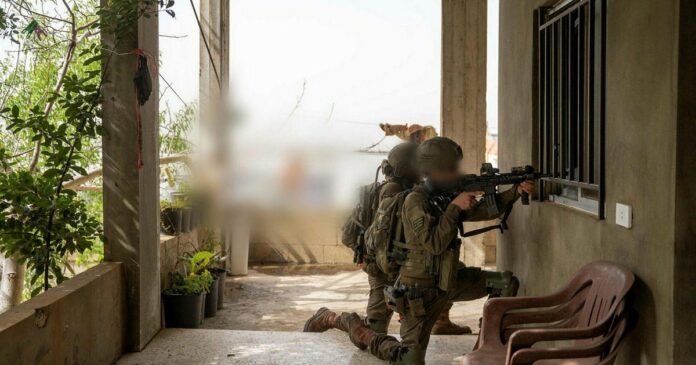
A report published by Haaretz on 23 April 2026, authored by Yaniv Kubovich, raises serious concerns over testimonies indicating that regular and reserve Israeli soldiers have allegedly engaged in widespread looting of civilian property from homes and businesses in southern Lebanon.
According to the report, items allegedly taken include motorcycles, televisions, paintings, sofas, and rugs, pointing to a pattern of appropriation affecting private civilian property on a significant scale. Testimonies from fighters and commanders stationed in the field suggest that such acts have become a routine phenomenon, with both senior and junior command reportedly aware of the conduct but failing to take effective disciplinary measures to prevent or stop it.
The allegations documented in the Haaretz report, if confirmed, raise serious concerns regarding widespread pillage and potential war crimes in southern Lebanon, as well as failures of accountability within the military chain of command. These developments underscore the urgent need for independent, transparent, and effective investigations, in accordance with international legal standards, to ensure accountability and uphold the rule of law.
Legal Assessment under International Humanitarian Law
If substantiated, the acts described in the report may amount to pillage, which is strictly prohibited under international humanitarian law.
The prohibition of pillage is clearly established under Fourth Geneva Convention, Article 33, which states that pillage is prohibited in all circumstances. This prohibition is further reinforced under Additional Protocol I and forms part of customary international humanitarian law as recognized by the International Committee of the Red Cross.
Pillage is defined as the unlawful appropriation of property for private or personal use without military necessity. The acts described, involving the taking of civilian property for personal gain, appear to fall squarely within this definition. Importantly, the prohibition is absolute and cannot be justified by operational circumstances or the absence of explicit orders.
War Crime Qualification
Under international criminal law, pillage constitutes a war crime. The Rome Statute of the International Criminal Court, Article 8(2)(b)(xvi), criminalizes pillage in the context of international armed conflict.
Where such acts are committed on a large scale or as part of a pattern of conduct, they may indicate not isolated incidents but systematic violations, potentially engaging individual criminal responsibility for those directly involved.
Command Responsibility
The testimonies reported also raise serious concerns regarding command responsibility.
Under Article 28 of the Rome Statute, military commanders and superiors may be held criminally responsible where they knew, or should have known, that subordinates were committing such acts and failed to take necessary and reasonable measures to prevent them or to ensure accountability.
The reported awareness of both senior and junior command, coupled with the absence of disciplinary action, may indicate a failure to exercise effective control, thereby engaging responsibility at multiple levels within the chain of command.
State Obligations and Accountability
States are under a clear obligation to prevent violations of international humanitarian law, investigate allegations promptly and impartially, and prosecute those responsible. This includes both direct perpetrators and those in positions of authority who fail to act.
Failure to address such conduct risks entrenching a climate of impunity and undermining the protections afforded to civilians and their property during armed conflict.
هذه المقالة متاحة أيضًا بـ:

