
Lebanon stands at the epicenter of a rapidly unfolding regional crisis whose consequences extend far beyond immediate military confrontation. As highlighted in the UNDP Regional Bureau for Arab States assessment of March 2026, the ongoing military escalation in the Middle East has exposed deep structural vulnerabilities across the region, but nowhere are these vulnerabilities more acute than in Lebanon. Already weakened by years of economic collapse, political paralysis, and institutional fragility, Lebanon is now facing a multidimensional shock combining destruction, displacement, economic contraction, and systemic breakdown.
A Country Already at the Brink
Before the escalation, Lebanon was already experiencing one of the worst economic crises in modern history. The country’s financial system had collapsed, the national currency had lost most of its value, and poverty levels had surged dramatically. Public services, including electricity, healthcare, and education, were severely degraded, while the state’s fiscal capacity was nearly exhausted. In this context, the escalation acts not as a standalone crisis, but as a force multiplier, accelerating existing trends of deterioration.
The UNDP report emphasizes that impacts of regional shocks are shaped by pre-existing vulnerabilities, including dependence on imports, weak fiscal space, and fragile labor markets. Lebanon embodies all these vulnerabilities simultaneously. As a highly import-dependent economy, particularly for food and fuel, it is especially exposed to disruptions in trade routes and global price fluctuations.
Destruction and Displacement
The most immediate impact of the escalation in Lebanon is physical destruction and mass displacement. Ongoing airstrikes and evacuation orders have resulted in widespread damage to residential areas, transportation infrastructure, and essential public services. Entire communities have been uprooted, with nearly 900,000 people displaced within days, and estimates suggesting that more than one million individuals may have been forced from their homes.
Displacement in Lebanon is particularly complex due to the country’s demographic composition and existing refugee population. Lebanon already hosts a large number of Syrian refugees, many living in precarious conditions. The escalation has triggered new patterns of movement, including accelerated returns of Syrian refugees to Syria under pressure from insecurity and deteriorating living conditions. More than 65,000 Syrians reportedly returned within a single week following the escalation, illustrating how conflict in Lebanon generates cross-border humanitarian consequences.
Conditions in displacement sites are dire. Schools and public buildings have been converted into shelters, often overcrowded and lacking adequate sanitation, water supply, and healthcare services. These conditions heighten risks of disease outbreaks and increase vulnerability, particularly for women, children, and the elderly.
Collapse of Essential Services
Lebanon’s already fragile public service systems are now under extreme pressure. Healthcare infrastructure has been directly affected, with dozens of primary healthcare centers and hospitals forced to close due to insecurity. This significantly reduces access to medical care for both displaced populations and host communities.
The disruption extends to humanitarian supply chains. Regional constraints on aviation and maritime transport have slowed the delivery of medicines, medical equipment, and humanitarian aid. At the same time, global supply hubs, such as the WHO logistics center in Dubai, have faced operational disruptions, further constraining the flow of essential supplies into Lebanon and the broader region.
Education has also been severely impacted. The Lebanese government suspended the academic year indefinitely, while more than 325 schools have been repurposed as shelters for displaced families. This not only halts formal education but also removes a critical protective environment for children. Prolonged disruption to education is likely to have long-term consequences for human capital development and social cohesion.
Economic Transmission and Inflationary Shock
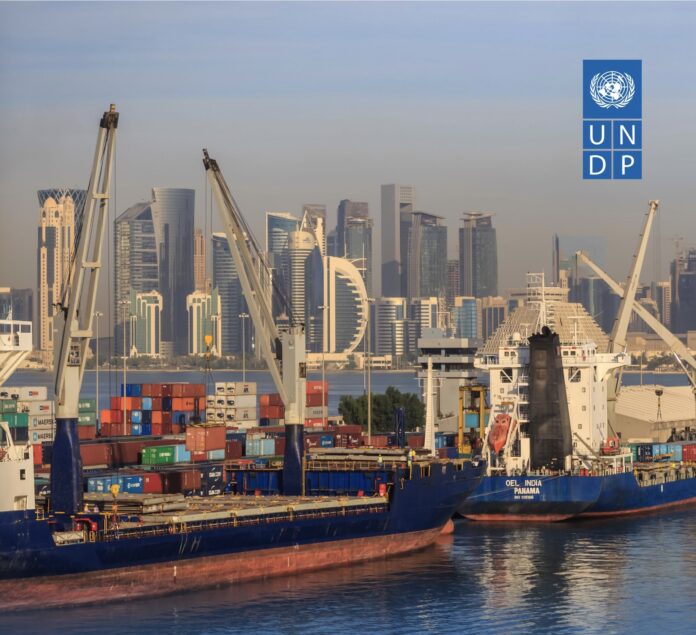
Beyond the immediate humanitarian crisis, Lebanon is experiencing profound economic spillovers from the regional escalation. The report identifies disruptions to maritime trade and energy flows as key transmission channels. Shipping activity through critical corridors has declined sharply, while war-risk insurance premiums have increased transportation costs.
These disruptions translate directly into higher domestic prices in Lebanon. As an import-dependent economy, Lebanon is particularly vulnerable to increases in global energy and food prices. Rising costs of fuel, fertilizers, and transportation feed into inflation, eroding purchasing power and deepening poverty.
Food security is a major concern. The report notes that fertilizer prices have already increased significantly, while shipping disruptions have constrained agricultural inputs and supply chains. In Lebanon, where approximately 17 percent of the population already faces crisis-level hunger, these pressures risk pushing many more households into food insecurity.
Energy disruptions further compound the crisis. Lebanon relies heavily on imported fuel for electricity generation and transportation. Rising global energy prices and supply disruptions increase costs across all sectors of the economy, exacerbating inflation and limiting economic activity.
Financial and Monetary Fragility
Lebanon’s financial system, already severely weakened, faces additional stress under the current conditions. The report highlights risks of exchange rate depreciation, capital outflows, and rising borrowing costs across the region. In Lebanon, these risks are amplified by the absence of effective monetary policy tools and depleted foreign reserves.
The country’s reliance on remittances, which account for approximately one-third of GDP, introduces another layer of vulnerability. Economic disruptions in Gulf countries, where many Lebanese expatriates work, could reduce remittance flows, further constraining household incomes and foreign currency availability.
At the fiscal level, Lebanon has little capacity to respond. Increased defense and reconstruction costs coincide with collapsing revenues, leaving the government unable to provide adequate social protection or invest in recovery. The report notes that reconstruction needs in Lebanon are already massive and growing, against the backdrop of a collapsed fiscal framework.
Environmental and Health Risks
The escalation is also generating significant environmental impacts in Lebanon. Airstrikes and fires release pollutants, including fine particulate matter and toxic substances, which degrade air quality and pose long-term health risks. These pollutants can travel beyond immediate conflict zones, affecting broader regions.
Environmental degradation intersects with public health challenges, particularly in displacement settings where sanitation is inadequate and healthcare access is limited. The cumulative effect is an increased burden of disease and long-term health consequences for affected populations.
Human Development Reversal
Perhaps the most concerning aspect of the crisis is its impact on human development. The UNDP report estimates that regional human development could decline by 0.2 to 0.4 percent, equivalent to a loss of up to one year of progress. In the Levant, including Lebanon, these setbacks are even more pronounced, reaching up to one and a half years of lost development gains.
For Lebanon, this represents a continuation of a downward trajectory that began with the financial crisis. The erosion of education, healthcare, and livelihoods undermines long-term development prospects and risks entrenching poverty and inequality.
Structural Vulnerabilities and Systemic Risk
What distinguishes Lebanon’s situation is not only the scale of the current crisis, but its systemic nature. The escalation interacts with pre-existing structural weaknesses, creating a feedback loop of decline. Economic contraction reduces fiscal capacity, which weakens public services, which in turn exacerbates social vulnerability and instability.
The report’s modeling highlights how shocks propagate through interconnected systems, including trade, energy, finance, and logistics. In Lebanon, these transmission channels are particularly strong due to the country’s openness and dependence on external inputs. Even a short-term conflict, modeled as lasting four weeks, can generate long-lasting impacts due to these structural characteristics.
Conclusion: A Crisis Within a Crisis
Lebanon’s experience of the regional escalation illustrates how conflict can transform localized shocks into systemic crises. The country faces simultaneous humanitarian, economic, environmental, and institutional challenges, each reinforcing the other.
The immediate priorities are clear: protecting civilians, ensuring humanitarian access, and stabilizing essential services. However, the scale of the crisis also demands a broader response that addresses structural vulnerabilities and supports long-term recovery.
Without such interventions, Lebanon risks entering a prolonged period of decline characterized by entrenched poverty, weakened institutions, and diminished prospects for development. The current escalation is not merely a temporary disruption, it is a critical juncture that may shape the country’s trajectory for years to come.
هذه المقالة متاحة أيضًا بـ: العربية (Arabic) Français (French)

