The Ministry of Interior: Direct Administrative Oversight
The Ministry of Interior and Municipalities is the primary administrative authority responsible for managing Lebanese prisons, as most prisons fall under the Internal Security Forces, which operate under the ministry’s supervision. According to the applicable regulations, prison inspections are carried out by several administrative and military officials within this system.
Periodic prison inspections are first and foremost the responsibility of the Commander of the Gendarmerie, or a delegate appointed for this task, acting under the authority of the Minister of Interior. This means that the gendarmerie leadership is responsible for monitoring conditions inside prisons and ensuring that officers and personnel comply with the regulations and laws governing detention facilities.
In addition, each battalion or platoon commander, within the scope of their authority, is tasked with supervising the prisons under their command. This includes monitoring the conditions of detainees and ensuring the proper functioning of these facilities. Furthermore, the Minister of Interior may assign an administrative inspector to conduct field inspections of prisons in order to assess detention conditions and address any administrative or security deficiencies.
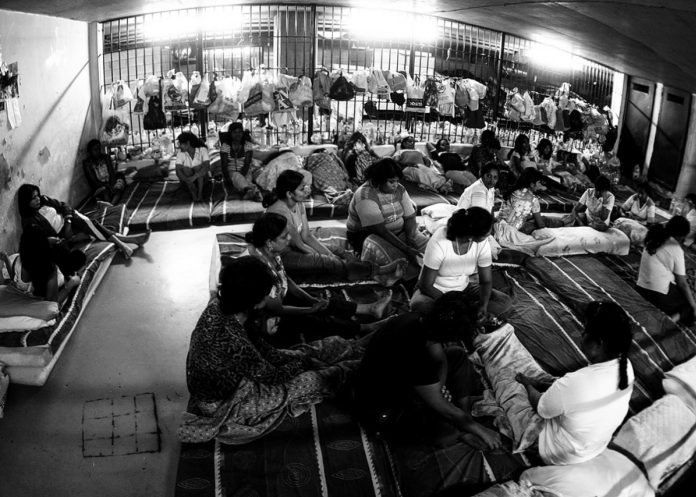
As part of efforts to improve complaint mechanisms within prisons, a new system has been developed to receive prisoners’ complaints, beginning with its implementation at Roumieh Central Prison, the largest and most overcrowded prison in Lebanon. Under this system, complaints are linked directly to the Human Rights Section of the General Inspectorate of the Internal Security Forces. All complaints are sent to this section, which sorts them and refers them to the relevant authorities depending on their nature—whether judicial, administrative, or health-related.
This system is intended to provide prisoners with an official channel to submit complaints without having to go exclusively through the prison administration itself, which may help enhance transparency and reduce the likelihood that complaints will be ignored. Judicial authorities are also entitled to review these complaints at any time, providing an additional layer of oversight over prison administration.
The Governor’s Role: Local Oversight of Prisons
Alongside the Ministry of Interior, Lebanese law grants governors (mohafez) an important supervisory role over prisons and detention facilities located within their respective governorates. As representatives of the central government in their regions, governors are responsible for ensuring the enforcement of laws and regulations related to prisons.
The law requires governors to conduct at least one monthly visit to each detention facility within their administrative jurisdiction. The purpose of these visits is to monitor conditions inside these facilities and verify their compliance with legal and administrative regulations. These visits are particularly significant because they allow a civilian authority—relatively independent from prison management—to directly observe conditions inside detention facilities.
If a governor becomes aware, by any means, of a malfunction or abuse within a prison, they have the authority to conduct an investigation personally or to assign a competent authority to do so. They may also propose appropriate measures or sanctions to the Minister of Interior, including disciplinary actions against those responsible for violations.
If it becomes evident that an error or violation was committed by gendarmerie personnel responsible for guarding the prison, the governor must prepare a detailed report and submit it to the Minister of Interior, including recommendations regarding the actions that should be taken—whether internal investigations, administrative measures, or referral to the competent judiciary.
However, although these powers grant governors an important oversight role, their effectiveness ultimately depends on how regularly these visits are conducted and whether governors are willing to intervene when irregularities are discovered.
The Judiciary: Legal Guardian of Detainees’ Rights
The judiciary occupies a central position in the prison oversight system, as it is responsible for protecting fundamental freedoms and ensuring that laws governing detention and imprisonment are properly applied.
Article 402 of the Code of Criminal Procedure stipulates that the Public Prosecutor of the Court of Appeal or the financial prosecutor, as well as investigating judges and single criminal judges, must inspect persons held in detention facilities and prisons within their jurisdiction at least once per month. The purpose of these inspections is to verify the legality of detention and ensure that judicial procedures are respected.
The Public Prosecutor of the Court of Appeal or their delegate, as well as judges appointed by the Minister of Justice, may also monitor all state prisons to verify the legality of detention and the procedures governing release. During their visits, they may review prison records, including the register of prisoners, the register of convicted persons, and the register of individuals placed in solitary confinement.
If a judge requires additional information beyond what is contained in these registers, they may submit a written request to the direct superior of the prison commander or the relevant platoon commander, in accordance with the procedures outlined in the Code of Criminal Procedure.
In addition, investigating judges and single criminal judges must inspect detention facilities once a month, while presidents of criminal courts carry out such visits at least once every three months. These judges also have the authority to issue the necessary orders to prison guards to implement measures required by an investigation or trial.
Although these powers give the judiciary a fundamental oversight role, several reports indicate that judicial visits to prisons are not always carried out with the required regularity, particularly given the heavy workload facing the judicial system.
International Organizations: Independent Humanitarian Oversight
In addition to domestic oversight, Lebanon allows international organizations to inspect prisons in order to promote transparency and ensure that detainees are treated according to humanitarian standards.
Under Decree No. 8800 issued on October 4, 2002, the International Committee of the Red Cross (ICRC) was granted the authority to visit Lebanese prisons and speak freely with prisoners. The decree allows ICRC delegates to meet with prisoners of their choosing without the presence of any observer and without time limits on these visits.
The decree also allows delegates to record the identity of prisoners they meet, helping document detention conditions. The mandate also extends to ICRC medical delegates, who may examine prisoners medically without supervision and in designated rooms inside prisons.
Prison administrations and prison doctors are required to provide all necessary medical information to these delegates, including access to prisoners’ medical files and the health facilities available within the prison.
The purpose of these visits is limited to assessing the humanitarian conditions of prisoners, including their physical and psychological health, their conditions of detention, and other humanitarian issues related to their treatment in prison.
Pending Reforms: Prison Administration under the Ministry of Justice
One of the paradoxes of the Lebanese system is that prison administration still falls under the Ministry of Interior, despite longstanding legal provisions calling for its transfer to the Ministry of Justice.
In 1964, Decree No. 17315 established a prison administration within the Ministry of Justice, with its powers to be defined by a subsequent decree issued by the Council of Ministers. However, this implementing decree has never been issued, leaving prison administration effectively under the authority of the Ministry of Interior.
In 1983, Legislative Decree No. 151 reorganized the Ministry of Justice and provided, in Article 29, for the creation of a Directorate of Prisons responsible for prisoner affairs, rehabilitation, and the application of prison regulations. Yet this directorate has also not been fully activated due to the absence of the necessary implementing decrees.
In recent years, the Directorate of Prisons within the Ministry of Justice, in cooperation with the United Nations Office on Drugs and Crime (UNODC), has introduced some reforms, including the installation of complaint boxes inside Lebanese prisons.
Under this system, a complaints box is placed in each prison, and a general supervisor opens the boxes in the presence of a representative of the Ministry of Justice or a social worker. Complaints are then collected and referred to the relevant authorities for follow-up, particularly those related to prisoners’ living conditions.
The Committee for the Prevention of Torture: An Independent Oversight Mechanism
The creation of the Committee for the Prevention of Torture, under Law No. 62 of 2016, represents an important step toward strengthening independent oversight of places of detention in Lebanon. The committee, which forms part of the National Human Rights Commission, enjoys broad powers in line with international standards set out in the Optional Protocol to the Convention against Torture (OPCAT).
The committee has the authority to conduct regular or unannounced visits to all places of deprivation of liberty without the need for prior authorization from administrative or judicial authorities. It may also hold individual or group interviews with detainees without any supervision.
In addition, the committee may meet with any person it considers capable of providing useful information for its work and obtain the necessary information confidentially. It may also receive complaints directly from detainees or request meetings with them, and conduct medical examinations when necessary.
The significance of this mechanism lies in the fact that it constitutes an oversight body independent of security and administrative authorities, giving it greater capacity to document violations and issue recommendations aimed at preventing torture and ill-treatment.