
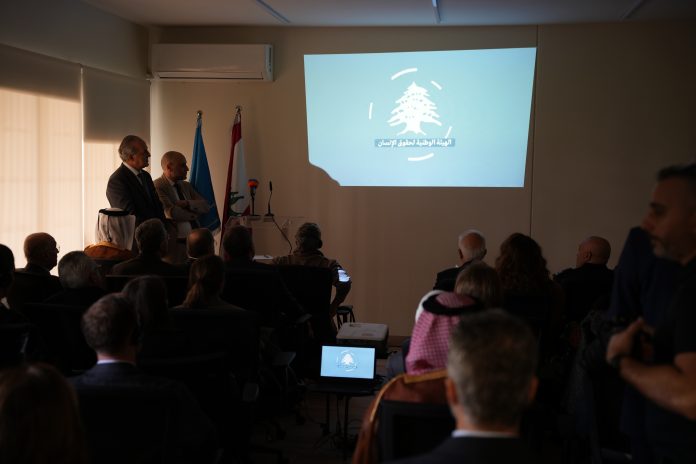
Today’s inauguration of the official headquarters of the National Human Rights Commission, including the Committee for the Prevention of Torture, is more than a ceremonial milestone. It is a meaningful step in Lebanon’s long and challenging journey toward strengthening the rule of law, institutional credibility, and human dignity.
For years, Lebanon has faced deep political, economic, and social crises that have weakened public trust in state institutions. In this context, the establishment of a permanent, fully operational headquarters for an independent human rights body sends a powerful message: despite the challenges, the commitment to rights, accountability, and justice remains alive.
From Legal Text to Living Institution
Lebanon has adopted important laws and international commitments in the field of human rights. However, laws alone are not enough. They must be translated into effective institutions that people can access, trust, and rely on.
This new headquarters represents that transition, from legal framework to practical implementation. It provides the Commission with a stable space to receive complaints, conduct investigations, engage with authorities, and support victims. It transforms human rights from abstract principles into daily institutional practice.
Strengthening Independence and Credibility
An independent institution requires more than legal guarantees. It also needs operational autonomy, visibility, and professional infrastructure. A dedicated headquarters enhances the Commission’s ability to function without undue pressure, reinforces its credibility, and strengthens its standing nationally and internationally.
This is particularly important as Lebanon seeks to align its institutions with the Paris Principles and to enhance its engagement with global human rights mechanisms. A strong, independent Commission contributes directly to Lebanon’s international reputation and credibility.
Protecting the Most Vulnerable
Through the Committee for the Prevention of Torture, the Commission plays a critical role in monitoring places of detention and protecting persons deprived of their liberty. In a country where detention conditions, overcrowding, and allegations of ill-treatment remain serious concerns, this role is essential.
The headquarters provides a base for systematic monitoring, reporting, and dialogue with authorities, helping to shift from reactive responses to preventive approaches. This protects not only detainees, but also the integrity of the justice system as a whole.
Rebuilding Trust Between Citizens and the State
One of Lebanon’s greatest challenges today is the erosion of trust between citizens and public institutions. Many people feel unheard, unprotected, and excluded from decision-making.
By offering a transparent, accessible, and professional platform for complaints and engagement, the Commission helps rebuild that trust. It offers citizens a legitimate channel to seek redress, raise concerns, and assert their rights without fear.
This is fundamental for social stability, democratic participation, and peaceful reform.
Supporting Reform and Public Policy
The Commission is not only a monitoring body. It is also a strategic partner in shaping public policy from a human rights perspective, whether in justice reform, social protection, freedom of expression, migration, or anti-corruption efforts.
With a functional headquarters, the Commission is better equipped to conduct research, issue recommendations, engage stakeholders, and contribute constructively to national reform agendas.
A Signal of Institutional Resilience
At a time when many public institutions are struggling to survive, this inauguration stands as a symbol of resilience. It shows that building strong, independent bodies is still possible, even in difficult circumstances.
It reflects the collective efforts of national actors, international partners, civil society, and committed professionals who believe that institutions matter, and that rights must be protected through sustainable structures.
Looking Forward
This inauguration should not be seen as an endpoint, but as a starting point. Its true value will be measured by how effectively the Commission uses this space to serve the public, defend victims, engage authorities, and promote a culture of human rights.
Sustained political will, adequate resources, and continued cooperation with partners will be essential to ensure that this headquarters becomes a living center of accountability and justice.
In today’s Lebanon, where hope is often fragile, this step represents a quiet but powerful affirmation: building institutions based on dignity, law, and responsibility is still possible, and still worth fighting for.
هذه المقالة متاحة أيضًا بـ:

