
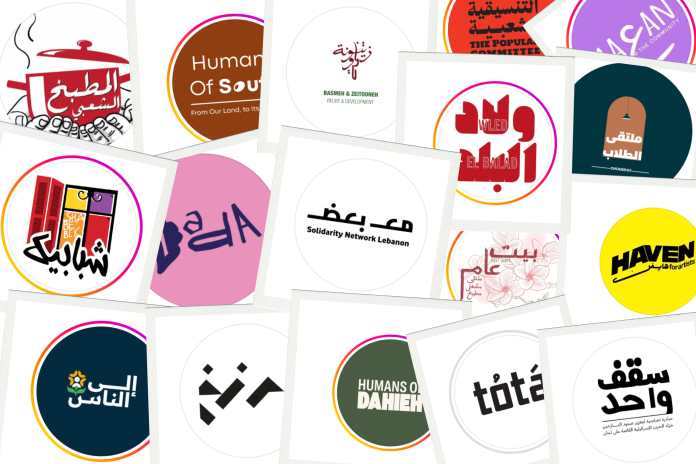
In one of the most expansive displays of community solidarity in Lebanon’s modern history, field data reveal a complex and integrated network of initiatives now exceeding 100. Humanitarian action is no longer confined to traditional institutions; it has evolved into a broad-based popular movement led by NGOs, youth groups, local initiatives, cultural spaces, and individuals who have become active responders on the ground.
The strength of this network is reflected in the breadth of services it delivers, covering nearly every essential aspect of daily life. These range from food provision, including hot meals, food parcels, and community kitchens, to the distribution of clothing, blankets, and mattresses, as well as personal and household hygiene supplies. Many initiatives also provide medicines and primary healthcare, support for children such as milk and diapers, and even transportation or assistance in securing shelter for displaced families. This diversity of services demonstrates a nuanced understanding of on-the-ground needs and an ability to respond rapidly and adapt to the evolving crisis.
Equally notable is the geographic spread of these initiatives, underscoring the inclusiveness of this solidarity. While Beirut remains a central hub for collection and distribution, efforts extend across the South, the Bekaa, the North, and Akkar, reaching areas such as Saida, Tripoli, the Chouf, Bourj el-Barajneh, and the southern suburbs. Local initiatives in these regions are playing a critical role in filling gaps and addressing context-specific needs. This nationwide reach helps reduce disparities in access to aid and strengthens the overall effectiveness of the response.
The network relies on diverse support mechanisms, including financial donations through local and international transfer channels, in-kind contributions such as food and essential supplies, and, crucially, volunteer work, which forms the backbone of these efforts. Many initiatives have also developed flexible operational models, such as community kitchens, mobile distribution points, and the use of social media platforms to coordinate needs and direct assistance efficiently, helping to accelerate response times and minimize waste.
Equally important is the inclusive nature of the beneficiaries. These initiatives target all displaced populations without discrimination, while placing particular emphasis on the most vulnerable groups, including children, women, Palestinian and Syrian refugees, migrant workers, and marginalized communities. This approach reflects a clear commitment to principles of social justice and humanitarian equity, ensuring that assistance reaches those most in need and reducing risks of exclusion or neglect.
The community kitchen in Saida provides daily home-cooked hot meals to displaced people. It is a pioneering solidarity initiative launched in 2020 by volunteers in collaboration with the Martyr Rashid Broum Dispensary and the Popular Solidarity Foundation. Over time, the kitchen has evolved into a shared humanitarian space that reflects the values of solidarity and volunteerism, bringing together volunteers from diverse backgrounds who contribute to cooking and distribution as part of community service efforts.
Over the past five years, the kitchen has established itself as a vital community support network, delivering more than 400,000 hot meals since its inception. In doing so, it has helped strengthen the resilience of families amid economic and living crises, demonstrating that local initiatives can generate deep and lasting impact in people’s lives.
Volunteers from diverse backgrounds take part in its activities, including students from the Evangelical School in Saida, who contribute to cooking and distribution as part of their community service programs. Over the past five years, the kitchen has established itself as a vital community support network, providing more than 400,000 hot meals since its inception. In doing so, it has helped strengthen the resilience of families amid economic and living crises, demonstrating that local initiatives can generate deep and lasting impact in people’s lives.
Basmeh & Zeitooneh provides food parcels, including traditional pantry items, ready-made meals, personal hygiene kits, sanitary pads, cleaning supplies, and essential items for children such as milk and diapers. Operating across various regions in Lebanon, the organization supports families affected by the war, with funding from multiple partners including Choose Love, 11.11.11, and ActionAid. These efforts are part of an ongoing response aimed at meeting basic needs and strengthening the resilience of affected communities.
In parallel, Amel International has activated a nationwide emergency response through a network of 40 centers and mobile medical units. Its interventions include operating 12 health centers, delivering medical, psychosocial, and social services, as well as providing support activities that have reached 2,617 children and 259 elderly individuals with specialized care, alongside the distribution of thousands of food parcels and hygiene kits.
Meanwhile, the initiative to support Palestinian refugee camps focuses specifically on Palestinian camps, providing transportation, food assistance, hygiene supplies, and shelter, with a clear emphasis on addressing the needs of Palestinian refugees. At the same time, the Lebanese Agricultural Movement is advancing a community-based initiative to support farmers across Lebanon, reinforcing local food systems and livelihoods.
The organization FeMale, together with its team and volunteers, works to reach women and girls across various regions in Lebanon, with interventions focused in Aley, the Chouf, Saida and Iqlim, Tripoli, and Beirut. These initiatives have successfully reached around 800 families and 2,500 women and girls.
The Deep Sleep initiative, operating from Beirut Art Center, stands out by providing pillows to displaced people across different areas, addressing needs that are often overlooked in humanitarian response. Meanwhile, Jeyetna distributes personal hygiene items and sanitary pads, with a strong focus on dignity and public health.
QMA operates through a unique community solidarity model to support queer groups, providing shelter and transportation through a trust-based, network-driven approach. The Democratic Youth Union supplies clothing, food, cleaning materials, mattresses, blankets, and children’s essentials, relying heavily on volunteer work and in-kind donations.
Zayer Association delivers a comprehensive response that includes food, clothing, mattresses, blankets, pillows, and children’s supplies, with broad national coverage. Individuals are also directly contributing by providing tents for displaced families, reflecting a notable level of personal engagement in humanitarian efforts.
In parallel, the Equality – Warde Boutros Women’s Action Association is mobilizing donations to support displaced populations, further reinforcing the collective humanitarian response.
In Beirut and its suburbs, initiatives have intensified significantly. Reyhan Beirut provides daily ready-made meals, while Ma‘a Baad and the Solidarity Network with Lebanon operate community kitchens, distribute food and hygiene supplies, and offer logistical services such as laundry facilities. The Palestinian Cultural Club delivers a comprehensive response within Mar Elias camp, including food, transportation, shelter, and medical assistance, specifically targeting Palestinian refugees.
The Popular Coordination offers diverse support, including clothing, food, sanitary pads, mattresses, blankets, and medicines, relying heavily on volunteer engagement. Wled el Balad focuses on hygiene supplies, blankets, and food, while the Juliette & Omar initiative provides food, medicines, mattresses, and health-related items. Individuals such as Sherry Choucair and Nadine Sami contribute comprehensive support packages, including clothing, food, medicines, and children’s essentials, while also mobilizing both in-kind and financial donations. Jad Assi focuses on securing shelter for displaced families across different regions.
Youth-led initiatives are also prominent. The Student Forum provides heaters alongside essential supplies, the Hamra Community Kitchen delivers daily meals, and Haven for Artists bridges art and humanitarian work through the distribution of food and blankets. Ila el Nas provides medicines and heaters, while Beit Aam serves as a central distribution hub for aid in Beirut.
Food-focused initiatives such as Souk El Tayeb, Barzakh, Bake Atelier, and Jibal continue to supply daily meals, while Ahla Fawda offers an integrated model covering everything from food to transportation and children’s supplies. Humans of Dahieh delivers a broad response that includes shelter, mattresses, blankets, and food, supported by direct communication networks with beneficiaries.
Specialized initiatives are also emerging. Migrant Workers Action, Egna Legna Besidet, Reman Org, and DoWan focus on supporting migrant workers, while Syrian Eyes targets Syrian refugees with comprehensive services. Tres Marias, Raseef, and NationStation provide ready-made meals, and Tota & Radio Karantina collect donations for redistribution through multiple networks.
Additional initiatives such as Shield, Farah Al Atta, Shababeek Association, and the “One Roof” initiative provide diverse support including food, bedding, and shelter. The Lebanese Food Bank plays a key role in large-scale food distribution, particularly in southern Lebanon. Organizations such as Maan, Man wa Salwa, Dada Community Art Space, and Truth Be Told provide multi-sectoral support including food, clothing, and health services, while initiatives like Food and More by Farah and Live Love Bourj El Barajneh continue to support local communities with food assistance.
In southern Lebanon, initiatives such as Lebanon Southern, Sanad, Eye on Lebanon, Humans of the South, Benaa Association, and the Wadi el Zeineh Initiative provide a wide range of assistance, including food, medicines, and essential supplies. Local efforts such as Sanadak, Nordisk Hjälp, and Lighter Style, along with individuals like Darine Saleh and organizations such as Rotaract, contribute to maintaining water systems in shelters and delivering targeted support.
In northern Lebanon, the Ahaly el Madina initiative provides food and hygiene supplies within shelters, while Hunna delivers meals and blankets, adding an important humanitarian dimension. Tripoli Volunteers offer comprehensive support, including shelter, food, and clothing.
In the Chouf, initiatives such as Ma‘a Baad and Ila el Nas continue to deliver food assistance and essential services, reflecting the geographic breadth and inclusiveness of this nationwide movement.
Within the framework of animal rescue and shelter programs in Lebanon, the Lebanese Association for Migratory Birds has taken in several animals, including a horse and rabbits, while Rescuing Souls supports pets. Animals Lebanon leads efforts to evacuate and rescue abandoned domestic and wild animals from zoos, alongside initiatives such as the Lebanon Animal Rescue Campaign, IFAW, and PETA, highlighting an often-overlooked dimension of humanitarian response during crises.
What this broad mobilization reveals is that Lebanese society, despite overlapping crises, continues to demonstrate a remarkable capacity for solidarity and self-organization. Small-scale initiatives are evolving into effective support networks, and individuals are becoming key actors in relief efforts. The presence of more than 100 actors operating simultaneously, albeit in a decentralized manner, creates a form of horizontal complementarity that partially compensates for the absence of comprehensive formal coordination, while ensuring a rapid and flexible response.
Ultimately, these initiatives should not be seen as merely temporary reactions, but rather as expressions of a deeply rooted social culture built on solidarity and mutual aid. Humanitarian action becomes a collective responsibility, and supporting others turns into an integral part of national identity. This expansive network of actors not only provides material assistance, but also helps safeguard human dignity, strengthen resilience, and keep hope alive in the face of an increasingly harsh reality.
This integrated landscape, encompassing food, shelter, healthcare, transportation, and psychosocial support, reflects the Lebanese community’s ability to generate a comprehensive solidarity system. Individual and collective efforts merge into a genuine safety net that transcends geography and affiliations, placing human dignity and well-being at the very center of response priorities.
هذه المقالة متاحة أيضًا بـ:

