

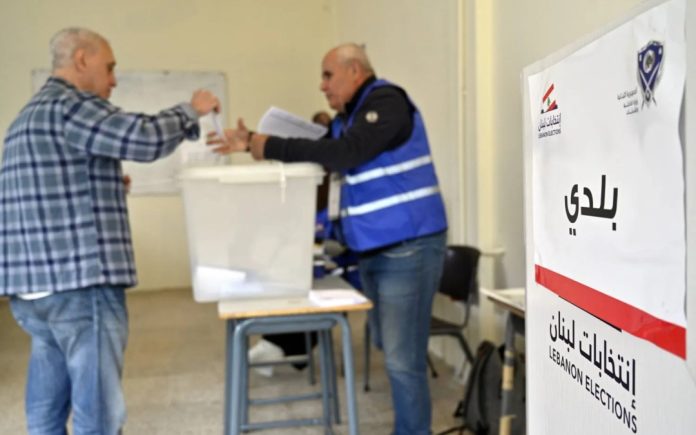
The National Human Rights Commission of Lebanon, including the Committee for the Prevention of Torture (NHRC-CPT), has emphasized that the right of internally displaced persons (IDPs) to participate in the 2026 parliamentary elections must be fully protected, stressing that displacement cannot be used as a justification to restrict citizens’ political rights.
This position was outlined in a preliminary memorandum issued by the Commission on the participation of internally displaced persons in the upcoming elections. The Commission recalled that the right to participate in public affairs, vote, and stand for election without discrimination is guaranteed under Article 25 of the International Covenant on Civil and Political Rights (ICCPR).
According to the memorandum, Lebanon is approaching the 2026 parliamentary elections amid one of the largest internal displacement crises in its modern history. The number of internally displaced persons reached nearly 900,000 at the peak of the crisis in late 2024, before stabilizing at approximately 82,632 displaced persons recorded as of May 2026. This displacement resulted from the Israeli attacks that took place between 8 October 2023 and 27 November 2024, which caused widespread destruction, administrative disruption, and significant barriers to voter registration, access to polling stations, renewal of civil documents, and access to information.
The Commission noted that international practice shows that states facing large-scale displacement often adopt special electoral arrangements to ensure that displaced populations can effectively exercise their political rights. Such measures, it stressed, are not optional improvements to electoral processes but necessary safeguards to prevent the political marginalization of communities affected by conflict and displacement.
The memorandum also highlighted the particular challenges posed by Lebanon’s electoral system, which is based on geographic constituencies. Under such a system, displacement may prevent many voters from returning to their places of registration in order to vote. In this context, the Commission identified the model of “mega polling centers” as a potential operational solution, allowing voters to cast their ballots from their current places of residence. Similar arrangements were successfully implemented for Lebanese voters abroad during the 2018 and 2022 parliamentary elections.
However, the Commission stressed that implementing such a system within Lebanon would require significant legal and administrative preparation, including safeguards against double voting, reliable voter identification mechanisms, and the establishment of polling centers capable of accommodating large numbers of voters from multiple electoral districts.
The memorandum further warned that continuing security instability and the persistence of Israeli attacks in Lebanon until late 2025 have created a climate of uncertainty and fear that may hinder the ability of displaced voters to safely travel to their designated polling stations, particularly for those originating from southern border areas and parts of the Bekaa.
The Commission also underlined the importance of consulting displaced communities themselves, as well as civil society organizations, women’s groups, disability rights advocates, and local representatives when designing electoral arrangements affecting displaced voters. Such consultations, it noted, help ensure that solutions reflect the real circumstances faced by displaced communities and strengthen public trust in the electoral process.
In conclusion, the Commission emphasized that ensuring effective participation of internally displaced persons in the 2026 elections requires a comprehensive approach, including reliable and updated data on displacement, strong monitoring mechanisms, transparency in electoral procedures, and accessible complaint mechanisms to address potential violations. The Commission indicated that it will intensify its election monitoring efforts through field teams, regional coordination points, and reporting mechanisms to ensure that all citizens are able to exercise their political rights without intimidation, discrimination, or unjustified administrative barriers.
هذه المقالة متاحة أيضًا بـ:
 العربية (Arabic)
  Français (French)

